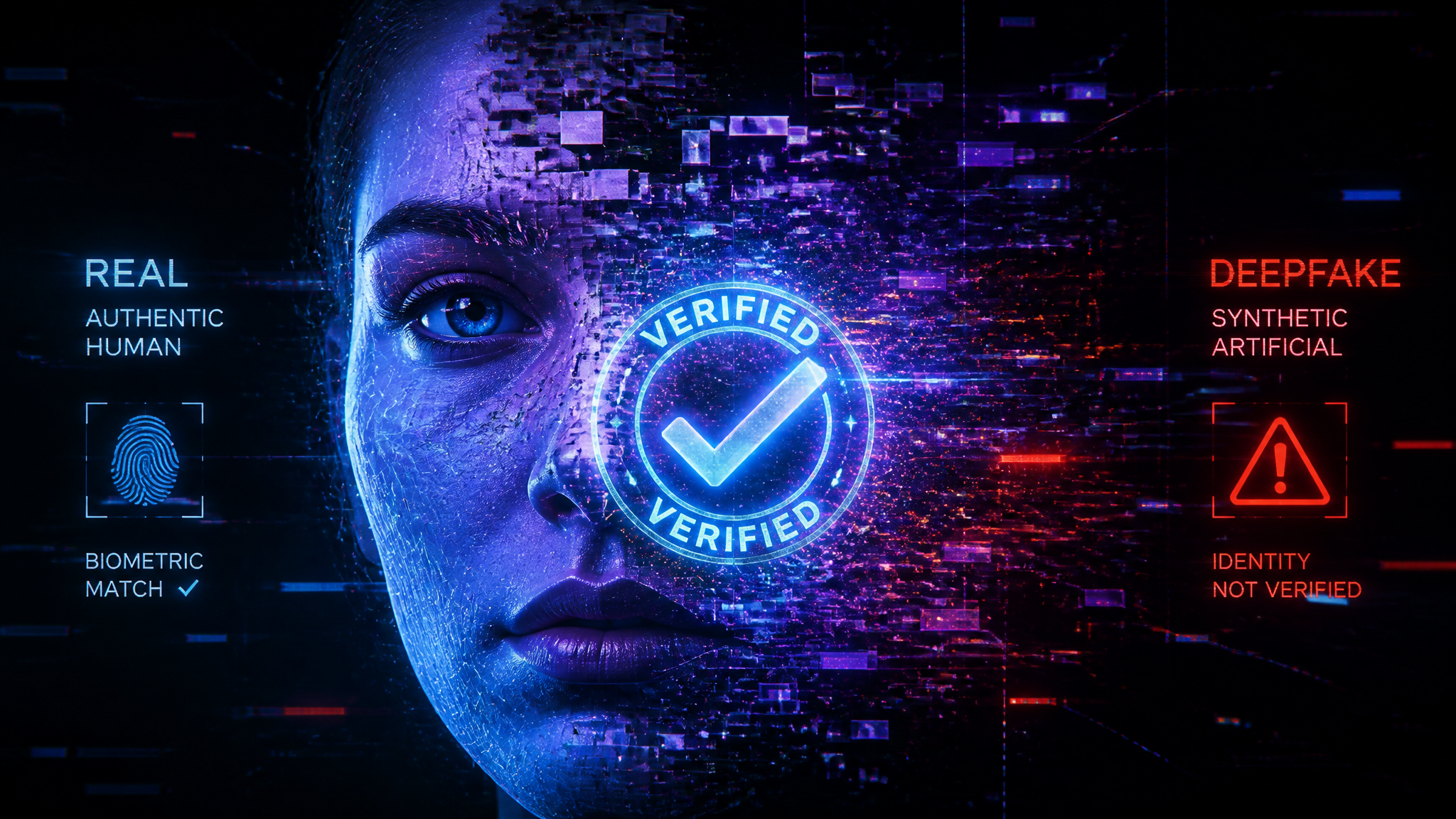
In the public imagination, a watermark promises a clean distinction: human on one side, machine on the other. As generative systems have improved, that promise has become politically attractive. Schools want a way to spot machine-written essays; newsrooms want signals for manipulated images; regulators want technical measures that make disclosure more than a matter of goodwill. The attraction is understandable. If synthetic content can be marked at the point of creation and detected later, some of the turbulence unleashed by generative models might be rendered manageable.
Yet watermarking has always been a narrower idea than its advocates sometimes imply. In text, the dominant approaches are statistical, embedding tiny biases in a model’s word choices so that a detector can later infer machine generation from the pattern. In images, approaches range from imperceptible marks inserted into pixels to metadata-based provenance records and cryptographic signatures attached to the file or its production history. All of these methods can be useful. None offers a general solution to the problem of trust.
Why watermarking moved to the centre of the debate
The shift from niche research topic to policy concern reflects two developments. First, generative systems now produce plausible prose, images and audio at industrial scale. Second, the harms at issue are not confined to outright fraud. Synthetic media can pollute information environments even when it is not especially convincing. NIST’s work on synthetic content stresses this wider risk picture: confusion, impersonation, evidentiary disputes, and the erosion of confidence in genuine records. In such an environment, a technical marker appears to offer a rare form of order.
The OECD has framed the issue similarly, treating transparency and provenance as practical building blocks for accountability. That framing matters because watermarking is often discussed as though it were a standalone test. In reality, it belongs to a broader family of mechanisms for tracing origin, documenting transformation and preserving context across a media supply chain.
Two families of marks
The first family is statistical watermarking. In large language models, the system subtly steers generation towards a preferred subset of tokens according to a secret rule or key. A detector later asks whether the resulting text shows a pattern too orderly to be likely by chance. The 2023 paper A Watermark for Large Language Models helped define this line of work. Its appeal lies in not changing the visible appearance of text. There is no stamp, banner or label to remove. The signal is distributed through word choice itself.
The second family is cryptographic or provenance-based marking. Here the objective is not to bias content statistically but to attach verifiable information about how it was made or edited. Standards efforts around content provenance have pursued manifests, signatures and chains of assertions: who created the file, what tools touched it, what transformations occurred, and whether those claims can be authenticated. For images and video, such approaches often work alongside embedded signals in the media itself.
These families are complementary rather than interchangeable. Statistical marks are useful when content is copied as plain text or stripped of metadata. Cryptographic marks are stronger when the goal is attribution and chain-of-custody, provided the surrounding infrastructure preserves them.
How text watermarking works in practice
Text watermarking is, at heart, a game of probabilities. At each step in generation, a language model has many plausible next words. A watermarking scheme partitions those candidates into sets and nudges the model towards one set more often than it otherwise would. Because the rule is secret, ordinary readers do not notice anything unusual. But across a long enough passage, a detector can test whether the preferred set appears too frequently to be accidental.
Watermarking can indicate that a model probably produced a piece of content; it cannot establish that the content is accurate, harmless or authentic in any richer civic sense.
This statistical logic explains both the promise and the weakness of the method. The promise is scalability: if a platform has access to the detector and key, millions of samples can be screened quickly. The weakness is that the signal only emerges over a sufficient span of text and under assumptions about how much the text has been altered. A short paragraph may carry too little evidence. Heavy editing can scramble the pattern entirely.
Watermarking can indicate that a model probably produced a piece of content; it cannot establish that the content is accurate, harmless or authentic in any richer civic sense.
Images, pixels and hidden signals
In images, watermarking is more varied. Some systems alter pixel values in ways designed to be imperceptible but machine-detectable. The recent Nature paper on SynthID describes a method for embedding a detectable signal in AI-generated images while aiming to preserve visual quality. The ambition is straightforward: let images circulate normally, then allow platforms or investigators to test for the presence of a mark later.
Image watermarking has a longer history than generative AI, and that history is instructive. Robustness depends on what the image suffers after creation. Resizing, cropping, compression, filtering and re-saving can all weaken or destroy a hidden pattern. Social media platforms routinely apply such transformations automatically. A mark may survive some manipulations and fail under others. The empirical question is not whether watermarking works in an ideal laboratory setting, but how gracefully it degrades in the wild.
Robustness is the real battleground
The central technical weakness is easy to state: any signal subtle enough to preserve quality is usually fragile under transformation, while any signal strong enough to survive heavy editing risks becoming visible or degrading output. This trade-off appears in both text and images. Paraphrase attacks are the classic threat for text. If a person or another model rewrites a watermarked passage while preserving its meaning, the token-level pattern can disappear. Research presented at ICLR in 2024 underscored how reliability depends on conditions that real-world adversaries need not respect.
Images face analogous attacks. Cropping can remove regions carrying the strongest signal. Compression and denoising can attenuate it. A screenshot may preserve the picture while discarding metadata entirely. Even absent malicious intent, ordinary user behaviour can break the chain of evidence.
This does not make watermarking useless. It means the relevant measure is not invulnerability but cost imposition. A successful scheme raises the effort required to launder synthetic content or strips away some of the convenience of mass deception. That is worthwhile. It is simply not the same as a permanent fingerprint.
Detection without provenance, provenance without detection
Policy discussions often collapse distinct goals into one. Detection asks: does this artefact bear signs of machine generation? Provenance asks: where did it come from, through what steps, and can those claims be verified? The first can operate without the second, but with limited interpretive value. The second can be highly informative, but only if enough actors in the chain adopt compatible standards and preserve records.
The central technical weakness is easy to state: any signal subtle enough to preserve quality is usually fragile under transformation, while any signal strong enough to survive heavy editing risks becoming visible or degrading output.
The content provenance movement, reflected in the C2PA specification and discussed by the OECD, addresses a problem that watermarking alone cannot solve. A genuine photograph may be edited responsibly and remain genuine. A synthetic image may be honestly disclosed and harmless. Conversely, an unwatermarked item is not thereby human-made. Absence of a detectable mark proves little unless one knows which systems were used and what transformations intervened.
What NIST has emphasised
NIST’s synthetic content work is notably sober on these distinctions. Rather than presenting watermarking as a silver bullet, it situates technical measures among a portfolio of mitigations including provenance, human-centred processes, risk assessment and institutional controls. That matters because the hardest problems are not only technical. They are evidentiary and social. How should a court treat a disputed recording? How should a newsroom verify an image that has circulated detached from its original file? What level of false positives is acceptable in an educational setting where allegations of cheating carry serious consequences?
Detection systems answer a narrower question than public debate often assumes: not whether to trust a claim, but whether there is evidence that a machine helped produce it. Even that narrower task requires calibration, threshold setting and clear communication of uncertainty.
The more watermarking is sold as a decisive test, the more damaging its inevitable failures will be when adversaries exploit its blind spots or when ordinary transformations erase the signal.
False positives, false negatives and strategic behaviour
Every detection regime invites strategic adaptation. If platforms screen for specific watermarks, model developers and attackers will adjust. Open models may omit marks entirely. Rewriters can paraphrase. Bad actors can blend human and machine output to push content into ambiguous territory. Meanwhile, defenders must manage two politically fraught error types: falsely accusing genuine human creators, and failing to flag synthetic material that later proves consequential.
These trade-offs are particularly sharp in text. Statistical detectors usually perform better on longer passages and more constrained sampling settings. But many high-stakes uses involve short social posts, mixed-authorship documents or heavily edited drafts. A probabilistic score may be informative in aggregate and still weak as proof in an individual case. That is one reason several scholars have cautioned against using AI-writing detectors punitively in education or employment without corroborating evidence.
The liar’s dividend remains
Perhaps the most important limit is conceptual. Even perfect identification of machine-generated artefacts would not solve the problem of trust because trust concerns more than origin. A true statement can be machine-written; a false one can be human-written. A real photograph can be used to support a misleading narrative. And as studies on deepfakes have shown, synthetic media can intensify a wider epistemic problem in which people become uncertain not only about what is fake, but about what can be known at all.
This is where the so-called liar’s dividend enters. Once the public knows deceptive media exist, wrongdoers can dismiss authentic evidence as synthetic. Watermarking helps only at the margin. If a genuine recording lacks provenance data or a detectable mark, sceptics can still cast doubt. If a synthetic artefact is unmarked, the absence of evidence does not settle the matter. Technical signals reduce uncertainty; they do not abolish opportunistic denial.
Detection systems answer a narrower question than public debate often assumes: not whether to trust a claim, but whether there is evidence that a machine helped produce it.
Where watermarking is genuinely useful
Used carefully, watermarking has several sensible roles. It can help platforms triage suspicious content at scale. It can support internal auditing by model providers, allowing them to test whether outputs from their own systems are circulating in unwanted contexts. In images, it can contribute to layered provenance systems in which embedded signals, signed metadata and contextual verification reinforce one another. For researchers and investigators, it can supply one evidentiary strand among several.
- At scale: useful for screening large volumes where manual review is impossible.
- In closed ecosystems: stronger when the creator, distributor and detector share technical assumptions.
- As evidence: helpful when combined with metadata, source verification and behavioural analysis.
- As deterrence: valuable if it raises the cost of laundering content, even if it cannot prevent it.
What a mature policy view looks like
A mature approach would resist two temptations: technological fatalism and technological salvation. Fatalism says marks will always be removed, so the effort is pointless. Salvation says detectable AI content will restore trust by itself. Both are wrong. The more realistic view is infrastructural. Statistical watermarks, cryptographic signatures, provenance manifests, disclosure rules, media forensics and institutional verification all address different parts of the problem.
The practical test is whether these measures improve accountability under realistic conditions of editing, reposting and adversarial pressure. That standard is less glamorous than claims of definitive detection, but more useful. It accepts that information integrity is maintained through overlapping institutions and evidence, not by a single hidden signal.
Beyond the allure of the stamp
The debate over watermarking often borrows the language of physical documents: seals, signatures, stamps. Digital media, especially generative media, behaves differently. It is copied frictionlessly, transformed casually and detached from context almost immediately. In such an environment, any mark must contend not only with attackers but with ordinary circulation. That is why the future probably belongs not to one technique but to combinations of them, each carrying explicit uncertainty.
Watermarking machines, then, is neither folly nor cure. It is a limited but potentially valuable attempt to preserve traces of origin in a medium that erases origin with unusual efficiency. Properly understood, detectable AI content can support better judgement. Improperly sold, it will create a false sense of certainty and invite disappointment. The challenge is not merely to identify what machines made, but to build institutions capable of weighing what those marks do—and do not—mean.