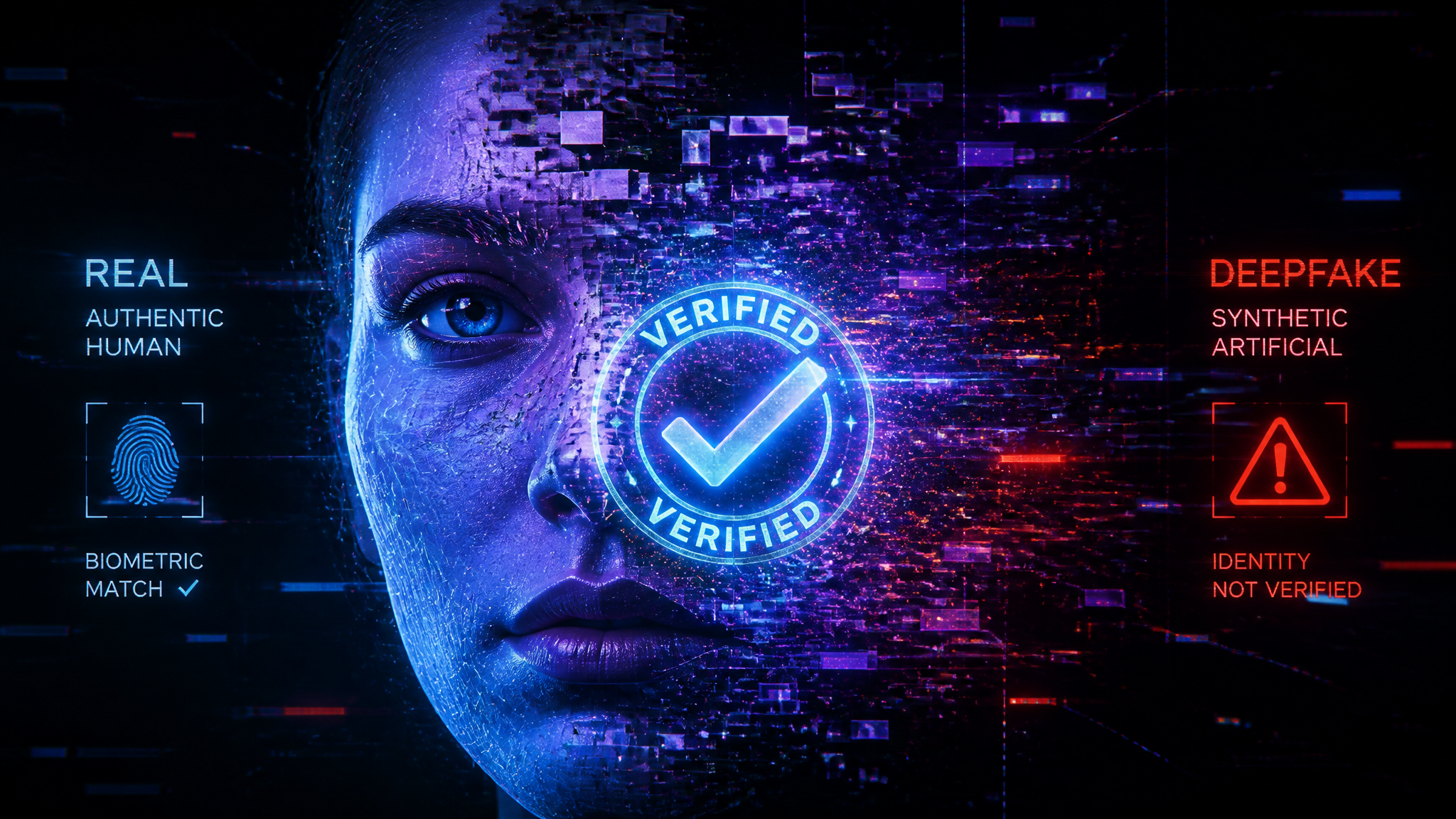
For years, public debate about manipulated media fixated on a familiar fear: that citizens would be duped by convincing fake video, audio or photographs. That danger is real enough. Yet the more corrosive effect may be subtler. When synthetic media becomes common knowledge, its power lies not only in fabrication but in negation. The existence of plausible fakes gives politicians, soldiers, police officers, propagandists and ordinary wrongdoers a new line of defence against authentic evidence. A recording can be shrugged off as fabricated. A photograph can be dismissed as machine-made. An incriminating voice note can be waved away as cloned. This is the liar’s dividend: the bonus reaped by those who benefit when the public cannot distinguish the true from the false.
The phrase was popularised by scholars and commentators examining “deepfakes”, but the phenomenon is broader than any one technical method. It names an epistemic condition in which trust in recorded evidence deteriorates generally. Once people know that convincing forgeries exist, every unwelcome clip becomes deniable. The result is not a world in which falsehood always triumphs over truth. It is a world in which truth must work much harder to be admitted at all.
The new value of plausible deniability
Historically, photography and sound recording acquired social authority because they were difficult to fake convincingly and expensive to manipulate at scale. They were never infallible. Images have always been framed, edited and stripped of context; states have always forged documents; confessions have always been coerced. But mechanical recording carried a default presumption that something happened before a lens or microphone. In law, journalism and human rights work, that presumption was often tentative and qualified, yet it mattered.
Synthetic media weakens this inherited compact. The danger is not simply technical. It is cultural. The public need not master generative models to absorb the lesson that anything might be altered. From there it is a short step to treating every inconvenient artefact as suspect by default. The liar’s dividend therefore rewards not the best fabricator but the most shameless denier.
The liar’s dividend is the political and legal profit drawn from a public that no longer trusts its own eyes and ears.
That dividend accrues asymmetrically. Powerful actors possess press offices, lawyers, allies and distribution channels with which to contest evidence. Victims, witnesses and local reporters often have only the file itself and their own credibility. If confidence in the file collapses, so may confidence in them.
From deception to ambient doubt
The most misleading way to think about synthetic media is as a succession of spectacular hoaxes. Some will indeed shape elections, markets or diplomatic crises. But everyday democratic life is more often damaged by accumulated uncertainty than by one cinematic fake. The ambient awareness that media can be fabricated invites a generalised scepticism that spills beyond the fake object itself.
This matters because most citizens do not authenticate files personally. They rely on institutions: reporters, courts, investigators, civil society groups and, at times, trusted public authorities. If those institutions are weakened, overrun or pre-emptively discredited, the truth value of a recording becomes politically negotiable. Evidence enters public life less as a settled record than as another factional claim.
The OECD has warned that AI-generated and manipulated content can intensify information risks not only through deception but by complicating verification and accountability. That complication is the heart of the problem. Verification takes time, expertise and often money. Denial takes seconds.
Journalism’s shrinking evidentiary margin
The liar’s dividend is the political and legal profit drawn from a public that no longer trusts its own eyes and ears.
For journalism, the liar’s dividend threatens a profession already contending with collapsing trust, platform-driven acceleration and political attacks on legitimacy. Newsrooms have become more adept at visual forensics, geolocation and metadata analysis; open-source investigation has matured rapidly; editorial standards around verification are stricter in many serious organisations than they were a decade ago. Yet every technical advance raises public expectations while narrowing tolerance for uncertainty.
A verified clip is rarely self-authenticating to readers. The audience must trust that a newsroom has checked provenance, context, edits, compression artefacts, chronology and witness testimony. Bad-faith actors exploit that distance. They do not need to prove fabrication; they merely need to suggest enough doubt to stall accountability. In contentious cases, the very act of verification can be caricatured as partisan interpretation.
This creates a punishing asymmetry for reporters. Publishing too quickly risks amplifying falsehood. Publishing too cautiously risks withholding genuine evidence while those implicated shape the narrative. The burden is heaviest in conflict zones and authoritarian contexts, where direct access is scarce and digital traces are often the only record available.
Human rights documentation under pressure
Nowhere is this more consequential than in the documentation of atrocity. Human rights investigators have increasingly relied on photographs, mobile video, satellite imagery and social media posts to corroborate abuses. The Berkeley Protocol on Digital Open Source Investigations, published by the Office of the United Nations High Commissioner for Human Rights, reflects how central such material has become to fact-finding. Groups such as the Digital Verification Corps have shown that rigorous methods can extract credible findings from open sources even in inaccessible theatres of violence.
Yet the same dependence creates vulnerability. Perpetrators can deny authentic recordings as synthetic. States can flood the zone with contradictory claims. Witnesses may be retraumatised by demands for ever more documentation of harms they have already proved to any reasonable observer. The shift is moral as well as methodological: victims are compelled to meet escalating standards of proof because technology has enlarged the menu of possible objections.
For organisations documenting war crimes, torture or police violence, this means chain-of-custody questions increasingly begin at the moment of capture. Who recorded the file? On what device? Was metadata preserved? Has the platform altered the upload? Can shadows, weather, dialect, landmarks or munition fragments be independently corroborated? These are sensible questions. But their proliferation illustrates the cost of epistemic decay. Truth no longer merely needs to be found; it must be insulated against organised disbelief.
In an environment of ambient doubt, authenticity becomes expensive while denial becomes cheap.
The courtroom after the age of innocence
Courts are not strangers to forged evidence. They have long dealt with doctored images, altered tapes and fraudulent documents. What changes with synthetic media is the background rate of plausible challenge. In criminal cases, civil disputes and international proceedings, parties may increasingly argue that incriminating recordings are fabricated or materially manipulated. Some such challenges will be justified. Many will be opportunistic.
This does not mean that courts will collapse into relativism. Legal systems possess tools for weighing evidence holistically: expert testimony, corroboration, disclosure obligations, adverse inferences, witness examination and chain-of-custody analysis. But synthetic media increases transaction costs. Authenticating a clip may demand specialist expertise inaccessible to poorer litigants and overburdened public defenders. Judges and juries may also import lay anxieties about “deepfakes” into cases where no sophisticated manipulation exists.
The burden-of-proof problem is acute. Formally, legal burdens remain where doctrine places them. In practice, however, suspicion can migrate informally onto the party relying on a recording. What was once persuasive prima facie evidence becomes merely the opening bid in a technical contest. Where institutions are weak, delay alone can amount to impunity.
The politics of strategic scepticism
In an environment of ambient doubt, authenticity becomes expensive while denial becomes cheap.
The liar’s dividend is especially useful to leaders who seek to make reality itself appear partisan. A ruler caught on tape threatening opponents can allege fabrication. Security forces filmed abusing detainees can describe the footage as synthetic. A corrupt official can call leaked audio a clone. Even if independent analysts later vindicate the material, the political moment may have passed. Doubt need not be permanent to be useful; it need only endure through the news cycle, the election period or the first hearing.
Strategic scepticism has two advantages for the powerful. First, it borrows the language of media literacy. Healthy caution about digital evidence is transmuted into blanket dismissal. Secondly, it exploits a norm of balance in journalism and public debate. If one side says a video is authentic and the other says it is fake, institutions often feel compelled to present the dispute as open longer than the evidence warrants.
This tendency is intensified by a broader crisis of authority. In highly polarised societies, acceptance of evidence is often mediated less by forensic quality than by group identity. Synthetic media does not create that pathology; it gives it new tools.
Why technical fixes will not restore trust by themselves
Watermarking, provenance standards and cryptographic signing may all improve media integrity in some contexts. Research bodies and standard-setting institutions have rightly explored methods for recording origin and edits. Such measures are valuable, especially for professional capture workflows and archival practice. But they cannot repair the deeper social problem on their own.
Many crucial recordings will continue to come from ordinary phones in chaotic settings, from frightened witnesses who do not control metadata hygiene, and from platforms that recompress, strip or transform files. Moreover, any provenance scheme depends on a chain of trust in devices, software, institutions and governance. The liar’s dividend flourishes precisely where that trust is absent or politically contested.
There is also a philosophical limit. Authenticity is not identical to truth. A genuine clip can still mislead through omission or false context. Conversely, a file lacking perfect provenance may still document a real event. The challenge is therefore not simply to certify files but to sustain norms and institutions capable of reasoning about them.
The unequal geography of proof
The burdens imposed by synthetic media are not evenly distributed. Wealthy news organisations, international tribunals and large investigative bodies can build forensic capacity. Smaller local outlets cannot. Nor can most grassroots groups, freelance journalists or families documenting abuses by authorities. The result may be a widening inequality of evidentiary voice.
In many parts of the world, the most important evidence already comes from people with the least institutional protection. They record raids, bombardments, forced evictions and killings because no one else is present. If synthetic media normalises suspicion of such recordings, then the groups already closest to violence will face the highest threshold for being believed.
This is the hidden politics of burden-shifting. The formal question is whether a file is authentic. The practical question is who must labour to prove it. Often the answer will be the vulnerable rather than the accused.
Education, scepticism and the risk of overcorrection
Public education about manipulated media is necessary, but it can misfire. Citizens should learn that images and audio require context and that recordings can be forged. Yet if this lesson is taught crudely, it produces not discernment but cynicism. People emerge believing that nothing can be known and that all evidence is equally suspect. That is not media literacy. It is epistemic surrender.
The burden of proof does not vanish in the age of synthetic media; it migrates downward, onto those with the least power to carry it.
Better habits are more demanding. They ask whether a source is primary or derivative, whether independent corroboration exists, whether the timing and location match external records, whether experts have examined the artefact, and whether those denying it offer evidence rather than mere assertion. The civic goal is discriminating judgement, not reflexive disbelief.
What institutions owe the public
If the authority of recorded evidence is under strain, institutions must become more transparent about how they verify it. Serious journalism should explain provenance where possible. Courts should develop clear standards for admitting and challenging digital media without letting speculative claims overwhelm proceedings. Human rights bodies should continue publishing methodologies that show how conclusions were reached from open sources and witness accounts.
None of this guarantees consensus. But visible method can preserve legitimacy when certainty is unattainable. In contentious cases, the public may not inspect every forensic step, yet it can assess whether institutions have acted with seriousness, independence and consistency.
- Journalism needs clearer explanation of verification, edits and uncertainty.
- Courts need proportionate standards that distinguish concrete challenges from tactical speculation.
- Human rights investigators need robust preservation and corroboration practices from the point of capture onward.
- Public institutions need to resist turning prudent scepticism into a licence for indiscriminate dismissal.
The real cost of a world that shrugs
The deepest damage done by synthetic media may not be the successful fake that fools millions. It may be the authentic recording that fails to persuade because audiences have been trained to hold all evidence at ironic distance. Democracies depend not on naivety but on workable confidence that facts can, with effort, be established. Courts depend on the possibility that proof can survive motivated denial. Human rights work depends on the belief that testimony and documentation, painstakingly assembled, still matter.
When that confidence frays, the beneficiary is rarely the ordinary citizen. It is the actor with the greatest interest in contesting the record and the greatest capacity to do so. The liar’s dividend is therefore not merely a side effect of new technology. It is a redistribution of epistemic power.
The burden of proof does not disappear in such a world. It settles, disproportionately, on those already harmed: the victim with a phone recording, the local reporter with a fragment of footage, the dissident with leaked audio, the family preserving images of an air strike. Their evidence may still prevail. But it must now cross a wider trench of suspicion before it does.
If there is a final irony, it is that societies rightly urged to be more critical of digital media may become less capable of defending reality when it is documented. The task is not to recover a lost innocence about images and sound. That era never truly existed. It is to prevent warranted caution from curdling into a permanent alibi for power. In the age of synthetic media, truth is not only forged in verification. It is defended against the convenience of not believing it.