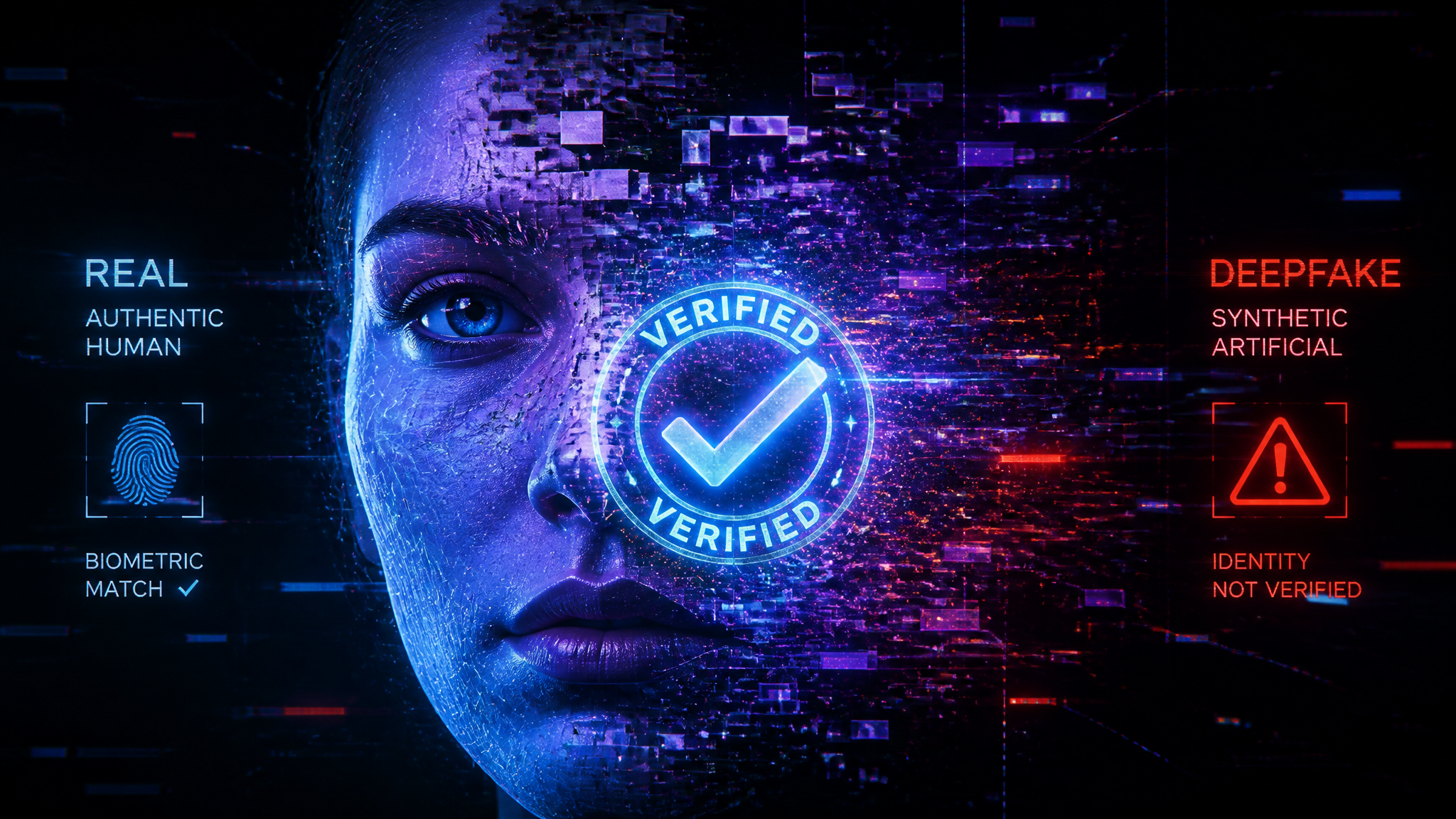
For years, election officials worried about hacked voting machines, troll farms and covert influence operations. Generative artificial intelligence has altered the hierarchy of concern. It has not replaced older threats, but it has made one especially troublesome form of deception far cheaper to produce: synthetic political media that can mimic a candidate’s voice, place words in a minister’s mouth, or fabricate compromising scenes timed for maximum electoral effect. The danger is not simply that voters may believe falsehoods. It is also that authentic evidence becomes easier to dismiss as fake, a phenomenon researchers have long described as the liar’s dividend.
The policy response has been hurried and uneven. Legislators in Europe, American states and several Asian democracies have sought to impose disclosure obligations, campaign restrictions or criminal penalties. Large online platforms have introduced labelling rules and election-integrity policies. Yet the resulting regime is a patchwork: dense in principle, thin in enforcement, and acutely vulnerable to timing. An election may be decided in days; a regulator’s remedy may arrive long after polling stations close.
A medium tailored to electoral volatility
Synthetic political media is not new. Manipulated images and edited audio long predate machine learning. What has changed is the combination of scale, plausibility and ease of use. NIST, in its overview of content transparency techniques, notes that synthetic media tools now allow realistic generation and modification of image, audio, video and text with rapidly falling technical barriers. That matters in campaigns because political persuasion depends as much on emotional cadence and timing as on factual claims. A bad clip released forty-eight hours before voting can be more consequential than a good forgery released months earlier.
The most immediate risk is not always a cinema-quality fabrication. It is often a low-cost deception that reaches receptive audiences before journalists, fact-checkers or election authorities can verify it. This is especially true in encrypted messaging environments and vernacular media ecosystems where the first point of contact is a forwarded clip, not a platform with robust moderation or provenance tools.
The most immediate danger is often not a perfectly engineered forgery, but a cheap, timely fabrication released when rebuttal is least likely to catch up.
Europe’s answer: transparency before prohibition
The European Union’s AI Act is the most important cross-border statutory intervention so far, though not an election-specific one. Its logic is distinctive. Rather than banning synthetic political media outright, it concentrates on transparency obligations for certain AI-generated or AI-manipulated content. Providers and deployers of relevant systems must, in defined circumstances, ensure that artificially generated or manipulated audio, image, video or text is disclosed as such. The Act also contains rules for deepfakes, requiring disclosure where content appreciably resembles authentic persons, objects, places or events and would falsely appear to a person to be genuine or truthful.
For elections, that matters because the EU is trying to institutionalise a simple norm: if content is synthetic in a potentially misleading way, audiences should be told. But the law’s strengths are also its limits. The obligation is to disclose, not necessarily to remove. It depends on identifying the responsible actor, applying exemptions correctly, and ensuring that labels remain attached as content is copied, clipped and recirculated across services. In practice, the closer a deepfake comes to a campaign dirty trick, the less likely its originator is to comply voluntarily.
The European Commission has also issued political guidelines under the Digital Services Act for very large platforms and search engines, asking them to assess and mitigate election-related risks, including manipulated media. These guidelines underscore that the EU increasingly treats electoral disinformation as a systemic platform-governance problem as much as a content problem. Even so, much still turns on company enforcement choices rather than swift public adjudication.
The American patchwork
The United States has no comprehensive federal regime governing AI-generated political advertising. Congress has considered proposals, including the DETER for AI-generated Deepfakes Act, but the operative rules remain largely at state level. By 2024, a growing number of states had enacted statutes targeting materially deceptive synthetic media in elections, typically focused on a pre-election window and often allowing candidates to seek injunctions or damages.
The most immediate danger is often not a perfectly engineered forgery, but a cheap, timely fabrication released when rebuttal is least likely to catch up.
This patchwork reflects both American federalism and constitutional caution. Election-related speech sits close to the First Amendment’s core protections. As a result, many state laws rely on narrow triggers: deceptive depictions of candidates, explicit intent to injure reputations or influence an election, and exemptions for satire, parody or news reporting. Some require disclaimers; others create takedown mechanisms. The legal architecture is therefore fragmented not only across jurisdictions but also across theories of harm.
That fragmentation creates obvious loopholes. A deceptive clip can be produced in one state, posted from another and consumed nationally. Plaintiffs may need to move quickly through courts to secure relief, while platforms decide independently whether the material breaches their policies. The result is a system in which legal remedy is possible but often slower than virality.
South Korea: fast-moving politics, sharpened concern
South Korea has approached deepfakes through a broader political and social alarm about digitally manipulated content. The country has legislated aggressively in adjacent areas, especially sexually exploitative deepfake material, and political concern has intensified as elections have drawn near. Reporting by the Financial Times during the 2024 parliamentary campaign described authorities grappling with a sharp rise in suspected AI-manipulated election content online.
South Korea’s response illustrates a wider truth. Rules aimed at one species of synthetic harm do not automatically translate into a clear election framework. Criminal law can punish especially egregious abuse, but campaign regulation requires speed, precision and public legitimacy. Where officials move too slowly, falsehood may spread unchecked. Where they move too aggressively, accusations of partisan censorship become inevitable. In highly polarised democracies, that trade-off is politically combustible.
India: advisory governance in a vast information market
India’s 2024 general election offered perhaps the most formidable test of synthetic media governance in a democracy of continental scale. The Election Commission of India issued an advisory to political parties stressing responsible and ethical use of social media and AI in campaign publicity. Parties were reminded of existing legal obligations under electoral and information-technology rules and urged not to disseminate misleading AI-generated material.
Yet India’s model remains heavily advisory and procedurally diffuse. Enforcement depends on a mix of election authorities, police, information-technology regulation and platform compliance, all operating across many languages and under intense time pressure. As The New York Times reported, Indian authorities and parties confronted a wave of AI-generated campaign content ranging from obvious parody to more questionable impersonation. Some material was deployed not only to deceive but to localise and personalise outreach at scale.
India demonstrates how disclosure rules become harder to operationalise in enormous, multilingual media ecosystems. A label in one interface or language may disappear when clips are downloaded, reposted or subtitled elsewhere. Even where parties are formally responsible, supporters, contractors and informal campaign networks may distribute content at arm’s length.
What platforms have actually done
The principal online platforms have adopted policies requiring labels or prohibiting certain deceptive manipulated media, especially when it is likely to mislead users about political matters. In theory, these rules can move faster than courts or legislatures. Labels can be applied globally, detection systems can be updated continuously, and distribution can be limited before a false clip reaches mass audiences.
But platform policy is not law, and labels are not a neutral cure. They vary by service, geography and format. Some are visible only in the original post, not in screenshots or reposted fragments. Some depend on self-disclosure by uploaders; others rely on automated detection or user reporting. Content can migrate quickly from mainstream platforms to smaller sites, messaging apps or private groups where moderation is weaker or opaque. OECD has warned that online deepfakes challenge existing governance because they cross services, jurisdictions and legal categories with ease.
A disclosure rule can create a norm of transparency, but it does not by itself solve attribution, jurisdiction or the speed of viral distribution.
There is also a subtler problem. Labelling regimes are designed around the assumption that synthetic origin is the key fact users need. In many electoral cases, however, the central issue is not whether a clip was generated but whether it conveys a false political claim, strips away context, or impersonates an authoritative source. A synthetic label may help, but it does not substitute for judgement about harm and intent.
A disclosure rule can create a norm of transparency, but it does not by itself solve attribution, jurisdiction or the speed of viral distribution.
The enforcement gap
Across jurisdictions, the recurring weakness is enforcement. Disclosure duties sound clear on paper, yet their practical execution is beset by four obstacles.
- Attribution: identifying the original creator is difficult when files are reposted, altered and mirrored across borders.
- Timing: electoral harm is front-loaded; legal remedies are often back-loaded.
- Volume: election periods generate too much borderline content for exhaustive human review.
- Institutional dependence: public authorities lean heavily on private platforms for detection, labelling and reach reduction.
Those obstacles are not theoretical. Election administrators generally lack forensic capability, while police and courts are not designed to arbitrate thousands of pieces of dubious media in real time. Technical provenance systems, such as watermarking or cryptographic content credentials, may improve traceability, and NIST has emphasised their promise. But such systems remain incomplete. They require adoption across tools, devices and platforms; they are vulnerable to stripping or degradation; and they do little for legacy content or hostile actors who simply choose not to participate.
The liar’s dividend
Regulators often present deepfakes as a problem of false positives: fake content that audiences wrongly accept as real. Equally serious is the inverse problem. Once synthetic media becomes common, genuine recordings can be dismissed as fabricated. Scholars have shown that awareness of deepfakes can increase general scepticism towards visual evidence, giving politicians and their allies a ready-made alibi when damaging authentic material emerges.
This is one reason disclosure law matters beyond any individual clip. It helps build an evidentiary culture in which provenance, chain of custody and contextual verification are treated as ordinary democratic infrastructure. Yet it also means that overbroad official claims about a deepfake epidemic can backfire. If every contested clip is framed as potentially synthetic, trust may corrode further rather than recover.
In election law, synthetic media has exposed a familiar weakness: public rules are increasingly enforced through private platforms whose incentives do not always align with democratic resilience.
Why election law struggles with synthetic media
Election law is usually built for identifiable actors and finite campaign acts: spending money, buying advertisements, printing leaflets, filing disclosures. Synthetic media scrambles those categories. A manipulated audio clip can be produced anonymously, distributed by volunteers, amplified by influencers and viewed by millions without any obvious point at which traditional campaign law bites. Was it an advertisement, a publication, a personal communication or foreign interference? Different legal systems answer differently, and often too late.
The same ambiguity affects remedies. Removal may be impossible once a clip has spread. Correction notices rarely travel as far as the original falsehood. Criminal sanctions may deter some future conduct but are ill-matched to immediate electoral repair. Civil injunctions can work only if plaintiffs identify defendants and judges act within hours.
In practice, then, synthetic political media exposes a structural reality of modern elections: much of the operational enforcement of democratic norms has migrated to online intermediaries. Public law sets expectations; private systems determine speed.
The limits of disclosure as a policy centrepiece
Disclosure has become the preferred regulatory instrument because it is less speech-restrictive than outright bans and easier to defend legally. It may also have pedagogical value, normalising transparency around AI-generated content. But it has three obvious shortcomings.
First, labels are least effective against malicious actors who have no incentive to attach them. Secondly, they presume audiences notice and understand them. Research on misinformation has repeatedly shown that contextual warnings can help, but their effect depends on interface design, repetition and user trust. Thirdly, disclosure can be gamed: operators may add tiny or ambiguous notices that satisfy formal requirements while preserving deceptive impact.
This does not make disclosure futile. It makes it insufficient on its own. Effective governance requires a layered system: narrow legal prohibitions for materially deceptive election content, rapid complaint channels, public-interest exemptions for journalism and satire, and stronger provenance standards across the media supply chain. None of these removes the underlying political incentive to deceive, but each can raise the cost.
A global rulebook still in formation
The emerging global picture is one of converging anxieties and diverging methods. The EU has built the most elaborate transparency framework. The United States remains a mosaic of state statutes and federal proposals. South Korea has moved under the pressure of fast electoral cycles and broader deepfake alarm. India relies on advisories and existing legal powers within a huge and fragmented media environment. Platforms, meanwhile, are crafting quasi-regulatory norms of their own, inconsistently applied but often decisive in practice.
No jurisdiction has solved the central dilemma. Democracies want to protect electoral integrity without empowering governments to suppress legitimate political speech, satire or inconvenient evidence. The balance is especially delicate where institutions are polarised and trust in referees is weak. Synthetic media did not create that fragility, but it exploits it with unusual efficiency.
The scramble to regulate deepfakes in politics is therefore less a discrete AI story than a chapter in the longer contest over who governs the information conditions of democracy. Elections run on deadlines, perception and legitimacy. Law runs on procedure, proof and jurisdiction. Between the two lies the space in which synthetic political media flourishes.
That mismatch will not disappear. But the lesson of the first regulatory wave is already clear enough: democratic resilience depends less on dramatic new bans than on the mundane capacity to authenticate, disclose, contest and, above all, respond before the ballot is cast.