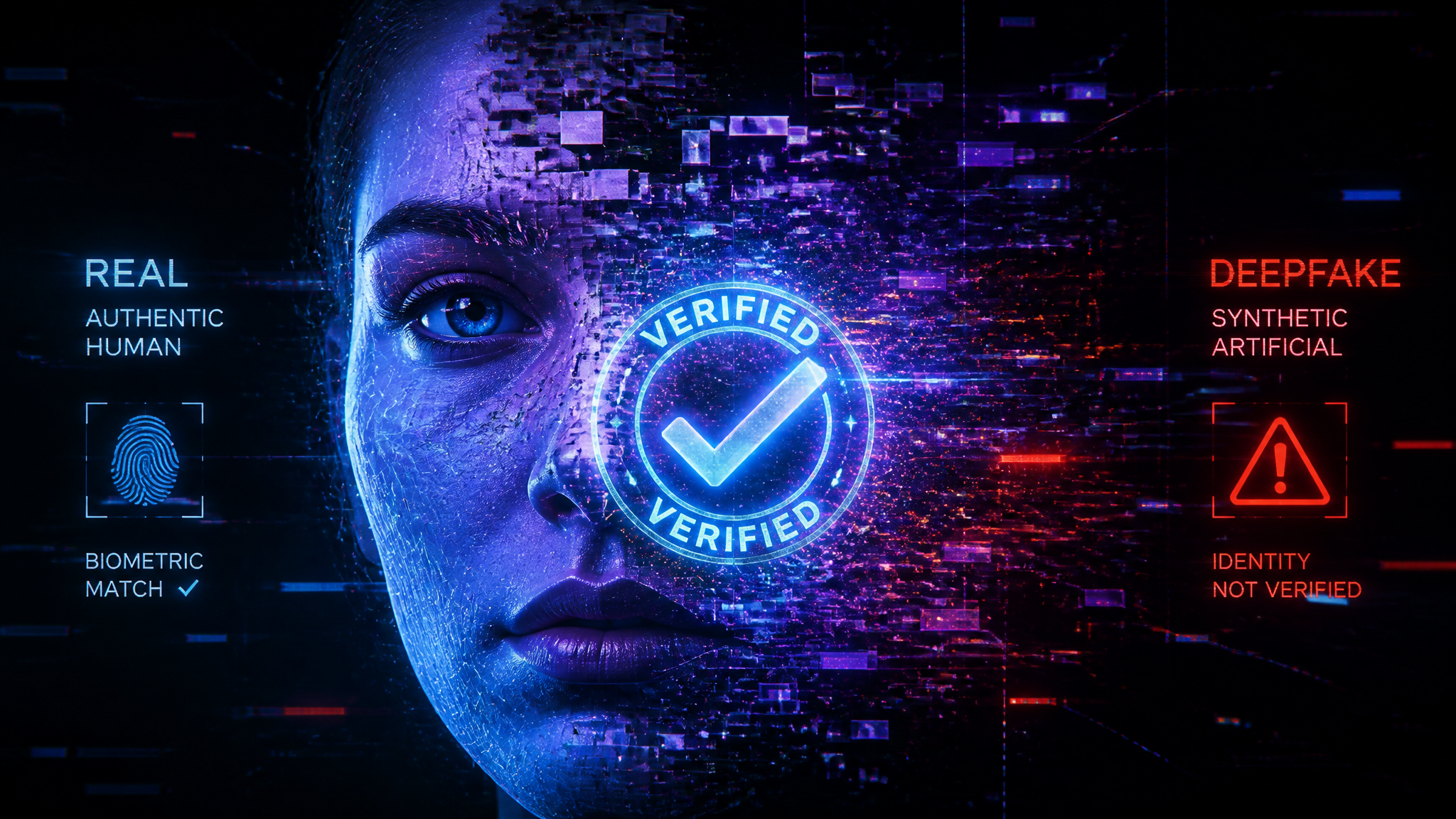
For much of the modern era, verification in journalism was treated as a professional reflex: ring another source, inspect the document, confirm the date, test the claim against the archive. The digital public sphere has not abolished those habits, but it has made them radically more difficult and more central. Images, video and audio now travel stripped of context, copied across platforms, cropped, relabelled and algorithmically amplified. Generative systems have added a further layer of confusion by making convincing synthetic material cheaper to produce and harder to spot by eye. In that environment, the newsroom’s trust infrastructure can no longer rest on authority alone. It must be rebuilt around repeatable methods.
The challenge is broader than the fashionable fear of “deepfakes”. The everyday problem confronting reporters and editors is usually less spectacular: an old photograph recirculated as breaking news, a genuine video attributed to the wrong location, a screenshot edited to remove qualifying text, a clip cut before or after the decisive moment. As research on information disorder for the Council of Europe argued, misleading content often derives its force from distortion rather than invention. The craft of verification therefore begins not with detecting the fake in isolation, but with reconstructing provenance, context and chain of custody.
Why visual evidence no longer speaks for itself
News organisations historically benefited from a cultural presumption that photographs and recorded footage were unusually close to reality. That presumption was never entirely justified; image manipulation long predates artificial intelligence. But smartphones, social platforms and generative models have weakened the old visual compact. A clip may be authentic in one sense and deceptive in another. It may show a real explosion, protest or military movement while being presented as evidence of a different event entirely.
This is why verification has shifted from binary thinking to probabilistic assessment. Editors are less often asking whether a piece of media is “real” than whether it is what it purports to be: recorded when, where and by whom; altered in what ways; first published in which context; and corroborated by which independent signals. The answer may remain provisional. Good verification is not the elimination of uncertainty but the disciplined management of it.
The most dangerous falsehood is often not a wholly fabricated image, but a genuine one stripped from its original time, place and meaning.
Open-source intelligence enters the mainstream newsroom
What was once a niche set of digital investigation techniques has become routine editorial practice. Open-source intelligence, or OSINT, refers in this context to the use of publicly available information to verify events, locations, actors and timelines. Journalists have borrowed heavily from human rights investigators, arms monitors and online research communities that developed methods for geolocation, chronolocation and network analysis.
The significance of OSINT is not merely technical. It changes newsroom culture by insisting that claims be traceable through observable evidence. A building’s façade can be matched to satellite imagery; the angle of shadows can indicate approximate time of day; weather records can support or undermine a claimed date; landmarks, signage, road markings, mountain ridges and even utility poles can become corroborating clues. Such work rewards patience over speed and method over instinct.
Yet OSINT has limits. Publicly available data can be incomplete, misleading or manipulated. Satellite imagery may be out of date. Search results vary by platform and region. The absence of corroborating material does not prove an event did not happen. Verification workflows are strongest when they combine open-source methods with conventional reporting: calls to witnesses, consultation with local journalists, comparison with official statements and scrutiny of primary documents.
Reverse image search as a first filter, not a final answer
Verification is no longer a backroom specialty; it is becoming the core production discipline of the newsroom.
Among the most accessible verification tools is reverse image search. Its logic is simple: if an image has appeared before, where and in what context? For journalists, this can quickly expose recycled disaster photographs, miscaptioned war imagery or doctored composites built from older material. Searching key frames from video can perform a similar function, especially when the clip itself has been reposted without the original caption or source account.
But reverse image search is best understood as triage. It can reveal prior appearances, not authenticate a first upload. It may fail when an image has been heavily cropped, mirrored, recoloured or overlaid with text. Indexes are uneven, and search engines do not see the entire web. Skilled manipulators exploit these gaps. The practical lesson is that a “no match” result should never be treated as confirmation of originality. It simply means the search has not found a known duplicate.
For that reason, experienced verification teams tend to compare multiple search methods and to pull several frames from a video rather than relying on one screenshot. They also document the process. Recording when a search was conducted, which frame was used and what results appeared matters because online evidence can change quickly. Verification is as much about auditability as accuracy.
Metadata forensics: useful, fragile and often misunderstood
Metadata retains an almost mythical status in public discussion, as if hidden fields inside a file can decisively settle authenticity. In reality, metadata is both valuable and fragile. It may include timestamps, device information, editing history, geolocation coordinates and software signatures. In digital forensics, such data can help reconstruct a file’s journey. In journalism, it can support or challenge a source’s account.
The problem is that metadata is frequently stripped during upload, export or messaging. Social platforms often remove or rewrite it; screenshots preserve little; file conversions alter it; bad actors can falsify some fields with ease. As forensic scholars have long noted, metadata is rarely dispositive on its own. It acquires meaning only when interpreted alongside other evidence.
A newsroom that treats metadata responsibly therefore uses it as one layer in a stack. If a file appears to have been edited shortly before publication, that fact is suggestive rather than conclusive. If geolocation tags match the claimed setting, that is supportive but not definitive. If timestamps clash with weather, shadows or witness testimony, the discrepancy deserves scrutiny. Metadata should sharpen questions, not end them.
From detection to provenance: the rise of authenticity signals
As synthetic media has improved, many technologists and policymakers have shifted attention from detection to provenance. The premise is that because manipulated content can be difficult to identify reliably after the fact, it may be better to preserve information about how media was created and edited from the outset. Standards efforts such as the C2PA specification aim to attach tamper-evident assertions about a file’s origin, capture device and modifications.
This is a promising development, particularly for professional workflows in which cameras, editing suites and publishing systems can maintain a chain of credentials. It offers a way to say not merely that an image looks plausible, but that it came through a documented process. NIST’s work on reducing risks from synthetic content likewise emphasises provenance as one important mitigation among several.
Still, provenance is not a panacea. Large volumes of consequential media will continue to originate outside managed systems: from civilians in conflict zones, encrypted chat groups, anonymous uploads and low-connectivity settings. Missing provenance does not imply deception, any more than a complete provenance record guarantees truthfulness about what the camera actually captured. A genuine image can still be misleadingly captioned; a verified chain of edits can still omit crucial context. Provenance strengthens trust when present, but journalism remains an interpretive practice.
Provenance signals can strengthen trust, but they do not replace editorial judgement, source reporting or public transparency about uncertainty.
The most dangerous falsehood is often not a wholly fabricated image, but a genuine one stripped from its original time, place and meaning.
Collaborative fact-checking networks and distributed expertise
No single newsroom can master every language, region and technical specialty required by the modern verification burden. That reality has encouraged more collaborative models. Cross-border fact-checking networks, open-source investigation communities and specialist desks now share methods, imagery comparisons and regional knowledge at speed. UNESCO and the European Journalism Centre have both documented how verification increasingly depends on structured cooperation rather than isolated newsroom heroics.
This matters because many verification questions are local. A street sign, dialect, vehicle registration format or style of police uniform may be immediately recognisable to someone in one country and opaque to editors elsewhere. Distributed networks make it easier to test claims against such situated knowledge. They also help counter one of the defining asymmetries of disinformation: falsehood can be produced cheaply and globally, while debunking is laborious and often local.
The best collaborations are not merely ad hoc tip exchanges. They rely on common evidentiary standards, careful source attribution and explicit confidence levels. Saying that a video is “likely” from a certain district, “confirmed” by two independent local reporters, or “unverified” pending weather data is more informative than a simple true-false label. Shared vocabularies of certainty improve both internal decision-making and public explanation.
Verification as workflow, not a specialist intervention
One of the most important shifts in the synthetic age is organisational. Verification cannot be a desk called in only when something goes obviously wrong. It must be integrated into commissioning, newsgathering, editing and publication. A reporter receiving dramatic footage should know the first steps: preserve the original file if possible, ask how it was obtained, identify the earliest upload, capture screenshots, note account history, and seek independent corroboration before publication.
Editors, meanwhile, need protocols for escalation. What threshold of confidence is required for publication? When should uncertain material be withheld, caveated or replaced with a textual description? How should corrections be phrased if attribution changes? Clear workflows reduce arbitrary decisions under deadline pressure. They also make verification a shared institutional habit rather than a matter of individual virtuosity.
Documentation is central. A newsroom that keeps internal verification notes, archived links, contact attempts and rationale for judgments creates an institutional memory that can later support corrections, legal review and public accountability. Trust is often rebuilt not by claiming infallibility but by showing one’s workings.
The economics of speed and the cost of being right
The verification problem is not only epistemic; it is economic. Digital news rewards immediacy, while verification consumes time, skill and often money. The temptation is to publish first with minimal checks and update later. Yet the downstream cost of error can be severe: reputational damage, audience cynicism and a further erosion of confidence in all media. Reuters Institute research continues to show fragile levels of trust in news across many markets, making process integrity more valuable, not less.
This creates a strategic tension inside newsrooms. Verification appears expensive because its success is measured by absences: the false clip not aired, the wrong identification not printed, the viral hoax not amplified. But those absences are part of the product. In a polluted information environment, reliability becomes a distinguishing editorial asset. The institutions that preserve it tend to treat verification as core infrastructure rather than discretionary overhead.
Provenance signals can strengthen trust, but they do not replace editorial judgement, source reporting or public transparency about uncertainty.
Explaining uncertainty to the audience
Verification is often discussed as an internal craft, but it also has a public dimension. Audiences increasingly encounter raw claims before journalists do, and they notice when coverage changes as new evidence emerges. Simply presenting a final verdict can therefore be less persuasive than explaining how that verdict was reached and what remains unknown.
Research in debunking and correction suggests that clear, concise explanations work better than repeating a false claim without context. In practice, this means telling readers why a video was judged miscaptioned, what clues established its true location, and which questions could not be resolved. Such transparency not only improves credibility; it models the habits of mind that a saturated media environment now requires from citizens as well as reporters.
There is, however, a balance to strike. Excessive technicality can alienate readers, while overconfident declarations can backfire if later evidence shifts the picture. The most trustworthy tone is often one of precise modesty: here is what we know, how we know it, and where uncertainty remains.
Media literacy after the deepfake panic
Public discussion of synthetic media has sometimes veered between alarmism and complacency. Alarmism implies that nothing can be trusted; complacency assumes that obvious fakes are the only threat. Both are unhelpful. Media literacy in the synthetic age is less about teaching people to spot impossible shadows or mangled fingers than about cultivating procedural scepticism. Where did this come from? Who first posted it? Has any reputable outlet verified it? Does the framing match the evidence?
UNESCO’s journalism and disinformation handbook framed media and information literacy as a civic necessity, not an optional add-on. That is even truer today. Citizens who understand basic verification principles are less likely to act as unwitting distributors of manipulated content. They are also better equipped to evaluate journalism itself, distinguishing between transparent reporting and opaque assertion.
For news organisations, this educational role is not paternalistic. It is part of rebuilding the social contract around evidence. A public that understands why verification takes time may be more willing to value restraint over instant certainty.
What trust infrastructure now requires
The phrase “trust infrastructure” can sound abstract, but in newsroom terms it is concrete. It means preserved originals where possible, routine reverse searches, metadata checks interpreted with caution, geolocation and timeline testing, collaborative escalation pathways, transparent confidence labels, and editorial cultures that reward hesitation when evidence is weak. It also means acknowledging that technology will not solve a problem rooted partly in incentives, attention and institutional credibility.
Verification in the synthetic age is therefore not a story about miraculous detection tools rescuing journalism from deception. It is a story about the return of method. The most resilient newsrooms are likely to be those that treat every digital artefact as a claim to be tested, every uncertainty as something to be named, and every publication decision as part of a visible chain of responsibility.
That may feel less glamorous than the mythology of the scoop. But it is closer to the real task of journalism in a world of synthetic abundance: not simply to gather information, but to establish, with disciplined humility, what can be trusted about it.