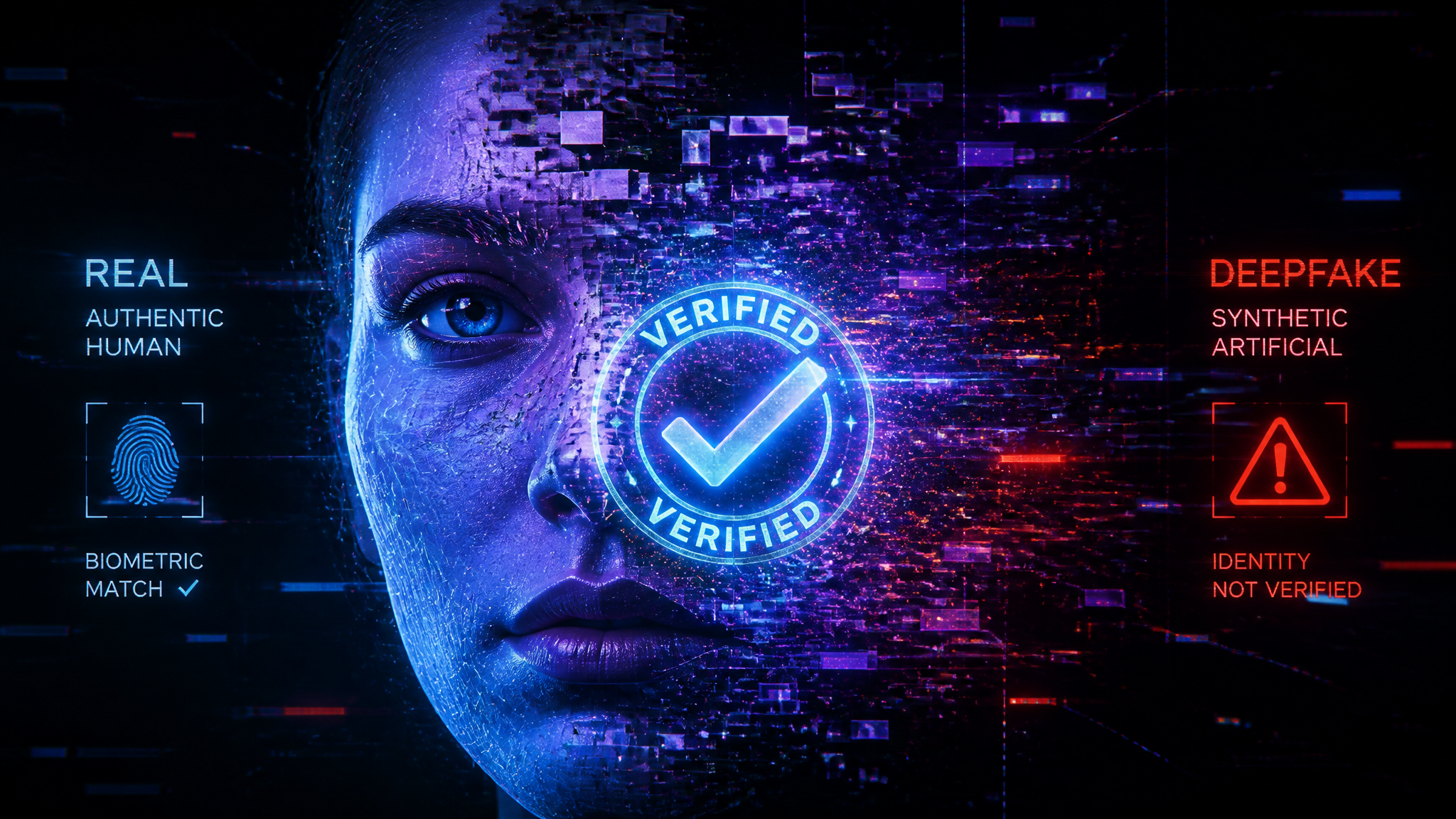
The integrity problem has changed shape
Falsehood in public life is not new, but synthetic media alters its speed, scale and plausibility. Cheap tools can now generate convincing images, cloned voices and edited video with a degree of realism that was once the preserve of specialist studios. This changes the practical burden on journalists, election officials and citizens. They are no longer deciding only whether a claim is true; they are judging whether the underlying evidence was captured, altered, relabelled or entirely fabricated.
That matters because modern public discourse is highly visual. Video clips, screen captures and short audio fragments travel faster than the reporting that might contextualise them. The result is a more fragile evidentiary environment: authentic material can be dismissed as fake, while manipulated material can exploit the authority still granted to sight and sound.
The hardest information-integrity problem is no longer the fake itself, but the collapse of confidence in the evidence chain.
Information integrity therefore sits at the intersection of technology, institutions and civic habit. Technical measures can help establish provenance; editorial processes can verify and contextualise; public education can reduce impulsive sharing. None is sufficient on its own. Together they form a more realistic defence against a media environment in which manipulation is easy and trust is expensive.
Deepfakes are only one part of the synthetic-media spectrum
Public debate often treats deepfakes as the singular threat, usually meaning highly realistic face-swapped video. In practice, the challenge is broader. Synthetic media includes text generated to imitate a public figure, audio cloned from a few seconds of speech, still images fabricated from prompts, and authentic footage deceptively edited or miscaptioned. The most damaging intervention is not always the most technically sophisticated one.
Research from the United States National Institute of Standards and Technology has repeatedly shown the difficulty of building generalisable forensic tools for manipulated media. Detection methods improve against known techniques, then lose reliability as generation methods change. That is a familiar pattern in security: an arms race in which static signatures age badly.
This is why institutions should avoid overly cinematic assumptions about threat. A low-quality fake released at the right political moment can be more consequential than a technically perfect forgery seen by few people. Likewise, a voice-cloning scam directed at a newsroom or local official may matter more than a viral image. The information-integrity agenda is therefore not merely about spectacular falsification. It is about the routine contamination of public evidence.
The liar’s dividend may be more dangerous than the deepfake
One of the most important concepts in this field is the liar’s dividend: the advantage gained when the existence of convincing fakes allows real material to be denied. Scholars at University College London and elsewhere have argued that the social effect of synthetic media extends beyond deception into strategic scepticism. Once citizens know that fabricated audio and video are possible, bad actors can exploit that uncertainty.
The hardest information-integrity problem is no longer the fake itself, but the collapse of confidence in the evidence chain.
This creates a paradox. The more public attention deepfakes receive, the easier it becomes for genuine wrongdoing to be waved away as artificial. A leaked recording can be dismissed as cloned. An authentic photograph can be described as generated. For political actors under pressure, this is a gift. Plausible deniability no longer requires disproving evidence; it requires merely injecting doubt fast enough.
The liar’s dividend also pressures journalists. Publishing true material now carries an additional evidentiary burden, because audiences may ask not just what happened, but whether the evidence itself is ontologically secure. In such conditions, the value of transparent verification rises sharply. News organisations that can show how they know what they know will be better placed than those that simply assert confidence.
Detection will matter, but it will not be enough
There is understandable interest in automated detection of AI-generated or manipulated media. Yet the technical and operational limitations are substantial. Academic work and guidance from standards bodies indicate that detectors tend to be probabilistic, brittle across domains and vulnerable to post-processing such as recompression, cropping or re-recording. They may perform well in laboratory settings and less well in the wild.
There is also a governance problem. A detector can flag suspicious content, but who interprets that result, on what threshold and with what consequences? In elections or breaking news, false positives and false negatives both carry costs. A genuine clip wrongly labelled synthetic can suppress valid evidence. A forged clip wrongly passed through can inflame a crisis.
Detection is a useful instrument, not a constitutional foundation for public trust.
For that reason, detection should be treated as one layer in a broader assurance model. It may help triage, prioritise verification resources and identify likely manipulation patterns. But it cannot bear the full weight of social trust. Systems built around provenance, source validation and chain-of-custody are more durable because they ask not only whether media looks suspicious, but where it came from and what happened to it along the way.
Provenance is becoming the strategic layer
The most promising shift in information integrity is from after-the-fact forensics to before-the-fact provenance. Rather than trying only to inspect finished media for signs of fakery, provenance frameworks attach secure metadata about how content was created or edited. The Coalition for Content Provenance and Authenticity, alongside the C2PA technical specification, has become a focal point for this approach. Its premise is modest but important: trustworthy content should carry verifiable history.
These systems can record when and where a file was captured, what device or software handled it, and whether material was altered in ways that should be disclosed. Properly implemented, such credentials can help journalists, platforms and the public distinguish between an original asset, a transformed derivative and an unattributed copy. The idea is less to certify truth in the philosophical sense than to improve traceability.
Still, provenance has limits. Metadata can be stripped when files are uploaded, copied or converted. Not all capture devices support secure signing. Bad actors can always distribute unsigned material. And provenance says little about semantic deception: an authentic image can still be presented with a false caption. Even so, provenance shifts the burden in a useful direction. It rewards those who can document origin and handling, while making it easier to identify media that arrives without a credible chain of evidence.
Watermarking has a role, but it is not a silver bullet
Detection is a useful instrument, not a constitutional foundation for public trust.
Watermarking is often discussed as a practical answer to synthetic media, especially for content generated by AI systems. In theory, a visible or invisible mark can signal that a file was machine-generated, or tie it to a particular model or workflow. In practice, watermarking is better seen as a signalling and compliance tool than a universal solution.
Visible watermarks are easy to understand but easy to crop or obscure. Invisible watermarks can survive some transformations, but not all, and they are often difficult for ordinary users to inspect. Some approaches require cooperation across software vendors, publishers and platforms; others rely on robust standards that are still maturing. There is also an asymmetry problem: compliant actors may mark content, while malicious ones simply do not.
That does not make watermarking useless. It can improve transparency in professional pipelines, especially when paired with provenance records. It can also help downstream systems identify declared synthetic material. But policymakers and editors should resist a false sense of closure. A labelled fake can still mislead, and an unlabelled fake can still circulate. The deeper challenge remains institutional: how to ensure that evidence can be checked, contextualised and trusted under pressure.
Elections sharpen every weakness in the system
Election periods compress time, heighten emotion and raise the stakes of verification. A forged candidate statement released hours before voting, or a manipulated clip suggesting violence at a polling station, may do its work before fact-checkers can respond. International organisations including UNESCO, the World Economic Forum and major election-observation bodies have warned that synthetic media can be especially disruptive in low-trust environments where rumours already travel quickly.
The threat is not limited to fabricated candidate behaviour. Synthetic narration can imitate election administrators. Doctored visuals can misrepresent turnout or incidents. Coordinated disinformation campaigns can combine authentic footage, synthetic inserts and false captions to create persuasive composites. The objective is often not to persuade everyone of one lie, but to flood the zone with uncertainty and grievance.
Election resilience therefore depends on preparation before the campaign reaches its final weeks. Officials need verified communication channels, rapid rebuttal protocols and pre-bunking strategies that familiarise voters with likely manipulation tactics. Newsrooms need escalation paths for suspicious viral content, especially when it concerns voting procedures, violence or candidate misconduct. The important point is chronological: trust infrastructure must exist before the crisis clip appears.
In elections, the speed of verification matters almost as much as the accuracy of verification.
Newsrooms need evidence workflows, not just fact-checking teams
Traditional fact-checking remains essential, but synthetic media requires a more operational model of verification. The first task is intake discipline: preserving original files, recording how material was obtained and avoiding destructive transformations that erase metadata. The second is forensic literacy: knowing how to inspect hashes, timestamps, compression artefacts, geolocation clues and provenance credentials. The third is editorial transparency: explaining to readers what has been confirmed, what remains uncertain and why.
Guidance from organisations such as First Draft, BBC Academy and Reuters Institute has emphasised that verification should be distributed across newsroom functions rather than left to a small specialist unit. Reporters, audience teams, visual desks and editors all encounter high-risk content. Shared protocols matter more than heroic expertise. In practical terms, this means checklists for user-generated content, escalation procedures for politically sensitive media, and a norm of slowing publication when evidentiary confidence is weak.
There is also a strategic opportunity here. In a polluted information environment, news organisations can differentiate themselves by making verification visible. Publishing methods notes, source provenance and uncertainty statements may appear less dramatic than a viral clip, but such practices accumulate credibility over time. Integrity is not only a technical property of content; it is also an editorial property of how verification is done and shown.
In elections, the speed of verification matters almost as much as the accuracy of verification.
Media literacy must move beyond warning people to be sceptical
Calls for media literacy are common, but they can become vague or counterproductive. Simply telling people that anything might be fake risks deepening cynicism and feeding the liar’s dividend. Effective literacy is more specific. It teaches people to ask where a piece of media originated, whether there is corroboration from trusted outlets, whether the timing seems manipulative, and whether the content provokes a strong emotional reaction likely to short-circuit judgement.
UNESCO’s work on information integrity and digital platforms points towards a broader civic curriculum: not just how to spot manipulation, but how recommendation systems, virality incentives and engagement dynamics shape what people encounter. Citizens need to understand that deception often depends on context collapse rather than perfect fabrication. A real image from another country, recaptioned during a domestic crisis, can be as misleading as an AI-generated scene.
The most useful literacy programmes also distinguish between healthy scepticism and indiscriminate disbelief. Democracies cannot function if citizens retreat into total epistemic relativism. The goal is calibrated trust: confidence in institutions and methods that earn it, coupled with caution towards decontextualised, emotionally charged or unverifiable media.
Platforms and standards can lower risk, but governance choices remain political
Technical standards such as C2PA can improve interoperability. Platform policies can label manipulated media, reduce amplification or prioritise authoritative sources during crises. Shared taxonomies can help researchers and civil-society groups compare interventions across jurisdictions. Yet decisions about what to label, demote or remove remain politically fraught, especially around satire, parody, legitimate editing and contested speech.
This is why governance design matters. Rules should be clear about harmful deception, especially when synthetic media misrepresents public officials, voting procedures or emergency events. Appeals processes should exist for errors. Independent research access is important so that claims about prevalence and policy effectiveness can be scrutinised. And measures taken in election periods should be proportionate, rights-aware and transparent.
There is a temptation to imagine a final technical settlement in which authenticated media becomes the norm and deceptive content is neatly filtered away. That is unlikely. Open information ecosystems are messy by nature. The realistic objective is not perfect purity, but lower ambiguity, faster verification and stronger incentives for credible publication.
The next phase is institutional, not merely technical
The public conversation on synthetic media often oscillates between panic and gadgetry: either civilisation is on the brink of total deception, or one more detector will solve the problem. Both instincts miss the central point. Information integrity is an institutional discipline. It depends on standards for provenance, habits of verification, election preparedness, newsroom process, platform accountability and public education reinforcing one another.
The strategic shift is from asking whether people can still believe their eyes to asking what evidence systems deserve belief. Authenticity will increasingly be established through documented origin, corroboration and transparent handling rather than raw sensory persuasion. That is a demanding transition, but also a clarifying one. It moves trust away from the image alone and back towards the institutions that can explain, verify and stand behind it.
The societies best equipped for synthetic media will not be those that imagine they can eliminate deception. They will be those that reduce its rewards, contain its speed and deny it the power to dissolve all shared standards of proof. In that sense, information integrity is not simply a media issue. It is emerging as a core condition of democratic resilience.