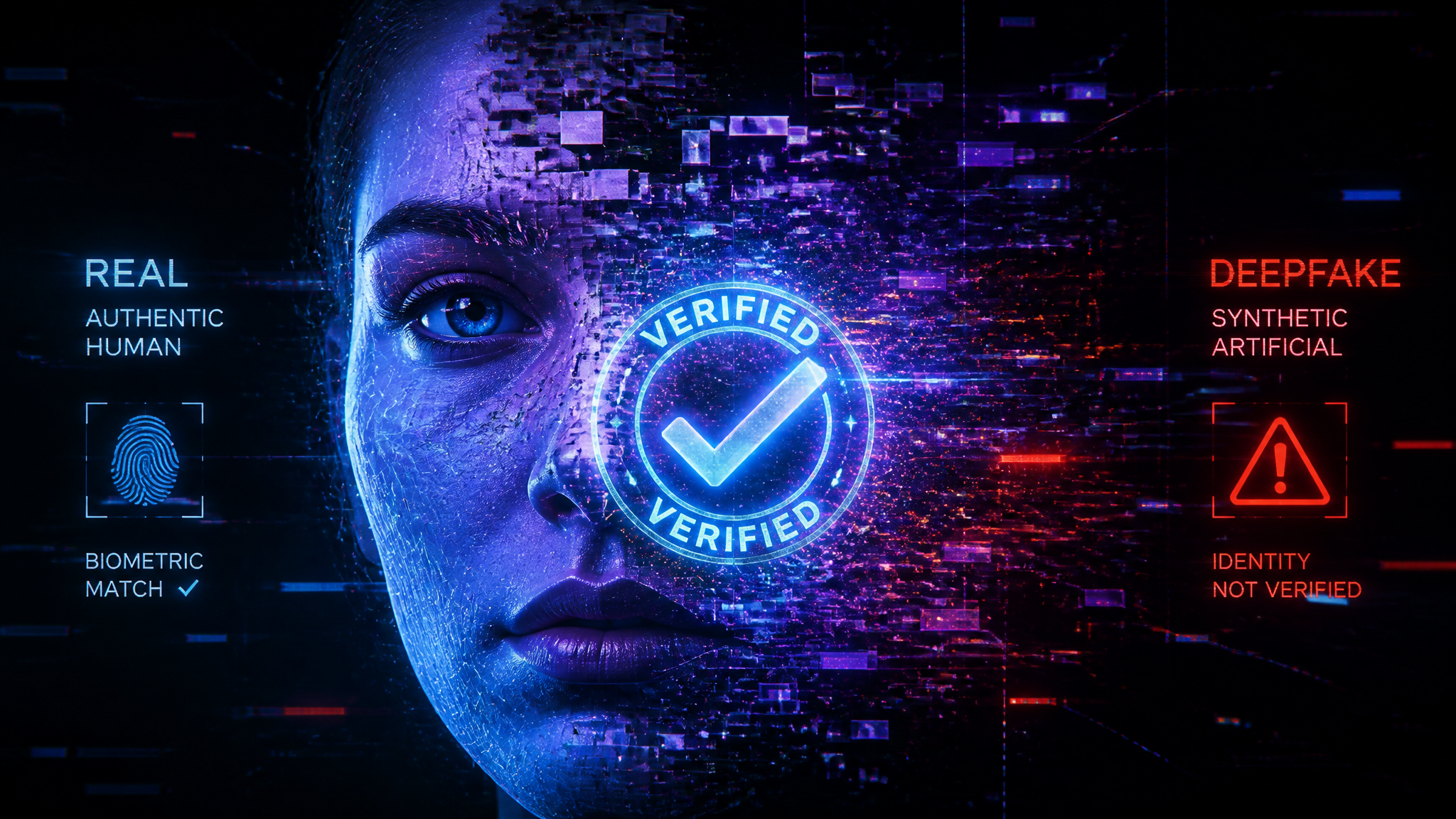
The problem shifted from images to evidence
For much of the internet era, concerns about manipulated media centred on editing software, deceptive headlines and the speed with which falsehoods spread online. But over the past decade, information integrity has become a more technically complex and politically consequential field. The rise of convincing synthetic media, alongside increasingly fragmented distribution channels, has made it harder not only to identify false content but also to establish what counts as trustworthy evidence in the first place.
This shift matters because democratic institutions, news organisations and ordinary citizens rely on visual and audio records to arbitrate disputes. A video clip, a photograph or a voice note has often served as a shorthand for proof. When those formats can be fabricated at scale, or when genuine media can be dismissed as fake, the public sphere loses one of its most practical mechanisms for settling contested claims.
“The central question is no longer whether media can be manipulated, but whether institutions can preserve credible proof in spite of that fact.”
The timeline of information integrity is therefore not just the story of better deception. It is also the story of competing responses: forensic detection, watermarking, provenance standards, newsroom verification workflows, election safeguards and media-literacy efforts intended to help citizens navigate an increasingly unstable information environment.
Before generative AI, manipulation was already a political weapon
Long before the term deepfake entered common use, researchers and journalists were documenting the political effects of digitally altered media and online disinformation. Cheap editing tools and social platforms lowered the cost of manipulation, while algorithmic distribution increased the chances that deceptive material would travel widely before corrections could catch up.
The 2016 US presidential election marked a turning point in public awareness. Investigations by the US intelligence community and the Senate Select Committee on Intelligence, alongside reporting and academic work, established that coordinated influence operations could exploit platform dynamics, social polarisation and weak verification norms. The problem was not merely false content in isolation. It was the architecture of amplification surrounding it.
At the same time, journalists and fact-checkers were refining methods for geolocation, reverse-image search and metadata analysis. Verification desks became more prominent in major newsrooms, particularly after years of experience covering conflicts and fast-moving crises. Yet these workflows were built for an environment in which manipulated media was common but still often detectable with careful human scrutiny.
Deepfakes transformed a familiar problem into a technical race
The phrase deepfake gained prominence in 2017, when machine-learning techniques made face-swapping and synthetic video generation more accessible. The underlying technologies advanced rapidly thereafter. Research groups demonstrated increasingly realistic facial animation, voice cloning and text-to-image generation, while open-source tools broadened access far beyond specialist laboratories.
By 2018 and 2019, policy institutions were treating synthetic media as a national-security and election-risk issue. Scholars at Brookings, reports from government agencies and work at academic centres warned that manipulated audiovisual material could be used for harassment, fraud, blackmail and political disruption. Even where the technical quality remained imperfect, the persuasive effect could be significant when content aligned with existing partisan beliefs.
The danger was twofold. First, synthetic media could be used offensively to create false evidence. Secondly, awareness of deepfakes created what some researchers called the liar’s dividend: the ability of public figures to dismiss authentic recordings as fabricated. This was an important conceptual turning point. Information integrity was no longer about detecting fake artefacts alone; it was also about preventing strategic doubt from consuming genuine documentation.
“Synthetic media does not merely create false evidence; it also weakens confidence in authentic records.”
The central question is no longer whether media can be manipulated, but whether institutions can preserve credible proof in spite of that fact.
Researchers built detection tools, but the limits soon became clear
Initial responses emphasised detection. Computer scientists developed methods to identify synthetic artefacts in images, video and audio, often by looking for inconsistencies in lighting, blinking patterns, compression traces or spectral signatures. Public agencies, including the US Defense Advanced Research Projects Agency, supported media-forensics research intended to keep pace with generative techniques.
Yet detection has always faced structural constraints. Generative models improve quickly. Distribution contexts vary. Compression, re-uploads and screenshots degrade the signals that detectors rely on. Most importantly, adversaries adapt. A detector that performs well in a laboratory benchmark may prove far less dependable in the wild, especially during breaking news or election periods when decisions must be made quickly.
Research from institutions such as the National Institute of Standards and Technology has reinforced a sober conclusion: detection can be useful, but it is not a silver bullet. Accuracy depends on context, and false positives can be as damaging as false negatives. In political settings, labelling genuine material as suspicious may inflame distrust just as surely as missing a fake.
This prompted a broader rethink. Rather than relying solely on retrospective identification of manipulated files, many experts began to argue for a shift towards provenance: establishing how content was created, edited and distributed from the outset.
Provenance emerged as a more durable answer
Provenance systems aim to attach verifiable information to digital media about its origin and any subsequent edits. Instead of asking only, “Is this fake?”, provenance asks, “Where did this come from, and what happened to it on the way here?” That is a more institutionally useful question, particularly for journalists, archivists and investigators who need to establish chains of custody.
A major development came with the Coalition for Content Provenance and Authenticity, a standards effort bringing together media, technology and standards bodies to create interoperable ways of attaching and verifying provenance information. The technical framework is often surfaced through content credentials, which can indicate whether an image or video was captured by a device, edited by software, or exported with specific metadata attached.
The appeal of provenance is practical. It does not require proving that every unverified item is fake. Instead, it creates a pathway for trusted sources to provide affirmative evidence of origin and modification history. For newsrooms, that can help preserve confidence in authentic visual reporting. For audiences, it offers a clearer basis for evaluating what they are seeing.
But provenance also has limits. It works best when creators, toolmakers, publishers and platforms adopt common standards. Metadata can be stripped during reposting. Bad actors can simply decline to participate. In other words, provenance can strengthen trust where legitimate actors cooperate, but it cannot by itself eliminate deception.
Watermarking became part of the toolkit, not the solution
As generative systems became more widely used, watermarking gained attention as another means of identifying synthetic outputs. The idea is straightforward: embed a signal in generated content that can later be detected, ideally without affecting the user-facing quality of the image, audio or text. Policymakers have often found watermarking attractive because it appears to offer a scalable mechanism for labelling machine-generated material.
In practice, the picture is more complicated. Watermarks can be fragile under cropping, compression or reformatting. Some are visible and easy to remove; others are invisible but difficult to standardise across formats and providers. Text watermarking poses additional problems because paraphrasing can erase statistical signals. For open ecosystems, enforcement is especially difficult.
That has led many researchers to treat watermarking as one layer in a broader integrity stack rather than a standalone fix. Combined with provenance, disclosure norms and platform policy, it can improve transparency. On its own, it struggles to provide reliable assurance in adversarial settings.
The distinction matters for regulation. Overpromising technical fixes can create false confidence, especially in electoral contexts where the cost of misclassification is high. The information-integrity field has gradually matured towards a more plural approach: provenance where possible, detection where necessary, and human judgement throughout.
Synthetic media does not merely create false evidence; it also weakens confidence in authentic records.
Elections forced the issue into public policy
Electoral politics gave synthetic media its clearest route from specialist concern to mainstream governance problem. Political campaigns are compressed, emotional and highly sensitive to last-minute shocks. A fabricated audio clip released days before a vote, even if debunked later, can still distort public understanding. Equally, authentic material can be disowned as fake when it is politically inconvenient.
By the early 2020s, election authorities, civil-society groups and international organisations were issuing guidance on AI-generated campaign content, mis- and disinformation, and crisis communication. The World Economic Forum and OECD highlighted synthetic media among emerging governance risks. UNESCO, meanwhile, linked platform accountability, media literacy and information integrity to broader democratic resilience.
Several election cycles then supplied concrete examples: synthetic or manipulated political messages, cloned voices, deceptive campaign imagery and online networks designed to amplify confusion. The problem was not only persuasion. It was timing. Elections expose the weaknesses of verification systems because there is often little time to investigate, contextualise and communicate findings before a narrative hardens.
“In elections, speed favours the manipulator; resilience depends on institutions that can verify and explain just as quickly.”
That has sharpened interest in pre-bunking, rapid response teams and clear public communication from election bodies. It has also raised uncomfortable questions about platform enforcement consistency and the uneven capacity of smaller news organisations to respond.
Newsrooms rebuilt verification for an age of synthetic abundance
Journalism sits at the centre of the information-integrity challenge because it both depends on digital evidence and acts as a public validator of that evidence. Over the past decade, verification has become more formalised in many newsrooms. Open-source intelligence techniques, forensic review, source triangulation and documentation of editing history are no longer niche practices reserved for investigations teams.
Organisations such as the BBC and Reuters have published guidance on verifying user-generated content, while specialist groups have helped codify methods for checking visual material during conflicts, disasters and protests. The synthetic-media wave has added a new requirement: journalists must now consider not only whether a file is manipulated, but whether any certainty claim is warranted at all.
This pushes newsrooms towards procedural transparency. If audiences are to trust a piece of visual evidence, they increasingly need to know how it was obtained, what was verified independently, and what remains uncertain. That is a cultural shift as much as a technical one. Verification is becoming more visible to the reader, listener or viewer.
It also creates uneven pressures. Large international outlets may have dedicated verification teams; local publishers often do not. Yet local reporting is where many political rumours first surface. Strengthening information integrity therefore requires investment not only in technical standards but in editorial capacity and training across the broader media system.
Media literacy became a civic defence, with caveats
As synthetic content has proliferated, governments, educators and civil-society organisations have doubled down on media literacy. The aim is sensible: help people assess sources, recognise manipulation cues, understand platform incentives and resist emotionally charged falsehoods. UNESCO and other international bodies have long argued that media and information literacy is a foundational democratic skill.
Still, media literacy has limits. Better critical habits do not guarantee better beliefs, particularly in highly polarised settings where identity and trust outweigh factual corrections. There is also a risk of teaching generalised scepticism rather than calibrated judgement. If every image is presented as potentially fake, audiences may become cynical rather than discerning.
The more productive approach is not to tell people never to trust media, but to show them how trust can be earned: through attribution, corroboration, provenance and transparent editorial process. Information integrity depends on preserving the possibility of justified belief, not merely multiplying warnings about deception.
In elections, speed favours the manipulator; resilience depends on institutions that can verify and explain just as quickly.
That is why literacy efforts increasingly intersect with technical standards and institutional practice. A public that understands provenance signals, source disclosure and verification notes is better equipped to use them. Equally, literacy campaigns cannot compensate for weak platform governance or poor journalistic standards.
Regulation is advancing, but governance remains fragmented
Policymakers have begun to respond more systematically. The European Union’s Digital Services Act has created new obligations around systemic risk and platform accountability, while the EU AI Act includes provisions relevant to transparency for certain AI-generated content. Elsewhere, national legislatures have considered or passed measures addressing deceptive election media, non-consensual synthetic content and disclosure requirements.
Yet governance remains patchy. Definitions differ across jurisdictions. Enforcement is uneven. Rules aimed at political advertising may not cover informal influence campaigns or encrypted dissemination channels. Technical standards evolve faster than legislation, but law remains necessary to shape incentives, assign responsibilities and create avenues for redress.
A lasting governance framework is likely to be layered. Standards bodies can set interoperability norms. Regulators can require risk assessment and transparency. Election authorities can establish campaign rules. Courts can handle harms involving fraud, defamation or intimate-image abuse. Newsrooms and schools can build public competence. No single institution can resolve the issue alone.
The next phase is about trustworthy workflows
The future of information integrity will probably not be determined by one breakthrough detector or one universal label. It will be shaped by workflows: how media is captured, signed, edited, published, archived, discovered and cited across institutions. The most important advances may therefore be mundane rather than dramatic: default provenance in cameras and editing tools, better preservation of metadata across platforms, clear newsroom verification logs, and public interfaces that surface trust signals without overwhelming users.
This is also where strategic competition enters the picture. Societies that can maintain credible public evidence will be better equipped to withstand disinformation, document abuses and sustain electoral legitimacy. Those that cannot may find themselves trapped in recursive doubt, where every contested event produces not clarification but mutually reinforcing narratives.
Information integrity is best understood, then, as civic infrastructure. Synthetic media has exposed weaknesses that already existed in the digital public sphere, but it has also forced institutions to confront them directly. The challenge is not to restore a naïve faith in images or recordings. It is to build systems in which authenticity can be demonstrated, uncertainty can be communicated honestly, and deception becomes harder to weaponise at scale.
- Detection remains necessary, but its reliability is context-dependent and adversaries adapt quickly.
- Provenance offers a stronger basis for trust by documenting origin and edits, though adoption must become much wider.
- Watermarking can assist transparency, but it is too fragile and fragmented to serve as a complete answer.
- Elections are the highest-risk environment because manipulated content exploits urgency, emotion and limited verification time.
- Newsroom verification and media literacy are not auxiliary measures; they are central to democratic resilience.
The field has moved from an obsession with fakes to a harder but more useful task: designing institutions that can still produce shared facts under conditions of synthetic abundance. That is likely to define the next decade of information integrity.