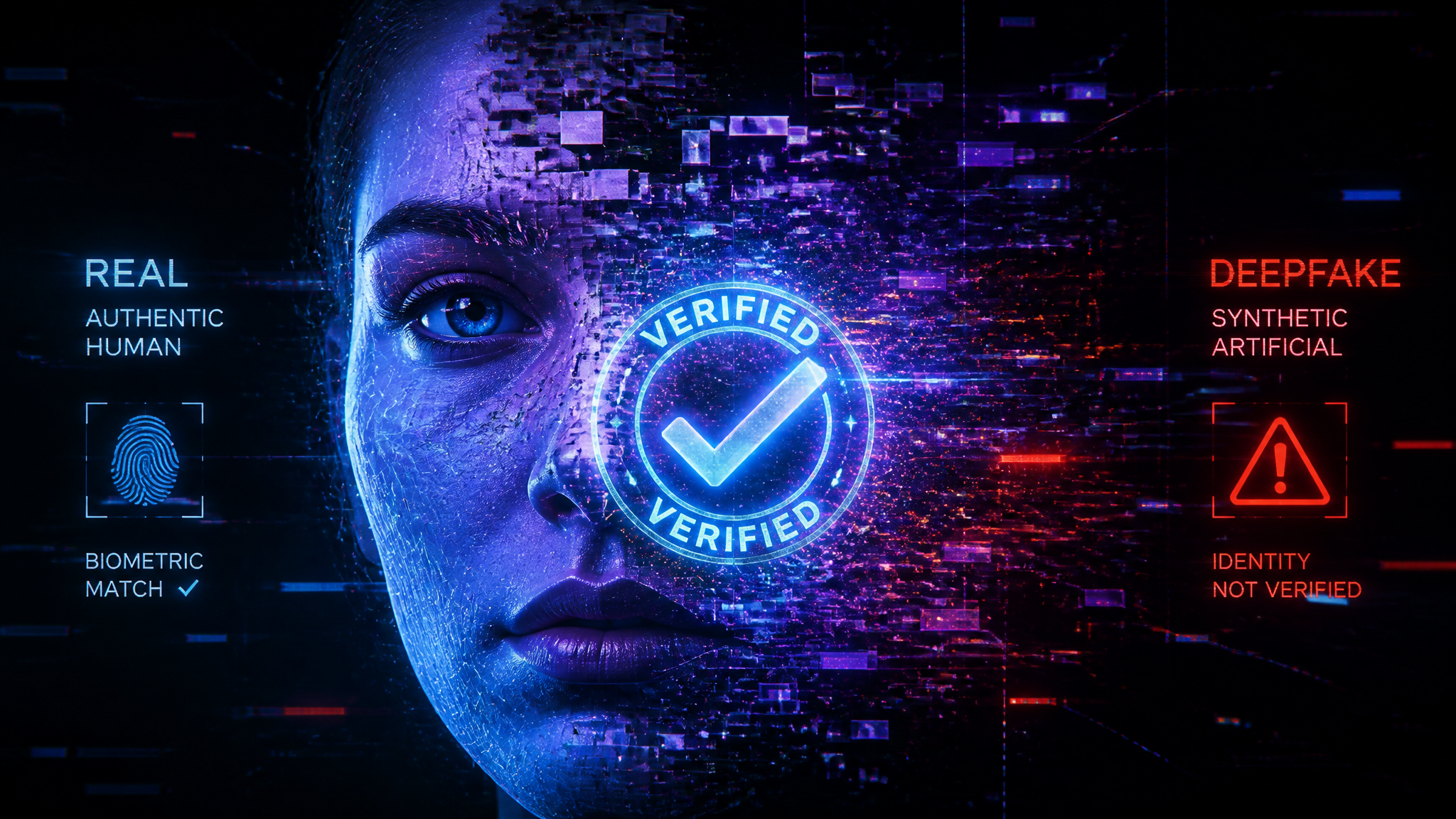
The Year Synthetic Media Became an Operational Crisis
In March 2026, the National Republican Senatorial Committee released a political advertisement featuring an AI-recreated version of Democratic Senate candidate James Talarico — a realistic simulation sustained for over a minute, the first of its kind in a major US political campaign. In the same election cycle, fake videos of missile strikes were erroneously verified as authentic by X's AI chatbot, Grok, before being debunked. By the time the 2026 US midterm campaigns reached their final weeks, synthetic media had transitioned from experimental novelty to industrial-scale campaign infrastructure.
These events did not occur in a governance vacuum. The EU AI Act's mandatory disclosure requirements for AI-generated content entered force on 2 August 2026. India amended its IT Rules to define "Synthetically Generated Information" and impose strict labelling and takedown obligations on major platforms. Thirty-one US states had enacted laws regulating election-related deepfakes by early 2026. The C2PA (Coalition for Content Provenance and Authenticity) standard reached version 2.3/2.4, with production-scale adoption across major camera manufacturers, AI labs, and social platforms.
And yet the information environment of 2026 is, by most measures, more contested than at any previous point in the digital era. Understanding why — and what the emerging technical and regulatory infrastructure can and cannot achieve — requires a clear-eyed examination of the provenance problem at the heart of information integrity.
The Liar's Dividend: Why Detection Is Not Enough
The conventional framing of the deepfake problem focuses on detection: can we build AI systems capable of identifying synthetic media reliably enough to prevent its spread? This framing, while intuitive, misses the most significant threat that synthetic media poses to information integrity.
The "liar's dividend" — a concept that has moved from academic literature into mainstream policy discourse in 2026 — describes the phenomenon whereby the mere existence of synthetic media allows bad actors to dismiss authentic evidence as fabricated. A politician caught on camera making a damaging statement can now claim the footage is a deepfake. A journalist presenting documentary evidence of wrongdoing faces the counter-claim that the evidence has been manipulated. The epistemic damage is not limited to the specific instances where synthetic media is deployed; it extends to the entire category of digital evidence.
The liar's dividend is the deepfake era's most insidious contribution to public discourse: the mere existence of synthetic media allows bad actors to dismiss authentic evidence as fabricated, poisoning the epistemic commons.
This insight has driven a fundamental shift in the technical approach to information integrity. The focus has moved from detection — identifying what is fake — to provenance — verifying what is real. The distinction is not merely semantic. Detection is inherently reactive and faces an adversarial arms race: as detection systems improve, generation systems adapt. Provenance is proactive: it establishes a verifiable chain of custody for authentic content, making manipulation detectable not by analysing the content itself but by identifying breaks in the provenance chain.
The Three Pillars of Verification: C2PA, Watermarking, and Classifiers
The technical infrastructure for information integrity in 2026 rests on three distinct pillars, each addressing different failure modes and appropriate for different contexts.
C2PA Content Credentials: Cryptographic Provenance
The C2PA standard, developed by a coalition including Adobe, Microsoft, Google, Intel, and the BBC, uses X.509 certificates and SHA-256 hashing to attach a tamper-evident metadata manifest to media files. This manifest records the creation device, editing history, and AI involvement — a cryptographically signed chain of custody that travels with the content.
The liar's dividend is the deepfake era's most insidious contribution to public discourse: the mere existence of synthetic media allows bad actors to dismiss authentic evidence as fabricated, poisoning the epistemic commons.
By 2026, C2PA adoption has reached production scale across the industry. Major camera manufacturers — Sony, Nikon, Leica, and Canon — have integrated C2PA-signing firmware into professional cameras, enabling journalists and documentary filmmakers to establish provenance at the moment of capture. Adobe's Creative Cloud, OpenAI's DALL·E 3 and Sora, Microsoft's M365, and Google's Imagen and Veo have integrated C2PA into their generation and editing pipelines. YouTube, TikTok, Meta, and LinkedIn have implemented support for reading and displaying these credentials.
The critical limitation of C2PA is that it verifies declarations, not truth. A C2PA manifest confirms what a device or tool declared at the time of signing — it does not independently verify that the declaration was accurate. A camera that has been compromised, or a signing key that has been stolen, can produce a C2PA manifest for fabricated content. C2PA is a powerful tool for establishing provenance in good-faith contexts; it is not a silver bullet against sophisticated adversaries.
C2PA Content Credentials do not detect fakes — they verify originals. The distinction is critical: provenance infrastructure shifts the burden of proof from the victim of manipulation to the manipulator.
Invisible Watermarking: Persistent Signal Embedding
Unlike metadata, which travels with a file and can be stripped during processing, invisible watermarks are embedded directly into the content itself — into the pixels of an image, the waveforms of audio, or the token patterns of text. They are designed to survive routine modifications: compression, cropping, re-encoding, and format conversion.
Google's SynthID is the most prominent implementation, deployed across images, video, audio, and text generated by Google's AI systems. The technical approach varies by modality: for images, imperceptible pixel-level modifications; for audio, inaudible frequency-domain signals; for text, statistical patterns in token selection that are invisible to human readers but detectable by trained classifiers.
The key advantage of watermarking over metadata is persistence. A C2PA manifest can be stripped by a social media platform's transcoding pipeline — a significant compliance gap that affects the practical utility of the standard. A well-designed watermark survives that transcoding. The key limitation is coverage: watermarking only works for content generated by systems that implement it. Open-source AI models, which are not subject to the same commercial pressures as major AI labs, typically do not implement watermarking — creating a significant gap in the verification ecosystem.
Trained Classifiers: The Last Line of Defence
For content that lacks both C2PA manifests and watermarks — which, given the prevalence of open-source generation tools, represents a substantial fraction of synthetic media in circulation — platforms rely on deep-learning classifiers trained to identify statistical patterns associated with AI generation.
These classifiers have improved significantly in recent years, but they remain probabilistic rather than deterministic. False positive rates of 5–15% are typical — meaning that a meaningful fraction of authentic content is flagged as potentially synthetic. In high-stakes contexts — journalism, legal proceedings, electoral communications — this error rate is unacceptably high. Classifiers are best understood as a triage tool: useful for identifying content that warrants closer examination, not as a definitive verdict on authenticity.
The Regulatory Landscape: Divergent Philosophies, Convergent Pressures
The governance of synthetic media in 2026 is characterised by significant jurisdictional divergence in philosophy, combined with convergent pressure toward mandatory disclosure and provenance requirements.
The European Union: Rights-Based and Precautionary
C2PA Content Credentials do not detect fakes — they verify originals. The distinction is critical: provenance infrastructure shifts the burden of proof from the victim of manipulation to the manipulator.
The EU's approach to synthetic media governance is embedded in two overlapping frameworks: the AI Act and the Digital Services Act (DSA). The AI Act's Article 50, which entered force on 2 August 2026, mandates machine-readable disclosure for AI-generated content — a requirement that effectively mandates C2PA or equivalent provenance infrastructure for AI systems operating in the EU market. The DSA imposes additional obligations on very large online platforms to assess and mitigate systemic risks, including the spread of synthetic disinformation.
The EU framework is explicitly rights-based: it frames information integrity as a prerequisite for democratic participation and treats the governance of synthetic media as a matter of public interest rather than purely commercial regulation. This framing has significant implications for enforcement: the EU is prepared to impose substantial fines on platforms that fail to meet their obligations, and the extraterritorial reach of EU regulation means that these obligations apply to global platforms serving EU users.
The United States: Fragmented and Market-Oriented
The US regulatory response to synthetic media has been characterised by federal gridlock and state-level experimentation. The Federal Election Commission has remained paralysed by partisan deadlock, failing to establish comprehensive rules for AI in political advertising. The FCC's prohibition on AI-generated voices in robocalls, while meaningful, does not extend to social media, television, or digital advertising — the primary vectors for political synthetic media.
In the absence of federal action, 31 states had enacted laws regulating election-related deepfakes by early 2026. These laws vary significantly in scope and approach: some impose disclosure requirements, others prohibit specific categories of synthetic content within defined timeframes before elections, and some — like Texas's — impose time-sensitive prohibitions on manipulated content. Constitutional challenges have complicated enforcement: courts have struck down portions of California's legislative attempts to regulate synthetic political speech on First Amendment grounds.
The federal legislative response has focused on voluntary standards and consensus-based approaches. The "Content Origin Protection and Integrity from Edited and Deepfaked Media Act of 2025" (COPIED Act) pushes for industry consensus on watermarking and provenance standards — an approach that reflects the US preference for market-oriented solutions but that critics argue is insufficient given the pace of synthetic media deployment.
India: Proactive Gatekeeping
India's 2026 amendments to its IT Rules represent the most prescriptive national approach to synthetic media governance outside the EU. The amendments define "Synthetically Generated Information" (SGI) and impose obligations on significant social media intermediaries to verify declarations of synthetic content before publication, implement labelling and metadata permanence, and adhere to accelerated takedown windows — as short as three hours for content posing public order threats and two hours for non-consensual intimate imagery.
The Indian approach has attracted criticism from civil liberties organisations, who argue that rapid, non-judicial takedown mandates risk over-censorship and could suppress legitimate satire and political commentary. The tension between information integrity and freedom of expression is not unique to India — it is a structural challenge for any regulatory framework that attempts to govern synthetic media — but India's approach makes the trade-off more explicit than most.
The Efficacy Gap: Why Governance Is Harder Than It Looks
Despite significant regulatory activity and technical progress, the information environment of 2026 remains deeply contested. Understanding why requires examining what researchers are calling the "efficacy gap" — the distance between the theoretical capabilities of verification infrastructure and its practical impact on information integrity.
Metadata Stripping
The most significant technical challenge facing C2PA adoption is metadata stripping. When content is uploaded to social media platforms, it typically undergoes transcoding — conversion to the platform's preferred format and resolution. This process frequently strips C2PA manifests, "orphaning" the provenance data and rendering the verification infrastructure ineffective. Platforms have committed to preserving C2PA metadata, but implementation is uneven and the technical challenges are non-trivial.
No single verification mechanism is sufficient. The industry has converged on a layered defence — provenance metadata, invisible watermarking, and trained classifiers — because each addresses failure modes the others cannot.
The "Good Enough" AI Problem
The primary threat to information integrity in 2026 is not forensically perfect synthetic media — it is "good enough" AI that thrives in low-attention environments. Research suggests that users are most susceptible to synthetic media not when it is indistinguishable from authentic content, but when it is plausible enough to confirm existing beliefs and is encountered in contexts where critical evaluation is not the default mode. Disclosure labels and provenance indicators are most effective when users are actively looking for them; in the ambient information environment of social media, they risk becoming background noise.
Regulatory Arbitrage
The jurisdictional divergence in synthetic media governance creates opportunities for regulatory arbitrage. Technology firms and malicious actors can exploit differences between regulatory regimes to evade detection or dilute compliance requirements. A synthetic media campaign that would violate EU disclosure requirements can be hosted in jurisdictions with weaker regulation and distributed globally through platforms that lack the technical infrastructure to enforce provenance requirements consistently.
No single verification mechanism is sufficient. The industry has converged on a layered defence — provenance metadata, invisible watermarking, and trained classifiers — because each addresses failure modes the others cannot.
The Newsroom Response: Verification in Practice
For journalists and news organisations, the synthetic media challenge has prompted significant investment in verification infrastructure and practice. The shift toward "source certification" — using forensic acquisition tools to capture and seal metadata at the moment of recording — represents a fundamental change in journalistic workflow.
The logic is straightforward: if authentic content can be cryptographically sealed at the moment of capture, the burden of proof shifts from the journalist (who must prove the content is real) to the bad actor (who must explain why the provenance chain is broken). This is a significant improvement over the current situation, in which the absence of provenance infrastructure means that any piece of digital evidence can be challenged as potentially synthetic.
Media literacy programmes are adapting to this new environment, with a growing emphasis on provenance literacy — the ability to read and interpret C2PA credentials, understand the limitations of AI detection tools, and apply appropriate scepticism to content that lacks verifiable provenance. This is a more sophisticated form of media literacy than the "check the source" heuristics of the previous decade, and it requires ongoing education as the technical landscape evolves.
Conclusion: The Provenance Imperative
The information integrity challenge of 2026 is not primarily a detection problem. Detection is necessary but insufficient: it is reactive, faces an adversarial arms race, and cannot address the liar's dividend. The fundamental challenge is provenance — establishing verifiable chains of custody for authentic content that make manipulation detectable and that shift the burden of proof from victims to perpetrators.
The technical infrastructure for provenance — C2PA Content Credentials, invisible watermarking, tiered verification frameworks — is sufficiently mature to support production-scale deployment. The regulatory infrastructure is developing, with the EU's rights-based approach providing the most comprehensive framework and other jurisdictions moving toward mandatory disclosure requirements at varying speeds.
The gap between technical capability and practical impact remains significant. Metadata stripping, the "good enough" AI problem, and regulatory arbitrage all limit the effectiveness of current approaches. Closing this gap requires not just technical refinement but governance coordination — international alignment on provenance standards, platform obligations to preserve metadata, and enforcement mechanisms with sufficient reach to prevent regulatory arbitrage.
The stakes are high. Information integrity is not merely a technical or regulatory challenge — it is a prerequisite for democratic governance, informed public discourse, and the basic epistemic conditions on which civil society depends. The provenance infrastructure being built in 2026 represents the most significant intervention in the information ecosystem since the invention of the printing press. Whether it will be sufficient depends on decisions being made now — in standards bodies, regulatory agencies, newsrooms, and platform engineering teams — about how seriously to treat the provenance imperative.