The new pressure on evidence
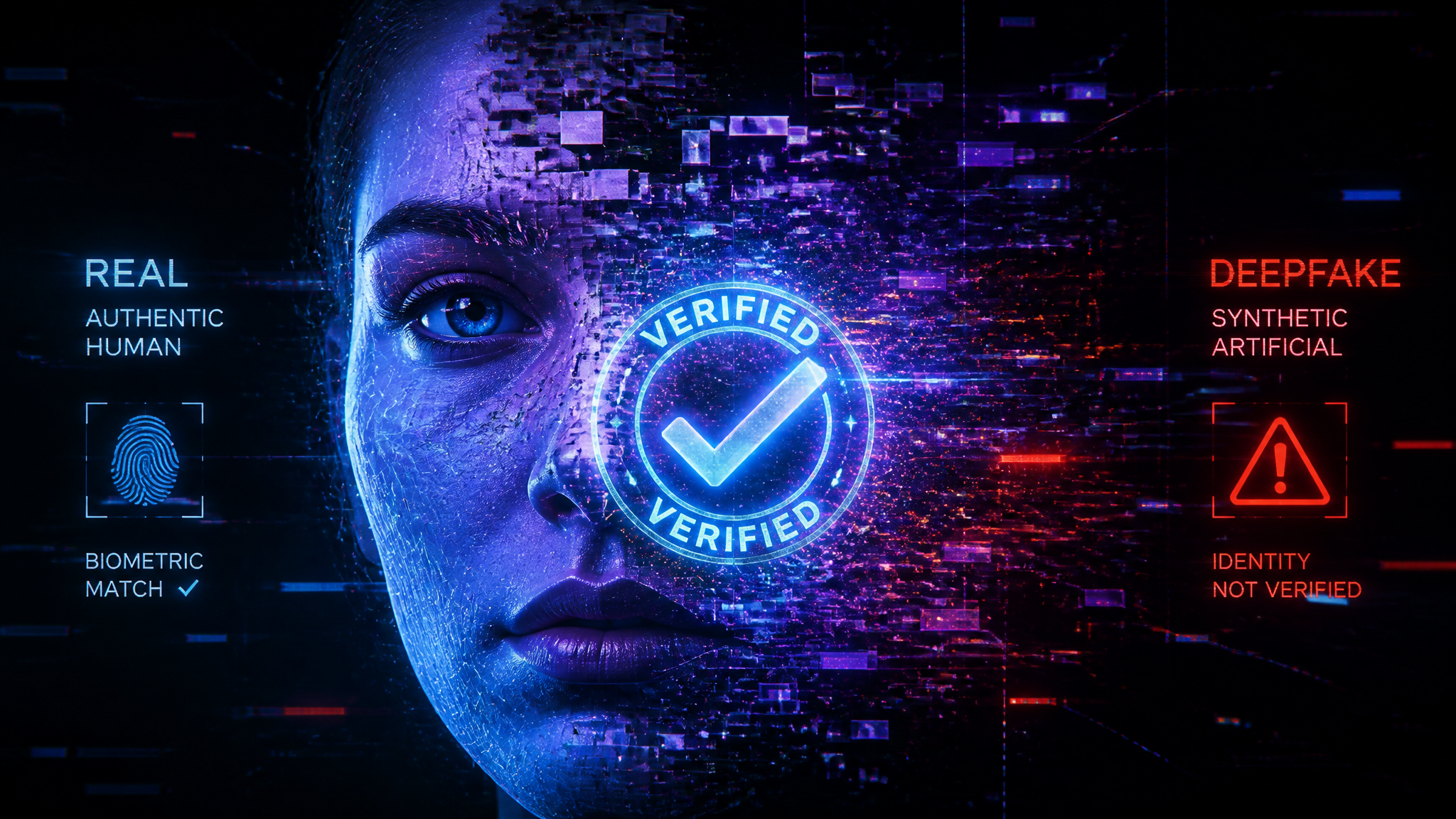
For much of the digital era, public debate has rested on an implicit assumption: that photographs, audio and video are imperfect yet broadly usable records of events. That assumption is weakening. Generative artificial intelligence has lowered the cost of producing convincing synthetic media, from fabricated speeches and cloned voices to photorealistic images and manipulated video. The result is not simply more false content. It is a more corrosive condition in which the status of evidence itself becomes contested.
That matters because information integrity is about more than whether a specific clip is authentic. It concerns whether citizens, journalists, election officials and courts can still establish what happened, who made a claim, and whether a piece of media has been altered. Deepfakes and other synthetic media intensify old problems of propaganda, fraud and political manipulation, but they also create a broader “liar’s dividend”: the ability of real wrongdoers to dismiss authentic evidence as fake.
The gravest risk is not that every fake will be believed, but that every real record becomes easier to dispute.
This is why the debate has shifted from simple content moderation to a wider architecture of trust. Provenance standards, watermarking, forensic detection, newsroom workflows and media literacy all matter. None is sufficient on its own.
What synthetic media changes
Manipulated media is not new. Political campaigns have long used selective editing, misleading captions and staged imagery. What has changed is accessibility, realism and speed. Systems that once required specialist visual-effects teams can now be used by non-experts. Audio cloning can imitate a familiar voice from brief samples. Images can be generated in endless variations for micro-targeted narratives. Video remains harder to fake convincingly at scale, but the technical threshold continues to fall.
The significance lies in volume as much as quality. Information ecosystems are overwhelmed not only by highly polished deceptions, but by a flood of plausible low-cost artefacts that consume attention and exploit emotional reaction. During crises, wars and elections, this can muddy the evidential waters long before professional verification catches up.
There is also a tactical asymmetry. A manipulator needs only a small window of virality to shape perception; verification usually takes longer. By the time a false clip is debunked, the initial impression may have spread across platforms, private messaging groups and partisan communities that do not encounter the correction with equal force.
Deepfakes and the politics of plausibility
Political synthetic media rarely needs to be flawless to be effective. In many cases, it need only confirm what a target audience is already disposed to believe. Researchers have long shown that disinformation succeeds not merely through deception, but through repetition, identity reinforcement and strategic ambiguity. Synthetic media fits neatly into that logic. A fake clip of a candidate making inflammatory remarks, or a cloned robocall discouraging turnout, can be useful even if some recipients suspect manipulation. Its purpose may be confusion, outrage or disengagement rather than belief in a literal sense.
Election periods are especially vulnerable because timing compresses institutional response. Voters may have little opportunity to absorb corrections before polling day. Officials face pressure to communicate rapidly without amplifying falsehoods. Journalists must decide whether to report on a viral synthetic clip at all, knowing that coverage can unintentionally widen its reach.
The gravest risk is not that every fake will be believed, but that every real record becomes easier to dispute.
Recent guidance from election-security and civil-society bodies reflects a sober reality: there is no single election-specific defence. Preparedness depends on pre-bunking likely narratives, fast coordination between officials and media, and clear channels for authentic campaign communication. It also depends on having baseline trust in institutions before a crisis arrives.
Disinformation is a system, not just a file format
It is tempting to frame synthetic media as a standalone technical threat. In practice, it is one component within wider disinformation systems. False or misleading content spreads through networks shaped by political incentives, algorithmic amplification, influencer behaviour and social grievance. A fabricated image does not acquire power from pixels alone; it gains traction because it is attached to a story, a tribe or a perceived injustice.
This broader view matters for policy. If institutions focus exclusively on detecting AI-generated artefacts, they may neglect mundane but decisive features of the information environment: coordinated posting, deceptive framing, bot-assisted distribution, selective clipping of authentic footage, and strategic use of old media presented as new. Some of the most consequential information manipulation contains no AI at all.
Synthetic media is best understood not as a novel category of deception, but as an accelerant for older methods of propaganda and fraud.
The operational question, then, is not simply “Was this made by AI?” but “What claim is being made, who is making it, what evidence supports it, and how is it being circulated?” Provenance and detection tools can help answer parts of that puzzle, but only within a broader investigative framework.
Why detection will remain imperfect
Public discussion often treats AI-content detection as if it might deliver a definitive authenticity test. That is unlikely. Detection systems face a familiar adversarial dynamic: as forensic tools improve, generation methods adapt to evade them. This does not make detection useless, but it does limit what it can reliably do, especially in high-stakes contexts.
False positives and false negatives are both politically costly. A detector that wrongly flags authentic footage could discredit real evidence or punish innocent users. One that misses sophisticated fakes can create false reassurance. Performance also varies across languages, compression levels, editing histories and media types. Re-uploads, screenshots, cropping and transcoding can degrade the signals many tools rely on.
Leading technical and standards bodies have therefore pushed a more cautious line: detection should be probabilistic, contextual and one input among many. It can support triage and prioritisation, particularly for platforms and newsrooms dealing with volume. But it cannot function as a universal courtroom-style verdict generator.
There is a further social risk. If the public is told that detection tools can solve the problem, trust may collapse when those tools inevitably fail. A more realistic goal is layered defence, combining forensic analysis with source evaluation, metadata checks, eyewitness corroboration and transparent editorial judgement.
Provenance and the promise of Content Credentials
If detection asks whether something looks fake, provenance asks a different question: where did this media come from, and what happened to it along the way? That distinction is increasingly important. Technical provenance frameworks aim to attach tamper-evident metadata to media files, recording details such as device origin, capture time, edits and publication history. The best-known effort is the Coalition for Content Provenance and Authenticity, whose specifications underpin the use of Content Credentials.
Synthetic media is best understood not as a novel category of deception, but as an accelerant for older methods of propaganda and fraud.
The appeal is obvious. A verifiable chain of custody can help publishers, creators and audiences distinguish original material from altered copies. For journalism, provenance could support stronger evidential standards from acquisition through publication. For the public, it offers a way to ask not merely whether a file appears plausible, but whether its source and editing history can be independently inspected.
Yet provenance has practical limits. It works best when many parts of the ecosystem adopt compatible standards: cameras, editing software, content-management systems, platforms and archives. Metadata can also be stripped when files are reposted or converted. And the absence of provenance does not prove falsity; much legitimate material is captured or shared in conditions where secure credentialing is unavailable.
Still, provenance may prove more durable than the search for perfect detection. It shifts the emphasis from hunting every forgery to establishing islands of verifiable authenticity. In an era of abundant manipulation, knowing what can be trusted may matter more than exhaustively cataloguing what cannot.
Watermarking and its limits
Watermarking is often grouped with provenance, but the two serve different purposes. Provenance seeks to document origin and edit history. Watermarking usually embeds a signal into content to indicate that it was generated or modified by an AI system. In principle, this can help platforms and downstream users label synthetic media or trace outputs from particular tools.
In practice, watermarking faces trade-offs. Visible watermarks are easy to notice but also easy to crop or obscure. Invisible watermarks are less intrusive but may be fragile under compression, editing or screenshotting. Open-source generators, malicious actors and cross-platform reposting further reduce coverage. A watermark is therefore best seen as a helpful cue when present, not a comprehensive solution when absent.
Policy interest in watermarking remains strong because it offers a relatively concrete intervention point. But its utility depends on realistic expectations. It can improve transparency for compliant actors and create friction against casual misuse. It is less effective against determined manipulators operating outside mainstream systems. As with detection, the lesson is cumulative defence rather than technological silver bullet.
What newsrooms need to do differently
Journalistic verification was already under strain before generative AI. User-generated content, conflict reporting and social-platform velocity had made visual forensics a routine part of reporting. Synthetic media now raises the threshold. Newsrooms need explicit procedures for authenticating audio, images and video before publication, especially when material is politically sensitive or emotionally explosive.
That means combining old and new disciplines: contacting original uploaders, checking contextual details such as weather, location and shadows, comparing with satellite or street-level imagery, inspecting metadata where available, and using forensic tools cautiously. It also means documenting uncertainty. In some cases the correct editorial decision is to delay publication until corroboration is secured, even at the cost of speed.
Equally important is communication with audiences. Trust does not come only from being right; it comes from showing how a judgement was reached. Explanatory verification notes, visible corrections and links to source material can make editorial reasoning legible. As provenance tools mature, news organisations may also use signed credentials to make authentic imagery easier to trace.
In a polluted information environment, verification is no longer a backstage craft; it is part of the public-facing value of journalism.
In a polluted information environment, verification is no longer a backstage craft; it is part of the public-facing value of journalism.
There is also a defensive need to protect news brands from impersonation. Synthetic presenters, cloned voices and spoofed visual identities can be used to mimic legitimate outlets. Editorial integrity increasingly includes technical brand integrity.
Media literacy without learned helplessness
Public education is often invoked as the answer to disinformation, but poorly designed media literacy can backfire. If people are told simply that anything could be fake, they may become generally distrustful and retreat into partisan heuristics. That serves manipulators as much as credulity does. The aim should be critical confidence, not nihilism.
Effective media literacy focuses on habits rather than slogans: pause before sharing; check whether multiple trusted outlets confirm a claim; distinguish a strong emotional reaction from strong evidence; look for the original source; examine whether a clip is complete or selectively edited; and understand that authenticity of a file does not guarantee truth of the accompanying narrative. An authentic video can still be miscaptioned.
Pre-bunking has shown promise in this regard. Rather than correcting falsehoods after exposure, it prepares audiences for common manipulation tactics in advance. This can include teaching people how impersonation, false context and conspiracy framing work. The goal is not to turn every citizen into a forensic analyst, but to make routine manipulation less frictionless.
How institutions should think about regulation
Governments are under pressure to respond, particularly around elections, non-consensual sexual imagery, fraud and child safety. Narrow, harms-based interventions are often more workable than broad attempts to define and ban “deepfakes” as a category. Requirements for political ad transparency, protections against deceptive AI robocalls, criminal penalties for malicious intimate-image abuse, and procedural duties on large platforms may all address tangible harms without relying on unstable technical definitions.
Yet regulation must be designed carefully. Overbroad authenticity rules can chill satire, anonymity, whistleblowing and documentary editing. Heavy-handed takedown mandates may encourage platforms to remove legitimate speech. Rules should therefore distinguish between disclosure, deception, consent and harm, and should leave room for journalistic, artistic and public-interest uses.
Standards-based approaches may prove especially valuable. Encouraging interoperable provenance infrastructure, supporting public-interest research access, and funding independent forensic capacity can strengthen the ecosystem without putting the state in the role of truth arbiter. The challenge is governance that improves accountability while preserving civil liberties.
From authenticity to resilience
The information integrity agenda is often described as a race between generators and detectors. That framing is too narrow. The deeper contest is between brittle and resilient information systems. Brittle systems depend on single points of trust and are easily destabilised by uncertainty. Resilient systems can absorb deception because they have redundant checks: professional verification, authenticated sources, interoperable provenance, institutional coordination and a public trained to ask better questions.
That is why the most promising path is cumulative rather than absolute. Provenance can increase the supply of verifiable media. Watermarking can improve transparency at the margins. Detection can assist triage. Newsrooms can raise evidential standards. Educators can teach practical scepticism. Election officials can prepare for synthetic incidents before they happen. None will eliminate deception. Together, they can reduce its effectiveness.
The age of synthetic media does not require abandoning faith in evidence. It requires updating the machinery by which evidence is established. In the years ahead, the central task will not be proving every falsehood false. It will be making authenticity, accountability and verification visible enough that truth remains actionable in public life.