The long prehistory of synthetic doubt
Concerns about manipulated media long predate the recent wave of generative AI. Photographs have been altered since the early days of image editing; audio and video have been selectively cut, recontextualised or fabricated for decades. What changed in the digital era was the speed, reach and social consequence of those manipulations. Cheap editing software, social platforms and mobile distribution steadily eroded the friction that once limited forgery.
By the early 2000s, researchers were already developing digital forensics techniques to detect tampering in images and videos. The underlying assumption was relatively stable: altered media existed, but authentic recordings still held privileged evidentiary weight. Journalists, courts and publics might argue over interpretation, yet the baseline credibility of a photograph or a clip remained largely intact.
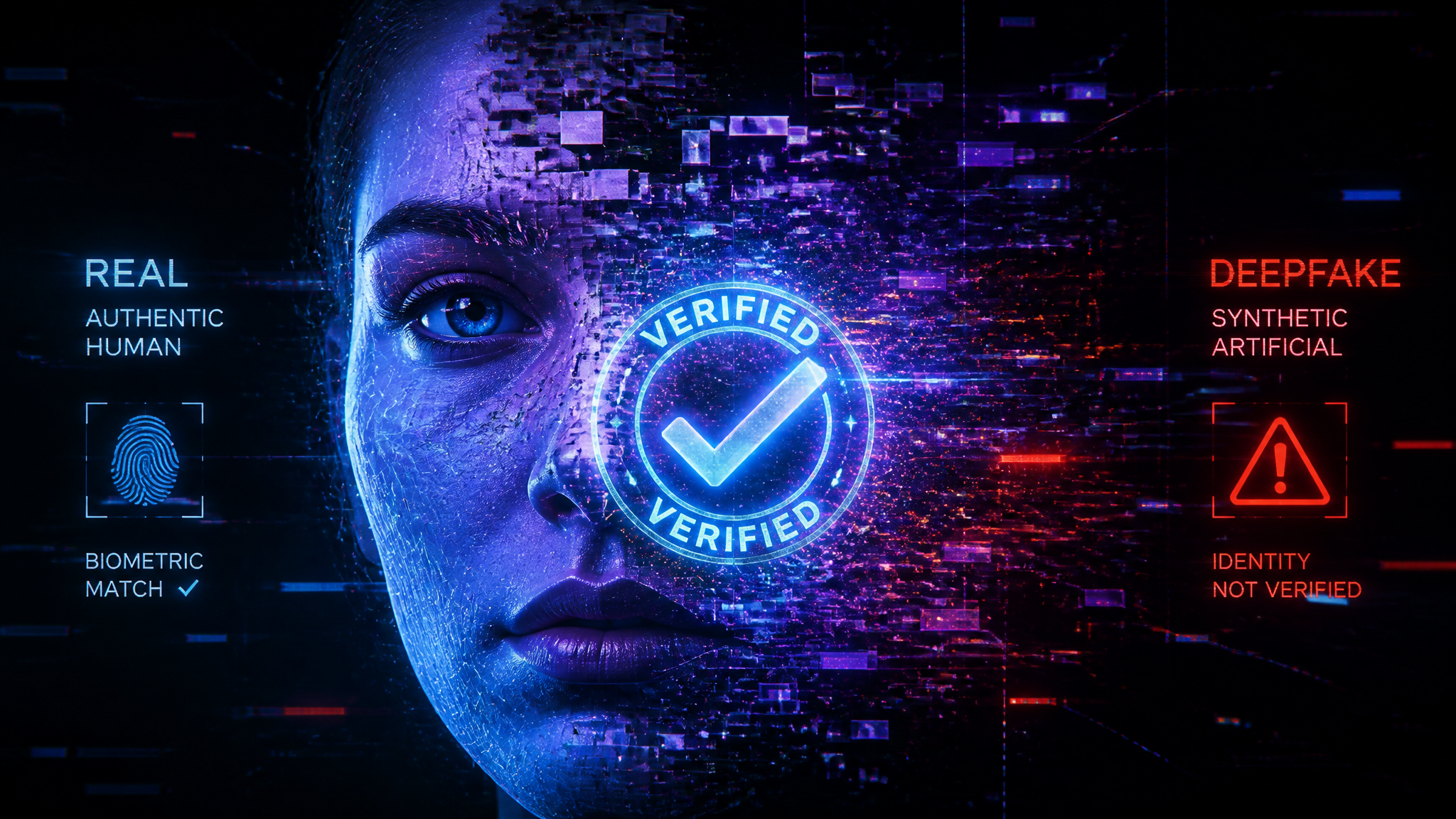
That assumption has weakened. The current information integrity problem is not simply that false media can circulate more easily. It is that the existence of convincing synthetic media has made authentic media easier to dispute. This shift lies at the heart of what later became known as the liar’s dividend: the strategic benefit gained by those who can dismiss real evidence as fake.
The central danger is no longer only that false evidence can be made persuasive, but that genuine evidence can be made negotiable.
2016 to 2017: a political ecosystem primed for manipulation
The mid-2010s exposed how vulnerable public discourse had become to networked disinformation. Investigations into online influence operations around major elections and referendums showed that manipulation did not require photorealistic forgeries to be effective. Misleading captions, selective edits, coordinated amplification and fabricated narratives often sufficed. The information environment was already unstable before deepfakes entered public vocabulary.
In 2017, researchers and online communities brought the term “deepfake” into common usage to describe synthetic video generated with deep learning methods, particularly face-swapping. Early examples were often crude, but they mattered because they signalled a new threshold: synthetic audiovisual deception was becoming more accessible outside specialist laboratories.
Even at this stage, many analysts warned against technological determinism. Political deception had never depended solely on technical sophistication. Audiences tend to believe content that confirms prior loyalties, and manipulators thrive where institutions are mistrusted. Deepfakes therefore entered an ecosystem already prepared to reward sensationalism, outrage and tribal confirmation.
2018 to 2019: the deepfake threat moves from fringe to policy agenda
By 2018, academic and policy attention sharpened. Researchers demonstrated rapid improvements in face synthesis and voice cloning, while lawmakers and civil society groups began to consider harms ranging from non-consensual sexual imagery to electoral manipulation and fraud. A key turning point came with the publication of research and policy analysis arguing that synthetic media posed not only a technical challenge but a governance problem.
The central danger is no longer only that false evidence can be made persuasive, but that genuine evidence can be made negotiable.
One of the most influential concerns was timing. A manipulated clip released just before an election, a diplomatic crisis or a violent incident could spread faster than fact-checkers or forensic analysts could respond. The harms, in other words, were not limited to whether a fake was eventually debunked. They included the acute window in which uncertainty itself could shape behaviour.
At the same time, scholars warned that panic could be counterproductive. While spectacular synthetic videos attracted headlines, simpler forms of manipulation remained more common and often more effective. Low-cost disinformation, deceptive editing and false attribution continued to do much of the day-to-day damage. The challenge was to build resilience without overstating any one tool or threat vector.
2019: the liar’s dividend enters the mainstream
The phrase “liar’s dividend”, developed in legal scholarship, captured a profound shift in the politics of evidence. Once convincing fakes are widely known to exist, public figures accused by authentic recordings can claim fabrication. Even if the denial is implausible, it can buy time, muddy coverage and reinforce partisan doubt. The dividend is paid not only when people fully accept the denial, but when they conclude that certainty is impossible.
This mattered enormously for journalism and democratic accountability. Newsrooms had long treated video and audio as powerful corroborative material. But when audiences encounter repeated warnings about synthetic media, some begin to apply those warnings indiscriminately. That creates a paradox: public education about manipulation is necessary, yet broad awareness of deepfakes can also weaken confidence in real reporting if not paired with stronger evidentiary practices.
The liar’s dividend also broadened the debate from detection to institutional trust. A society cannot rely on forensic analysis alone if citizens no longer trust the organisations presenting the analysis. Information integrity therefore sits at the intersection of technical verification, editorial transparency and civic culture.
Deepfakes did not invent the politics of denial; they industrialised a new excuse for it.
2020: election integrity and the limits of takedown logic
Election cycles around the world turned synthetic and manipulated media into a live governance issue. Platforms introduced or refined policies on manipulated media, while election officials, journalists and researchers prepared for scenarios in which fabricated clips might target candidates, voting procedures or public confidence in results. Yet experience showed the limits of a simple takedown approach.
First, harmful content does not always violate obvious rules. A synthetic clip may be framed as satire, commentary or remix, while still shaping public impressions. Secondly, removal after virality often comes too late. Thirdly, platforms are only one part of the chain: private messaging apps, fringe forums and local networks can distribute deceptive media beyond public scrutiny. Finally, false narratives can survive even after the original media is taken down, because screenshots, paraphrases and partisan retellings preserve the claim.
This period also highlighted the need for layered responses. Rapid rebuttal, contextual labelling, pre-bunking, official communication channels and trusted local journalism all proved more important than any single enforcement mechanism. Information integrity began to look less like a content moderation problem alone and more like a systems problem spanning institutions, media and public behaviour.
2021: provenance emerges as a parallel strategy
Deepfakes did not invent the politics of denial; they industrialised a new excuse for it.
If detection asks whether a piece of content is fake, provenance asks a different question: where did this file come from, and what happened to it along the way? In 2021, the Coalition for Content Provenance and Authenticity, or C2PA, published technical specifications designed to attach verifiable metadata to digital media. The goal was not to guarantee truth in any philosophical sense, but to create a chain of custody that could help users and publishers assess origin and edits.
This approach reflected a practical insight. Detection tools are locked in an adversarial race: as generators improve, detectors often degrade. Provenance tries to change the frame by making trustworthy origin information easier to preserve and inspect. Under related initiatives often presented to users as content credentials, creators and publishers can disclose when media was captured, edited or generated, provided the information remains attached across systems.
Still, provenance is no silver bullet. Metadata can be stripped; not all devices or platforms preserve it; and deceptive actors are the least likely to adopt voluntary standards. Provenance works best when it is integrated across cameras, editing software, publishing systems and platforms, and when users understand what the signals mean. It is an infrastructure play, not a magic stamp of truth.
2022: generative AI expands the scale of synthetic media
The release of more capable text-to-image, audio and video generation systems in 2022 dramatically widened access to synthetic media production. What had required specialised expertise increasingly became available through consumer-facing interfaces. This did not merely increase the volume of potentially deceptive content. It lowered the cost of experimentation, memeification and iterative manipulation.
For information integrity, the implications were mixed. On one hand, much generated content was benign, playful or clearly artistic. On the other, the boundary between expressive creation and deceptive impersonation grew harder to govern at scale. Voice cloning raised new risks for fraud and political spoofing. Synthetic images of breaking events could appear online before journalists reached the scene. The burden on verification teams increased accordingly.
Researchers and standards bodies responded by doubling down on watermarking and disclosure efforts. Yet watermarking, too, faces constraints. Robust watermarks can be degraded by cropping, compression or transformation; visible marks can be removed or may not travel with reposts; and cryptographic approaches work only where tools and platforms support them. Watermarking is useful, especially as part of provenance, but it is not a stand-alone answer.
2023: detection disappoints, verification adapts
By 2023, it had become clearer that AI-content detection was necessary but unreliable when treated as an oracle. Detectors often perform unevenly across languages, formats and generation methods. They can produce false positives on authentic content and false negatives on novel synthetic outputs. Open research repeatedly suggested that no universal detector could be expected to remain durable in the face of rapid model change.
This has practical consequences for newsrooms, courts and election administrators. A detector score may be one input into a broader assessment, but it should rarely be the sole basis for a consequential judgement. Verification increasingly depends on combining methods: reverse image search, geolocation, source interviews, temporal analysis, metadata inspection, platform tracing and forensic review. In many cases, old-fashioned reporting remains the most decisive tool.
News organisations have therefore begun to formalise verification workflows for the synthetic era. Some preserve original files and transmission paths more rigorously; some document how visual investigations are conducted; some train reporters to assess manipulated audio and video before publication. The most significant change may be cultural: verification is no longer a niche desk function. It is becoming a core newsroom competency.
In the synthetic era, trust is built less by claiming certainty than by showing the work behind it.
In the synthetic era, trust is built less by claiming certainty than by showing the work behind it.
2024: elections become the proving ground
The vast election calendar of 2024 turned information integrity into an operational stress test. Around the world, researchers tracked synthetic audio impersonations, AI-generated campaign imagery, misleading clips presented out of context and renewed attempts to cast doubt on authentic material. The public conversation often focused on spectacular deepfakes, but much of the real impact still came from hybrid tactics: a synthetic asset embedded in a broader disinformation campaign, amplified by partisan networks and informal influencers.
Several lessons emerged. First, disclosure matters more when it is timely, standardised and legible to ordinary users. Secondly, official institutions need pre-established channels for rapidly authenticating legitimate communications. Thirdly, local journalists and civil society monitors remain indispensable because manipulative content is often tailored to specific linguistic and political contexts. Fourthly, resilience depends not only on catching fakes but on preventing overreaction to uncertainty.
Election administrators also face a delicate balancing act. Overstating the prevalence of AI deception can accidentally empower the liar’s dividend by encouraging blanket scepticism. Understating it, however, leaves institutions looking complacent. The most credible posture has been sober specificity: identify concrete risks, publish clear verification guidance and avoid turning every rumour into a national drama.
What media literacy can and cannot do
Media literacy is frequently invoked as the long-run answer to information disorder. Properly understood, it is indispensable. Citizens need practical habits for evaluating sources, checking context, pausing before sharing and distinguishing evidentiary claims from emotional cues. They also need a basic grasp of how synthetic media works, including why authenticity can no longer be inferred from realism alone.
But media literacy has limits. It cannot compensate for weak institutions, opaque algorithms or exhausted local news ecosystems. Nor should the burden of systemic manipulation be shifted entirely onto individuals. In highly polarised environments, people do not process information as isolated rational consumers; they interpret it through identity, trust networks and social pressure. Teaching critical viewing skills helps, but it does not abolish motivated reasoning.
The most useful literacy efforts are therefore concrete rather than abstract. They teach people to ask where content first appeared, whether original sources are available, whether reputable outlets have independently verified it and whether provenance or editing disclosures are present. They also teach a subtler lesson: uncertainty is sometimes honest. Refusing to share unverified dramatic content is itself a civic act.
The next phase of information integrity
The future of information integrity will be shaped by an uneasy combination of standards, institutional practice and public norms. Provenance frameworks such as C2PA may gradually strengthen the traceability of digital media, especially if camera makers, publishers and platforms preserve credentials by default. Watermarking may prove valuable in narrower contexts, particularly where generation tools embed durable signals. Detection will continue to improve in some domains, but it is unlikely to deliver a permanent technical victory.
More important is whether institutions can rebuild procedural trust. Newsrooms that show their verification methods, election bodies that communicate quickly and consistently, and educators that teach evidentiary reasoning rather than generic suspicion all contribute to a healthier information environment. The strategic objective is not to eliminate deception, which is impossible. It is to raise the cost of manipulation while preserving confidence in authentic evidence.
That is the decisive challenge. Information integrity is not a niche issue for technologists or fact-checkers; it is now part of the constitutional plumbing of democratic life. Societies need ways to authenticate the real without becoming gullible, and ways to remain sceptical without becoming nihilistic. The timeline of deepfakes and synthetic media shows how quickly the balance can tip. The next chapter will depend on whether trust can be engineered, explained and earned in tandem.