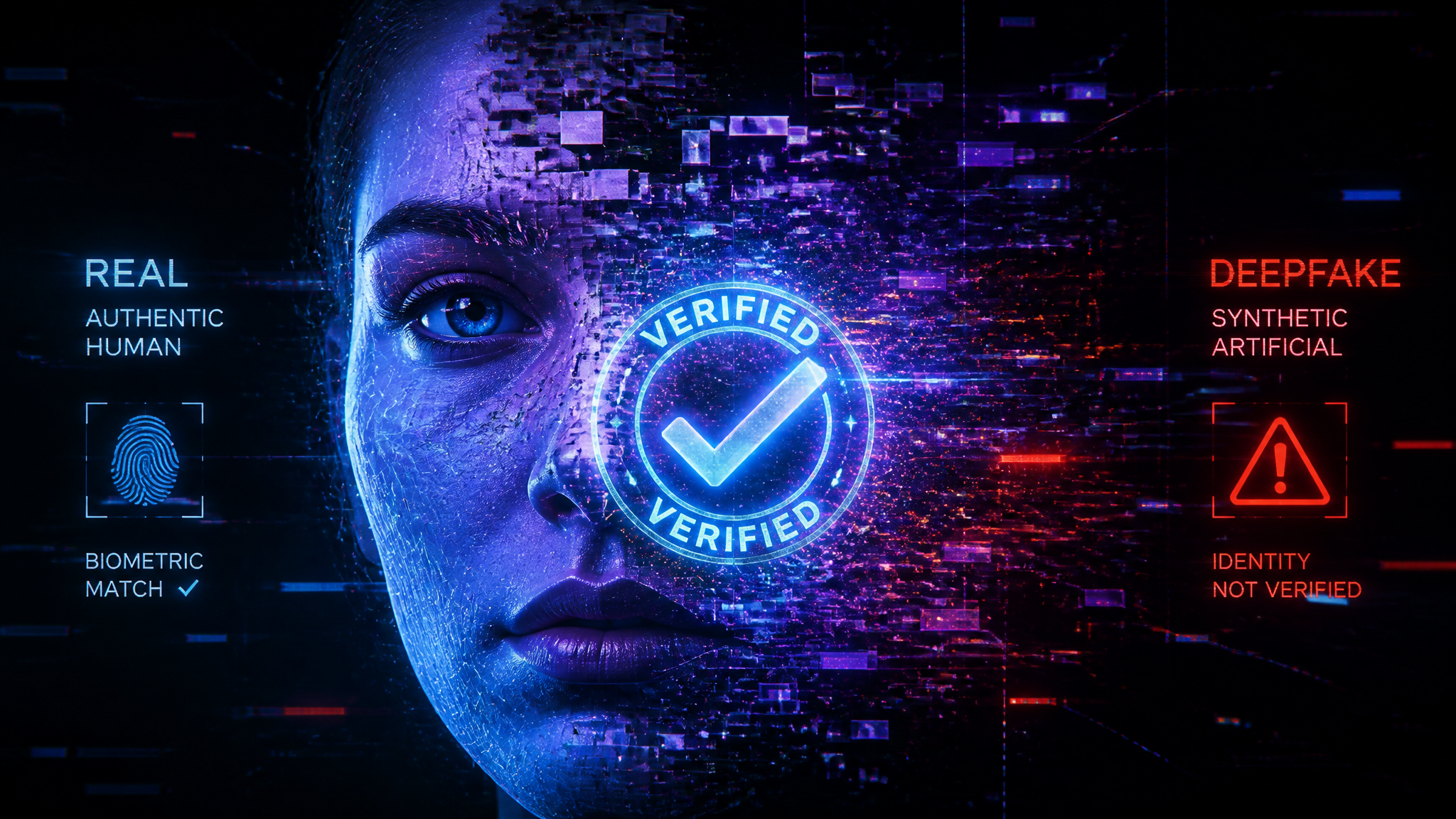
Trust in digital media has become a strangely brittle thing. For two decades the public was taught to worry about manipulation in photographs and video. Now the problem is broader and more disorienting. Cheap generative systems can produce convincing images, cloned voices and fabricated scenes at industrial scale, while ordinary editing software can alter authentic material without leaving obvious visible traces. In that environment, one response has been to ask not only whether a picture looks real, but whether its history can be inspected. This is the ambition behind the emerging provenance stack: a set of technical standards, cryptographic methods and workflow practices designed to attach durable records of origin and editing history to digital files.
Its best-known public expression is Content Credentials, a label applied to provenance information based largely on the standard developed by the Coalition for Content Provenance and Authenticity, or C2PA. The premise is straightforward. A photo, video or audio file can carry signed metadata stating where it came from, what device or software handled it, and what edits were performed. If that record is cryptographically bound to the file, later tampering should be detectable. In principle, viewers, publishers and platforms can inspect the credential and make a more informed judgement about authenticity.
Why provenance has become newly urgent
The internet has always had problems of attribution and context collapse. Images are copied, recompressed, screenshotted and reposted until they are detached from source. But generative AI has intensified the old weaknesses. NIST, in its report on reducing risks from synthetic content, notes that technical interventions can help users assess provenance and manipulation, even if they cannot settle every question of truth. The OECD has similarly argued that AI-generated content creates risks not only of deception but of evidentiary confusion: authentic material becomes easier to dismiss and fabricated material easier to circulate.
This matters acutely in journalism, conflict reporting, elections and emergency response. If a newsroom cannot demonstrate where an image came from, audiences may discount it. If a hostile actor can strip context from a genuine file and recirculate it with a false caption, the harm does not depend on pixel-level forgery. Provenance systems therefore aim to strengthen the chain of custody around media objects, creating a machinereadable account of how a file moved from capture through publication.
Provenance does not tell viewers what to think about an image; it tells them what can be known about how the file came to exist.
What C2PA actually is
C2PA is not a single app or watermark. It is a technical specification for attaching assertions to media and securing them with cryptographic signatures. Those assertions can include the identity of the producer, the time of capture, the device or software involved, and an edit history. The specification describes how these claims are packaged into a manifest and signed, often using public key infrastructure, so that later verification can determine whether the manifest is intact and whether the signer is trusted.
A central feature is tamper evidence. The system is not built to make files unalterable; digital files remain easy to copy and modify. Instead it seeks to make unauthorised alteration easier to detect. If a file is changed after signing, the relationship between the content and the credential should fail verification. This is a familiar logic in cybersecurity and document signing. The novelty lies in applying it to everyday media production at scale.
The standard also allows for ingredient tracking. A composed image or edited video can reference source assets and indicate transformations made along the way. In a well-configured workflow, a user might see that a picture was captured on a particular camera, cropped in editing software, had global colour adjustments applied, and was then exported for publication. Such information does not answer every epistemic question, but it is more informative than the near vacuum that often surrounds files online.
Provenance does not tell viewers what to think about an image; it tells them what can be known about how the file came to exist.
How Content Credentials are meant to work in practice
Public-facing implementations present this machinery in a simpler form. A user might click an icon or label attached to an image and view a summary card: who created it, whether AI tools were used, and which edits were declared. Underneath, verification software checks the signature chain and reports whether the manifest is valid, whether some information has been removed, or whether no credential is present at all.
The strongest version of the model begins at capture. If a camera or phone can sign an image at the moment it is taken, provenance starts before a file reaches the editing stage. Later software can append additional signed assertions as the asset is processed. This creates a layered record rather than a single claim made at the end of production. Camera-side signing is particularly important because a file generated wholly in software can otherwise imitate the appearance of a camera original while lacking any secure capture record.
That is why hardware support matters. Several camera makers have moved towards capture-stage authenticity features, and news organisations have shown interest in workflows where photographs can be verified from source. Reuters said in early 2024 that it would begin making digitally verifiable images available to customers, reflecting a wider shift in agency thinking: provenance is no longer just a laboratory concept but part of operational publishing.
The institutions pushing adoption
The ecosystem behind C2PA is broad, which is both a strength and a necessity. Standards of this kind have little value if they remain siloed inside one tool chain. Adoption has therefore spread across software developers, camera manufacturers, publishers and standards bodies. The Content Authenticity Initiative has been a prominent public advocate, framing credentials as a way to surface creation history to ordinary users. Broadcasters and public-interest media institutions have joined the discussion because they face direct reputational risk from fabricated or unattributed material.
The BBC has reported on industry efforts to counter disinformation through standards-based provenance, and the European Broadcasting Union has issued guidance on deepfakes and synthetic media that treats provenance as one useful instrument among several. In policy circles, the EU’s wider debate over AI governance has also increased interest in traceability and labelling, though legislative measures and technical provenance are not the same thing. Law can require disclosure in some contexts; cryptographic metadata provides one possible means of implementing and verifying such disclosure.
Why cryptographic signatures matter more than ordinary metadata
Digital files have long carried metadata through formats such as EXIF and IPTC. These fields can indicate camera settings, timestamps, geolocation and captions. They are useful but fragile. They can be altered with little effort, and many platforms remove them altogether during upload or recompression. Provenance advocates therefore emphasise signed assertions rather than plain text fields. A cryptographic signature binds claims to specific content hashes and to a certificate issued to a recognised entity. That makes forgery harder and post hoc editing more visible.
This distinction is easy to miss. Much popular discussion treats provenance as if it were merely more metadata. In fact the significant step is not extra description but verifiable integrity. An unsigned note saying “captured on this camera” is just a note. A signed claim tied to device-held keys and a certificate chain offers a materially different kind of evidence. It still depends on the trustworthiness of the issuing system, but it is far more resistant to silent alteration.
A missing credential is not proof of deception, just as the presence of metadata is not proof that what appears in frame is true.
The strongest version of the system begins at capture, where a device can sign a file at the moment of creation and bind that claim to hardware-held keys.
What provenance can and cannot prove
This is the point at which enthusiasm often outruns reality. Provenance can help answer how a file travelled; it does not by itself establish whether the depicted event is true. A signed image may faithfully document a staged scene, a misleading crop or a false caption added elsewhere. Conversely, an entirely authentic image may circulate without any credential because it passed through a platform that stripped metadata, because it was screenshotted, or because it originated before such systems existed.
In other words, provenance is evidence, not verdict. It can narrow uncertainty by showing that a file was captured on a given device and edited in declared ways. It can reveal that an image was generated or modified using AI tools where participating software records that fact. But it cannot see outside the frame, infer motives, or guarantee that every transformation was honestly disclosed. Its role is closer to chain-of-custody documentation than to a universal lie detector.
The metadata stripping problem
The biggest practical weakness is mundane: metadata is often lost in transit. Social platforms and messaging services routinely resize, transcode or otherwise process uploaded media. In doing so they may remove embedded provenance data, whether for compatibility, storage efficiency or product design reasons. Once stripped, the credential no longer travels with the file unless the platform preserves it or links to an external record.
This creates a paradox. Provenance is most useful where content spreads fastest and context is weakest, yet those are often the environments least hospitable to preserving rich metadata. The C2PA specification includes methods intended to make manifests portable and references durable, but no technical standard can force every intermediary to retain them. Some advocates therefore support redundant approaches, including cloud-hosted manifests, sidecar files and visible indicators. Each comes with trade-offs in usability, privacy and persistence.
Even when metadata is preserved, screenshots pose a familiar challenge. A screenshot of a credentialed image is a new file, typically severed from the original signed record. Watermarking can sometimes complement provenance, but visible marks are intrusive and can be cropped, while robust invisible watermarking remains technically and politically contested. The result is that provenance works best in cooperative ecosystems and degrades sharply in the wild.
Adoption in journalism and documentary workflows
News organisations have particular reasons to care. For decades, agencies developed internal methods to preserve trust: strict editing rules, archive systems, transmission logs and verification desks. C2PA-style credentials extend that logic into the file itself. If readers can inspect a photo’s source and declared edit history, the newsroom gains a portable way to expose some of its evidentiary process.
That said, journalism has always relied on layered verification rather than any single signal. Editors assess source reputation, corroborating witnesses, geolocation, shadow analysis, weather data and local knowledge. Provenance metadata can strengthen these checks, especially for staff-captured material, but it does not replace them. For freelancers, citizen witnesses and historical archives, the record may be incomplete or absent. A publication that mistakes credential presence for total reliability would simply swap one naivety for another.
The politics of trust and the risk of overclaim
A missing credential is not proof of deception, just as the presence of metadata is not proof that what appears in frame is true.
There is also a social problem that no standard can solve. Public mistrust is not caused only by technical uncertainty. It is shaped by polarisation, institutional legitimacy and deliberate campaigns to cast doubt on authentic evidence. In such an environment, better provenance may help conscientious users while doing little to persuade those committed to denial. The danger is the emergence of a new rhetoric of certainty around signed media, followed by backlash when edge cases and failures inevitably appear.
Systems designers are aware of this, which is why many careful descriptions avoid claiming to prove reality. The more credible framing is narrower: provenance can make digital media more accountable, more inspectable and harder to alter without detection. Those are meaningful gains. But they belong to the realm of infrastructure, not salvation.
Privacy, anonymity and edge cases
Another tension concerns privacy. News photography, human-rights documentation and whistleblowing may require anonymity or the suppression of location data. A provenance system that routinely discloses device identity, place and time could expose vulnerable sources. The C2PA framework allows selective disclosure and redaction, but those options complicate the message to users. If some fields are hidden for legitimate reasons, audiences need to understand that incompleteness does not equal fraud.
There are further edge cases. Composite documentary work may legitimately combine multiple exposures. Audio clean-up can be editorially acceptable without changing substance. AI tools may be used for minor assistance, such as masking or transcription, rather than fabrication. Provenance systems must therefore record nuance without collapsing into incomprehensible technical logs. The challenge is not just to capture data, but to present it intelligibly enough that people can distinguish routine editing from manipulative synthesis.
Where the provenance stack is likely to matter most
The immediate value is likely to be highest in professional pipelines where incentives align: cameras that sign at capture, editing tools that preserve manifests, agencies that publish credentials, and platforms that display them. In these settings provenance can reduce ambiguity, speed verification and provide better archival integrity. It may also prove useful in legal and administrative contexts, where chain-of-custody evidence already carries weight.
Its benefits will be weaker in open social environments unless major intermediaries preserve and surface credentials as a matter of routine. That remains uncertain. Yet even partial adoption could shape expectations. If audiences become accustomed to inspectable media history in high-trust contexts, the absence of such history elsewhere may become one more clue to be weighed, though never a conclusive one.
A modest but important repair
The provenances now being built into cameras, software and newsroom workflows represent a serious attempt to repair one layer of the internet’s evidentiary breakdown. They do not restore a lost age of certainty, because no such age existed. Images have always required context; institutions have always mediated credibility. What cryptographic provenance offers is something more practical: a way to bind at least some claims about authorship and alteration to the file itself, and to make later tampering more visible.
That may sound modest beside the scale of the trust crisis. It is. But modest infrastructure changes are often the ones that endure. If provenance standards such as C2PA succeed, it will not be because they solved truth. It will be because they improved record-keeping for a medium that has long lacked it, and because enough institutions decided that verifiable history is better than none at all.