For two decades, discussion of space infrastructure has been dominated by transport. The drama lay in launch cadence, reusable boosters and ever cheaper access to orbit. That story was real, and it changed the economics of putting metal in the sky. But by mid-2026 it is no longer the most revealing way to understand what comes next. The harder question is what happens after arrival: who keeps orbital assets healthy, who moves them when circumstances change, who extends their useful life, and who removes them when they become dangerous.
This is a less glamorous layer of infrastructure, but a more durable one. Orbital habitats, power platforms, relay constellations and scientific stations all presume a world in which maintenance is possible. On Earth, no serious investor values a port, railway or power grid as if every malfunction required full replacement. Yet much of space policy still carries that logic. Satellites are launched with finite fuel, limited options for inspection, and only partial plans for end-of-life disposal. The result is a strange economy in which increasingly valuable assets remain operationally brittle.
From launch problem to upkeep problem
That shift matters because the composition of orbital value is changing. A communications node, an Earth-observation platform, a navigation payload or a station module is not just a discrete object. It is part of a network whose utility depends on continuity. A relay that drifts, a failed docking interface, an ageing power bus or a stuck solar array can degrade a wider system. As infrastructure becomes more interdependent, maintenance stops being an optional afterthought and becomes part of core system design.
The old assumption was simple: build for resilience, launch, operate, then deorbit or abandon. That model made sense when launch was scarce and spacecraft were relatively isolated. It makes less sense in crowded low Earth orbit and in the cislunar environment now being prepared for sustained operations. The crucial infrastructure layer is no longer the rocket but the mechanic.
Why servicing is economically different from replacement
In-space servicing changes economics in three ways. First, it can preserve expensive assets whose replacement would involve not just manufacturing and launch but also regulatory delay, insurance renegotiation and interruption to service. Secondly, it creates option value. A spacecraft that can be refuelled or repositioned is more adaptable to shifts in demand, interference, congestion or mission redesign. Thirdly, it alters depreciation. If a platform is maintainable, its lifetime becomes a managed variable rather than a hard constraint set on the launch pad.
These are familiar principles in terrestrial infrastructure finance. What is unusual in orbit is the thinness of the ecosystem around them. Inspection craft, standardised interfaces, trusted rendezvous procedures, spare-part logistics, legal clarity over intervention and a market for underwriting servicing risks all remain immature. Without those layers, orbital assets still behave like disposable machinery even when their strategic value would justify ongoing care.
An orbital asset that cannot be inspected or moved on demand is closer to fixed waste than productive capital.
The debris issue is really an asset-management issue
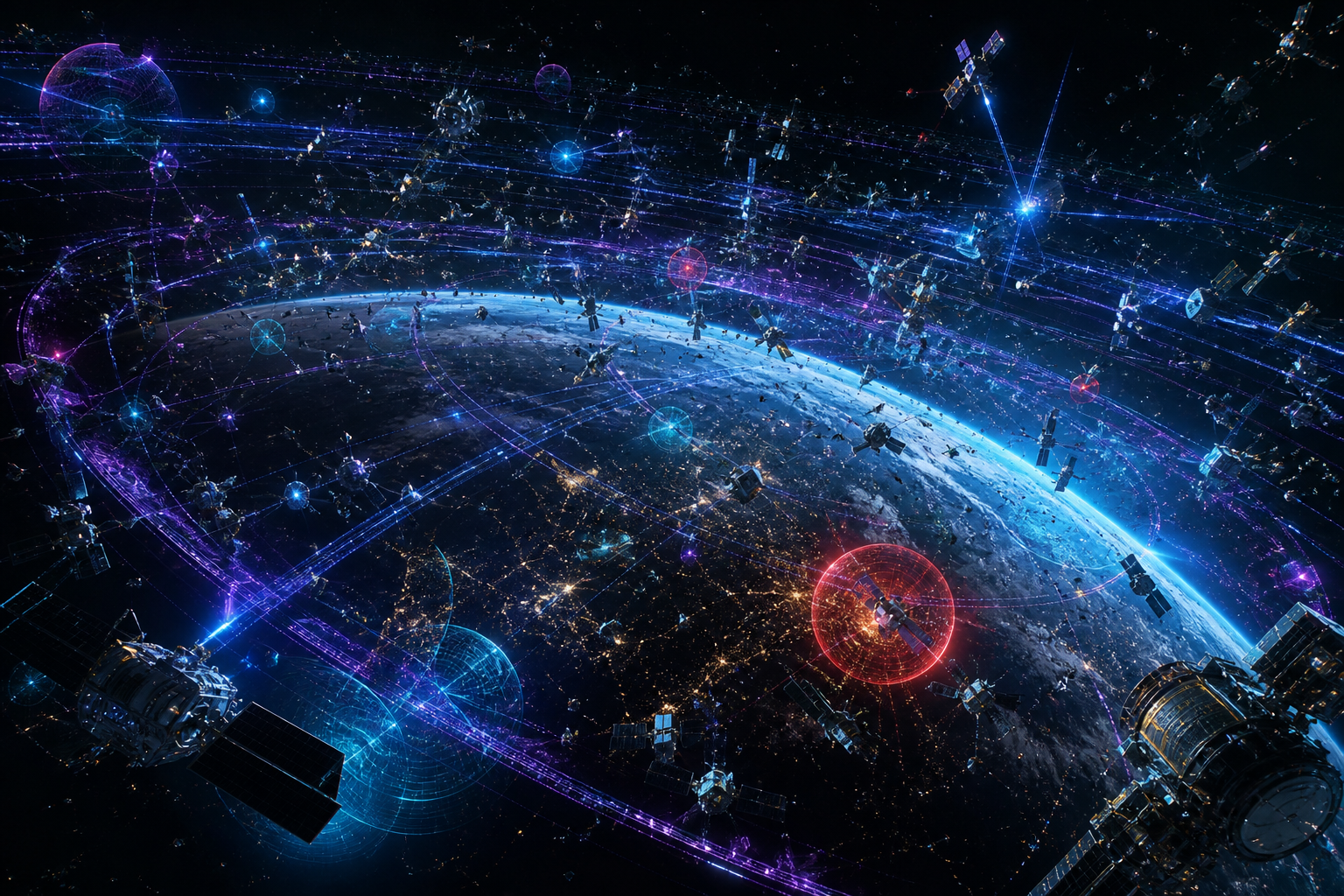
Debris is usually framed as an environmental externality, and it is one. ESA's 2024 space environment reporting continued to show growth in tracked debris populations and the persistence of collision risk even when launches pause. But debris is also evidence of a maintenance failure. Objects become threats because there is no routine, economical pathway to diagnose them, stabilise them, harvest residual utility or remove them at scale.
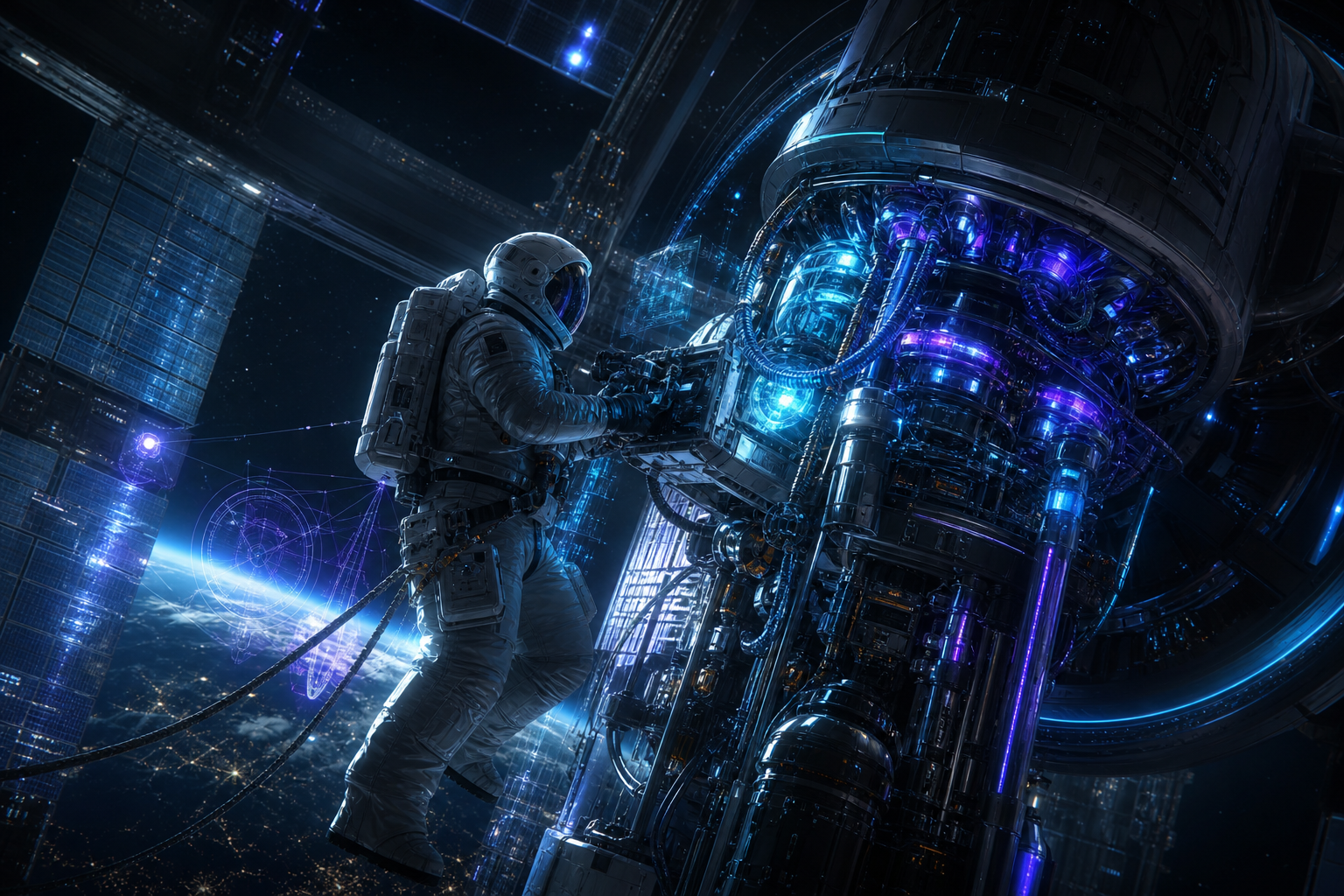
This reframing is important. If debris is treated solely as pollution, policy tends to focus on mitigation at design stage and remediation once the problem has become acute. Both are necessary, neither is sufficient. A maintenance-centred view inserts a middle layer: intervention while the object is still recoverable. Refuelling, software recovery, orbit adjustment, component replacement and guided retirement are all ways of reducing the probability that a useful spacecraft mutates into a hazard.
The crucial infrastructure layer is no longer the rocket but the mechanic.
That suggests the orbital economy needs fewer heroic one-off clean-up missions and more mundane service capability distributed across routine operations. The point is not simply to tidy space. It is to prevent value from becoming debris in the first place.
Standards will matter more than spectacular missions
The real breakthrough in orbital maintenance is unlikely to be a single dramatic demonstration. It will be the slow spread of common standards. Docking points, grappling fixtures, refuelling valves, machine-readable status formats, safe approach envelopes and authenticated command protocols are all unglamorous, yet they determine whether servicing is exceptional or routine.
There is precedent for this in every mature network industry. Containers transformed shipping not because steel boxes were revolutionary in themselves, but because standardisation connected ports, cranes, ships, insurers and customs systems into one operable chain. Space lacks an equivalent degree of interoperability. Some agencies and national programmes have pushed in-orbit servicing, assembly and manufacturing for years, and technical pathways exist. But unless operators converge on interfaces that permit third-party intervention, many spacecraft will remain effectively sealed units.
That matters especially for public infrastructure in orbit. A relay platform or habitat module designed without servicing interfaces is making a governance choice as much as an engineering one. It is assuming future dependence on bespoke rescue rather than ordinary upkeep.
Insurance is the underappreciated bottleneck
Finance rarely receives top billing in discussions of space engineering, but it may prove decisive. A maintenance economy depends on insurers and underwriters being able to price intervention risk. Rendezvous, docking and robotic manipulation create new categories of liability. If a servicing craft damages a target, causes radio-frequency disruption, or contributes to conjunction risk, who bears the loss? How should fault be assigned if intervention follows operator negligence or if ownership has become murky after mergers, bankruptcy or state-backed restructuring?
These questions sound technical, yet they shape whether servicing can scale beyond demonstration. Launch became commercially legible in part because actuarial and contractual frameworks gradually matured around it. Servicing now needs the same transition from bespoke exception to insurable practice. Until it gets there, many operators will prefer premature replacement over uncertain intervention, even when replacement is economically irrational from a system perspective.
Orbital sovereignty is becoming operational rather than symbolic
There is also a geopolitical layer. States increasingly speak of sovereign access to space, but access alone is a thin form of sovereignty. A more substantive version is the capacity to sustain, repair and retire critical orbital assets without depending entirely on foreign intervention. For navigation, meteorology, communications and security-related functions, maintainability is becoming part of strategic autonomy.
This does not imply autarky. No state will build every element of the service stack domestically. But the political meaning of dependence is changing. A country that can launch satellites yet cannot inspect or move them except through external technical assistance is not fully sovereign in the operation of its own infrastructure. In that sense, orbital maintenance resembles maritime logistics more than frontier exploration: endurance depends on support capacity, not merely initial deployment.
The same logic extends to lunar and cislunar plans. Habitats and power systems beyond low Earth orbit will require far stricter maintenance cultures than today's satellites. Distance, communication delay and rescue difficulty all punish design philosophies that assume replacement is the default answer.
Robotics will help, but governance is the real systems challenge
An orbital asset that cannot be inspected or moved on demand is closer to fixed waste than productive capital.
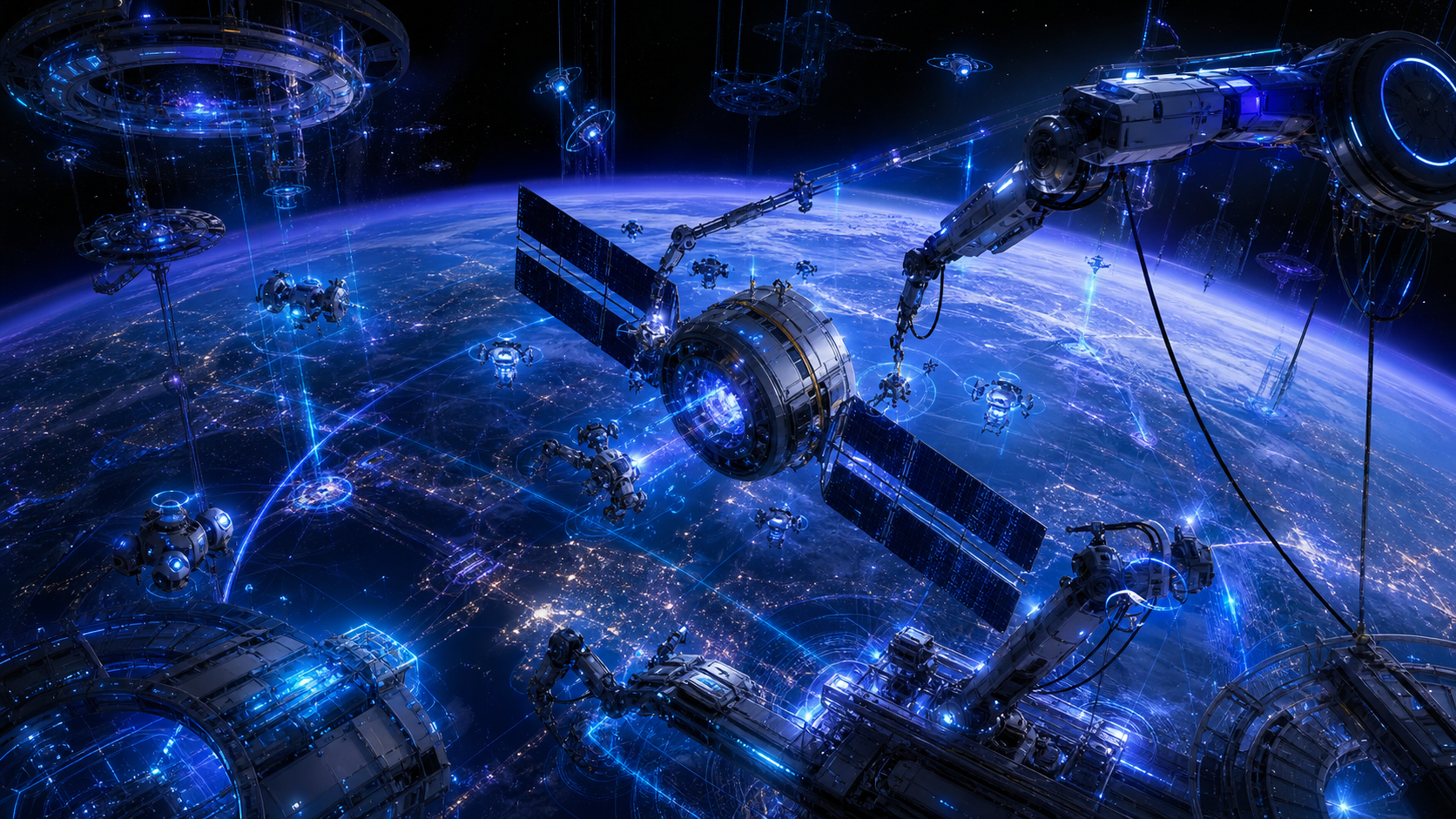
Technologists often present robotics as the answer: autonomous inspection, dexterous manipulators, machine vision and eventually in-space fabrication. These tools will matter. Yet the limiting factor is not simply whether a robot hand can turn a valve. It is whether legal permissions, spectrum coordination, traffic management norms and command authentication are robust enough to let intervention occur quickly and safely.
A servicing vehicle approaching a high-value satellite is not merely performing a technical task. It is entering a zone of dual-use sensitivity where concerns about tampering, espionage and coercion arise naturally. The same proximity operations that make repair possible can also appear threatening. That is why confidence-building measures, notification practices and shared technical standards are central infrastructure questions, not diplomatic decoration.
Space infrastructure is becoming a test of whether governance can keep pace with engineering without suffocating it.
Public agencies are still carrying disproportionate risk
One striking feature of the sector is how much early servicing work has remained tied to public institutions and agency programmes. That is understandable. The technical and legal uncertainties are high, and the spillover benefits are broad. Public missions can absorb demonstration risk in ways private balance sheets often cannot. But this also creates a structural problem. If the state remains the only actor willing to validate servicing methods, standards may evolve slowly and unevenly across jurisdictions.
The deeper issue is that infrastructure maintenance generates collective benefits not fully captured by individual operators. A refuelling capability, a trusted inspection service or a reliable retirement mechanism can reduce congestion and debris risk for others beyond the immediate client. Economists would recognise the pattern at once: positive externalities, public-good characteristics and underinvestment if left entirely to fragmented market incentives.
That does not mean a centrally planned orbital utility is required. It does mean that public policy will continue to shape the service layer through procurement, standards, licensing and liability rules.
The cislunar build-out will expose every weakness
The next phase of space infrastructure will make these questions harder, not easier. Cislunar architecture requires communication relays, navigation support, power systems, surface assets and habitation elements separated by far greater distances than low Earth orbit fleets. Maintenance delays lengthen, redundancy costs rise and logistics become more intricate. A failed component cannot simply be tolerated until the next launch window if the system around it is meant to support human presence.
This is where the maintenance thesis becomes most revealing. Permanent presence is not defined by flags, footprints or isolated missions. It is defined by whether systems can be kept in tolerances over time. If a habitat cannot be serviced, if a relay cannot be repositioned, if power hardware cannot be patched, then permanence is rhetorical rather than operational.
The history of difficult environments on Earth points in the same direction. Arctic stations, offshore platforms and undersea cables all became normal only when maintenance chains were embedded into their design and governance. Space is unlikely to prove an exception.
Designing for repair may reshape spacecraft architecture
Space infrastructure is becoming a test of whether governance can keep pace with engineering without suffocating it.
Once maintainability is treated as a first-order requirement, design choices start to change. Spacecraft may become more modular, with sacrificial and replaceable subsystems separated more clearly from long-lived structures. Diagnostic transparency may improve, because hidden faults are expensive when physical access is limited. Fuel margins may be reconsidered if refuelling is plausible. Even business models may shift from single-mission hardware towards platforms expected to host upgrades over time.
None of this is guaranteed. Modular systems can add mass, complexity and new failure points. Standardisation may constrain innovation at the margin. Servicing interfaces may create security concerns. Yet these trade-offs are ordinary for mature infrastructure sectors. The notable thing about space is not that such compromises exist, but that they have so often been postponed by the assumption that orbital hardware is inherently disposable.
What a mature maintenance layer would look like
A credible orbital maintenance economy would have several visible features. Operators would publish clearer end-of-life and intervention plans. Regulators would distinguish between irresponsible abandonment and justified managed retirement. Servicing interfaces would appear more widely across civil and commercial spacecraft. Inspection missions would become common enough to inform underwriting practices. Disposal and relocation would be budget lines rather than aspirational statements. Debris mitigation standards would be linked more tightly to maintainability requirements, not treated as separate compliance boxes.
- Routine on-orbit inspection before anomalies become failures.
- Common physical and digital interfaces for safe third-party servicing.
- Insurance products that price rendezvous and repair risks coherently.
- Licensing regimes that recognise maintenance as critical infrastructure activity.
- End-of-life pathways that prioritise guided disposal over passive abandonment.
None of that would eliminate accidents or conflict. It would, however, make orbital systems look less like expendable missions and more like governed infrastructure. That is the threshold spacefaring states and operators have not yet fully crossed.
The politics of permanence
The space age often described permanence in physical terms: larger stations, longer missions, more hardware, broader coverage. By 2026 the sharper definition is institutional. Permanence means the existence of routines for care. It means that breakdown is anticipated, intervention is lawful, costs are allocable and retirement is managed. Without that, even impressive orbital architecture rests on fragile assumptions.
This is why maintenance deserves to be treated as the missing layer above Earth. Launch solved scarcity at the point of entry. It did not solve persistence. The next contest in space infrastructure will be decided by whoever can turn orbital servicing from a specialised feat into a normal civic and industrial function. Only then will habitats, relays, power systems and other long-lived space assets begin to resemble the physical scaffold of a permanent human presence rather than an accumulation of expensive, vulnerable objects.