A category in transition
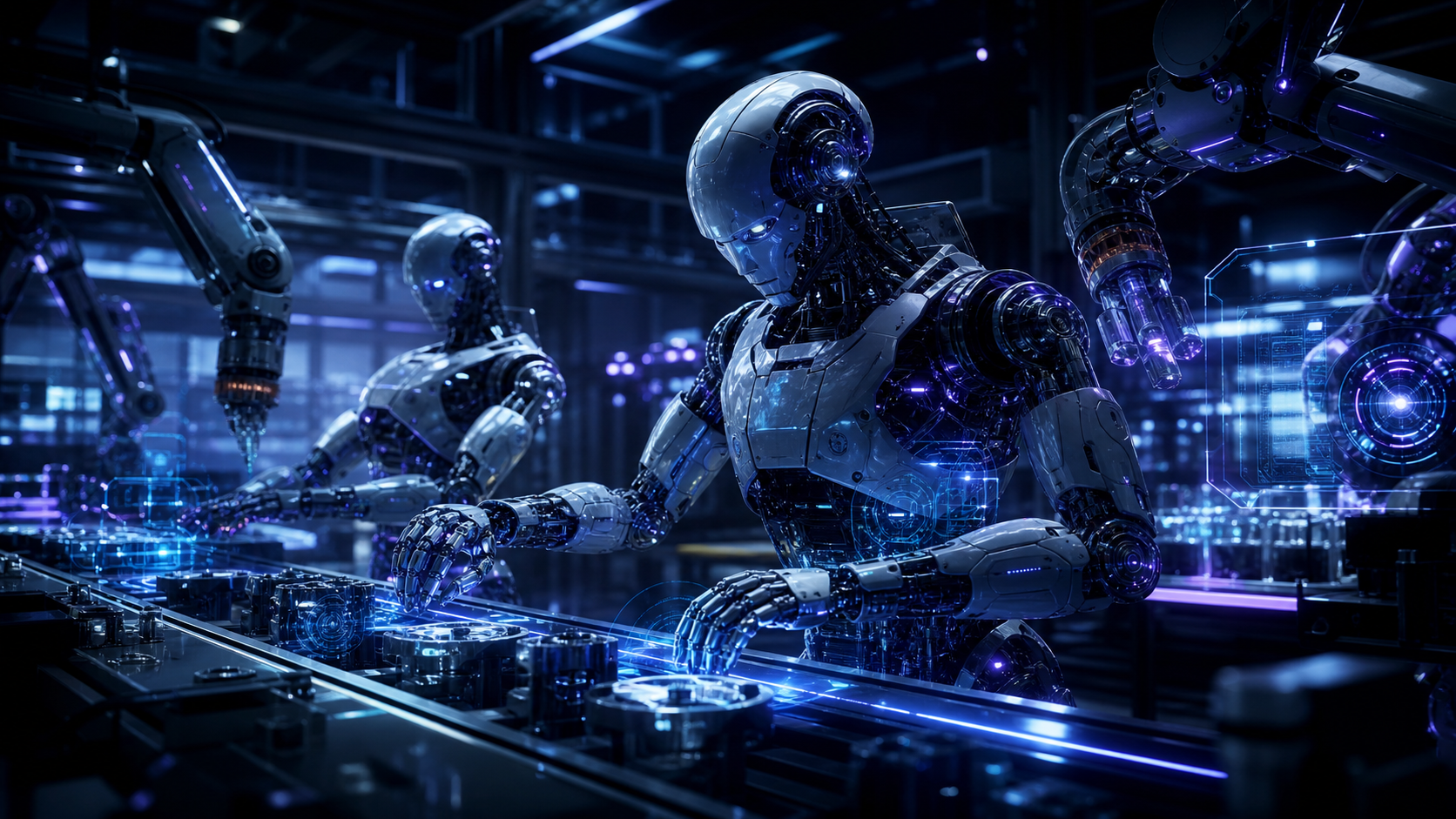
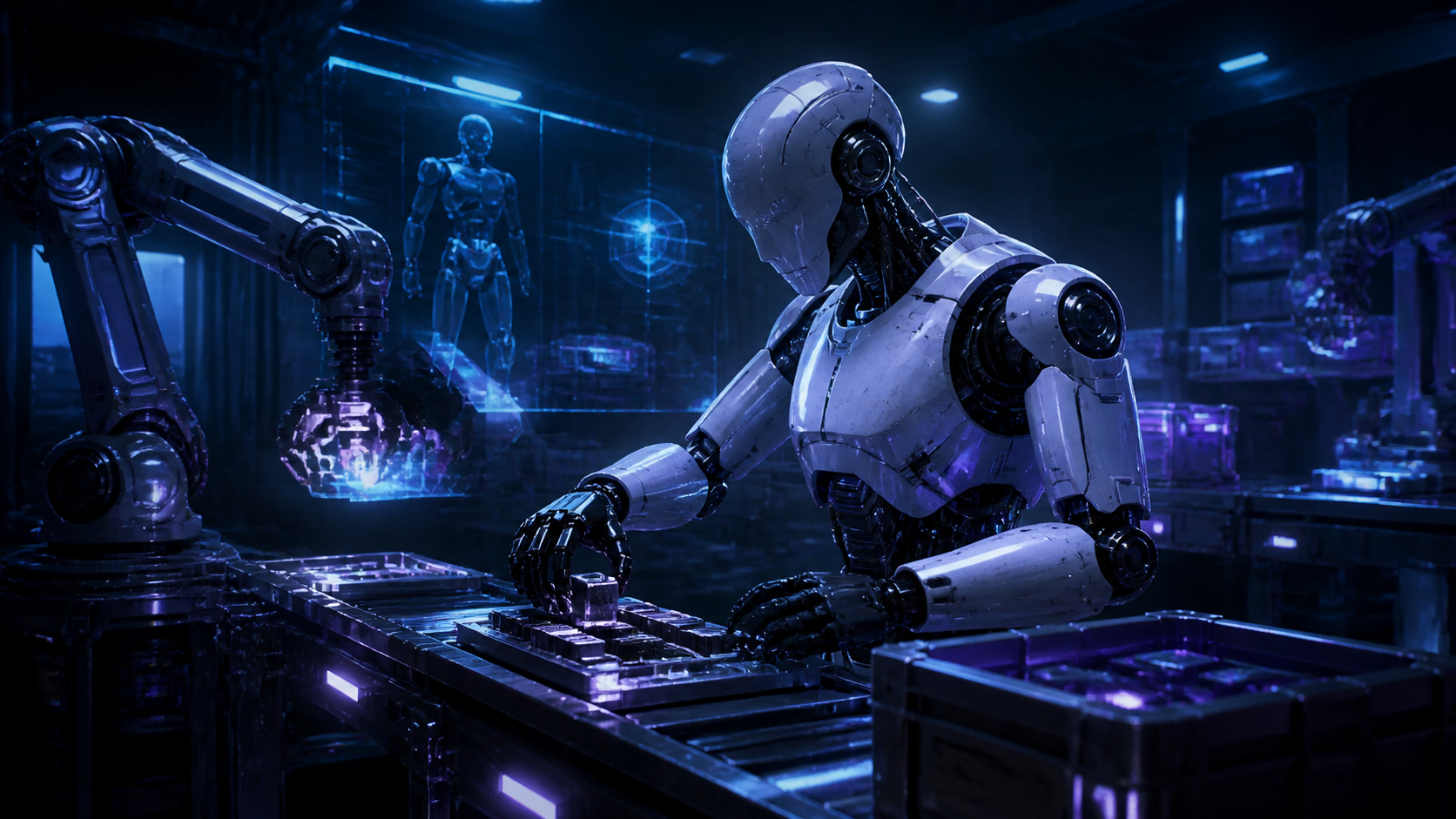
For years, humanoid robots occupied an awkward position in robotics: technically fascinating, visually compelling and commercially uncertain. That is beginning to change. A small but meaningful shift is under way from prototype demonstrations to real-world industrial pilots, particularly in sectors where facilities, tools and workflows were designed around the human body. The underlying logic is simple. If warehouses, factories and distribution centres are already built for people, then a machine with roughly human reach, mobility and manipulation may fit into those environments with less infrastructure redesign than a wheeled arm or a bespoke conveyor-based system.
That does not mean a broad breakthrough has arrived. Most evidence still points to narrow deployments rather than general-purpose labour. Yet the tone of the field has changed. Investors, manufacturers and logistics operators are no longer asking only whether a humanoid can walk, grasp or recover from a push. They are asking whether such systems can complete repeatable shifts, maintain uptime, meet safety requirements and justify their economics against incumbent alternatives.
The commercial test for humanoids is no longer whether they can move like people, but whether they can work reliably enough to be costed like equipment.
This is a more demanding threshold than a successful demonstration. Industrial buyers care about mean time between failure, maintenance regimes, integration with warehouse management software, task completion rates and liability exposure. In other words, the category is moving from mechanical possibility towards operational scrutiny.
Why the humanoid form is being reconsidered
The renewed interest is not primarily philosophical; it is infrastructural. Human environments are full of stairs, shelving, pallets, hand tools, door handles, tote bins and workstations set at human height. Traditional industrial robots perform extremely well where the environment can be structured around them. But many economically important tasks remain semi-structured and physically arranged for human workers. In those settings, a general mobile manipulator with a human-like envelope begins to look less extravagant than it once did.
Recent academic work has also sharpened the debate. A widely cited perspective in Science Robotics argued that the modern humanoid is becoming more plausible because improvements in actuators, batteries, controls and machine learning are converging with labour demand in dull, dirty and dangerous work. At the same time, the paper cautioned that practical value depends on matching form factor to use case, not assuming that human resemblance is inherently advantageous.
The strongest case for the humanoid body, then, is not that it is universally optimal. It is that it may be sufficiently adaptable to perform multiple tasks in spaces already optimised for people. That distinction matters. Flexibility has value only if it reduces deployment costs or raises utilisation enough to offset hardware complexity.
The industrial demand signal is real but selective
Labour scarcity has become a central argument for advanced robotics across developed economies. Data from the International Federation of Robotics show industrial robot installations remain concentrated in manufacturing, especially automotive and electronics, but the organisation also points to growing automation interest in logistics and other service-adjacent functions. Meanwhile, demographic pressure is intensifying. The OECD has documented ageing workforces across advanced economies, with implications for sectors that rely on repetitive manual handling, shift work and physically taxing tasks.
This backdrop helps explain why automotive plants and warehouses have become test beds for humanoids. These are environments where repetitive motions are common, process discipline is high and supervisors can carefully constrain a pilot. The target jobs are not open-ended household chores. They are highly specific activities such as material movement, tote handling, machine tending, picking and simple parts transport.
The commercial test for humanoids is no longer whether they can move like people, but whether they can work reliably enough to be costed like equipment.
There is also a strategic logic for manufacturers. Existing industrial robots excel at fixed, high-throughput routines. Humanoids, if they mature, could address edge cases, overflow tasks and workflow gaps that do not justify expensive line redesign. In warehousing, the attraction is similar: the promise is not magic autonomy but a machine that can move through a standard aisle, lift ordinary containers and work at stations built for human operators.
Economics will matter more than dexterity
The field is often discussed in terms of intelligence and embodiment, but procurement decisions will be shaped by cost. A humanoid does not compete only with a person. It competes with carts, conveyor systems, autonomous mobile robots, fixed arms, ergonomic redesign and software-led process optimisation. In many cases, simpler automation will remain cheaper, safer and easier to maintain.
This makes total cost of ownership the decisive metric. That includes acquisition or leasing cost, power consumption, maintenance, downtime, supervision, retraining, software integration and safety compliance. A humanoid that can theoretically do ten tasks but in practice performs only one at acceptable throughput may lose to a specialised machine that does that one task flawlessly. Conversely, if one platform can switch between several low-complexity activities without major reconfiguration, the economics could improve substantially.
Research on warehouse automation from institutions including McKinsey and the World Economic Forum has repeatedly shown that the business case for automation is highly context-specific. Facilities with volatile demand, labour churn and legacy layouts may value adaptable systems more than greenfield sites designed around fixed automation. But adaptability alone does not guarantee returns. Buyers need evidence that the machine can perform enough productive hours with low enough intervention to amortise its cost.
In most facilities, the true benchmark is not human capability in the abstract, but the cheapest combination of process redesign and simpler automation already available.
This is why headline claims about human-equivalent performance should be treated cautiously. Commercial viability does not require a robot to match all human skills. It requires a narrow set of useful tasks to be completed with sufficient consistency at a competitive cost.
Software progress is helping, but embodiment remains hard
Advances in machine learning, particularly in perception and policy training, have improved what mobile manipulators can do in cluttered and changing environments. Simulation-to-real methods, imitation learning and large-scale robot data collection are all helping systems generalise beyond a single scripted motion. Recent surveys in Annual Review of Control, Robotics, and Autonomous Systems and reports from leading technical institutes suggest that foundation-style models may eventually reduce the engineering burden of teaching robots new tasks.
Yet embodiment remains stubborn. Locomotion, balance, compliant manipulation and long-horizon task execution all impose physical constraints that software cannot wish away. A warehouse tote is not difficult to identify; it is difficult to grasp repeatedly, carry safely, place accurately and recover from mishandling over thousands of cycles. Battery life, thermal limits, actuator wear and falls still matter. So do subtle environmental variables: floor quality, lighting shifts, unexpected obstacles and human co-workers who do not move according to plan.
The result is a familiar robotics pattern. Digital intelligence may advance quickly, while electromechanical reliability improves more slowly. That gap is especially relevant for humanoids, whose many degrees of freedom increase both flexibility and failure modes. The category’s progress should therefore be assessed not by viral clips, but by boring metrics such as unscheduled stoppages, intervention rates and hours of useful operation between servicing.
Safety is the gating factor for wider deployment
In most facilities, the true benchmark is not human capability in the abstract, but the cheapest combination of process redesign and simpler automation already available.
If economics determines whether firms want humanoids, safety determines whether they are allowed to use them at scale. Human-shaped machines operating near people introduce complex risk profiles. A mobile system carrying mass through a shared workspace can create hazards related to collision, pinching, falling and dropped objects. Existing industrial robot safety standards provide part of the framework, but humanoids combine mobility, manipulation and dynamic balance in ways that challenge simple categorisation.
Guidance from the International Organization for Standardization and the US National Institute for Occupational Safety and Health underscores the importance of hazard assessment, speed and separation monitoring, emergency stop design and clear human-robot interaction protocols. In practice, this means most early deployments are likely to occur in constrained zones, with limited task repertoires and tightly managed workflows.
There is also a trust dimension. Workplace robotics adoption often depends on whether line managers and workers believe systems behave predictably. A machine that occasionally hesitates is inconvenient; one that behaves unexpectedly in close proximity to staff can be unacceptable. For that reason, some of the most commercially sensible uses may involve back-of-house logistics and machine support rather than highly interactive front-line roles.
Where the first durable use cases are likely to emerge
Not all sectors offer the same opportunity. The strongest near-term candidates share several characteristics: labour-intensive repetitive tasks, standardised objects, predictable routes, structured indoor environments and a cost of human labour high enough to support experimentation. By that standard, warehouses, intralogistics hubs and certain manufacturing cells remain the most plausible early markets.
In automotive and general assembly, parts kitting, line-side replenishment, bin transport and simple machine tending stand out. In warehousing, carton movement, tote transfer and repetitive picking from known inventory locations are obvious possibilities, though they still face stiff competition from conventional automation. In third-party logistics, the appeal may be seasonal flexibility: a machine that can be reassigned as bottlenecks move through the facility.
Healthcare, retail and hospitality are often mentioned, but these environments are less forgiving. They feature denser human interaction, greater task ambiguity and stronger safety expectations. Hospitals in particular require not just mobility but nuanced handling, sanitation protocols and integration with highly variable workflows. Humanoids may eventually find roles there, but the evidence today favours industrial back-end tasks over public-facing service work.
The earliest winners are likely to be mundane roles in structured facilities, not the socially complex jobs that attract the most public attention.
Labour implications are more nuanced than replacement narratives suggest
Debate around humanoid robots often defaults to substitution: machines replacing workers. The reality is likely to be more uneven. Historical evidence from industrial automation suggests technology tends to reconfigure work before it fully removes it. Studies by the OECD and the International Labour Organization indicate that exposure to automation varies sharply by task composition, sector and local labour market conditions.
In the near term, humanoids are more likely to alter job design than eliminate entire occupations. Facilities may use them to absorb peak demand, reduce overtime, cover undesirable shifts or take on ergonomically risky tasks. That can reduce injury exposure and ease recruitment pressure, but it may also shift human roles towards exception handling, system oversight and maintenance support. The employment effect will therefore depend not just on technical capability, but on management choices, wage dynamics and regulation.
This matters for policy. If deployment expands, governments and firms will face familiar questions about training, transition support and occupational standards. Because humanoids are being targeted at physically repetitive work, the distributional effects could be concentrated in exactly those labour markets already under strain from demographic ageing and churn. That could create both a business rationale and a political sensitivity.
The earliest winners are likely to be mundane roles in structured facilities, not the socially complex jobs that attract the most public attention.
China, Japan, Europe and the United States will shape the trajectory differently
The geography of adoption will matter. China has become the world’s largest industrial robot market by annual installations, according to the International Federation of Robotics, and it also faces strong policy pressure to upgrade manufacturing productivity. Japan combines deep robotics expertise with acute demographic ageing. Europe tends to pair advanced industrial automation with stricter regulatory expectations, especially around machinery safety and worker protection. The United States offers large logistics networks, high wages in certain regions and strong venture capital support for frontier robotics.
These differences imply distinct deployment paths. In China, scale manufacturing and industrial policy may accelerate hardware iteration. In Japan, eldercare and labour scarcity often feature prominently in strategic discussions, though practical deployment is likely still to favour structured settings first. In Europe, compliance and worker consultation may slow roll-out but improve operational discipline. In the United States, warehousing and automotive pilots could provide important commercial signals, particularly if they demonstrate integration with existing enterprise software and measurable productivity gains.
No single geography will decide the category. But cross-border comparison will help reveal whether the bottleneck is universal physics or local economics. If similar machines succeed only in specific wage environments or policy regimes, that will say as much about market structure as about robotics maturity.
What to watch in the next three years
Several indicators will be more revealing than promotional announcements. First, look for evidence of repeat deployments across multiple sites rather than one-off pilots. Replication matters because it shows a system can generalise beyond a carefully prepared environment. Second, monitor whether facilities report long operating windows with limited human intervention. Third, watch for integration into routine workflow software, maintenance schedules and safety procedures. A robot becomes economically meaningful when it disappears into operations rather than standing apart from them.
It will also be important to track whether the category moves down the task ladder before climbing up it. Success may come first from extremely simple but frequent actions performed dependably. If so, the field could follow the pattern seen elsewhere in robotics: modest capability, high reliability, clear return on investment. More ambitious forms of autonomy may arrive later, built on data gathered from these constrained commercial settings.
Regulation will be another signal. If standards bodies and workplace safety agencies begin issuing more tailored guidance for mobile manipulators and humanoid systems, that will indicate the market is becoming concrete enough to require governance. Insurers, too, will become quiet but influential arbiters of what deployments are acceptable.
The likely shape of the market
The most plausible outcome is neither a humanoid revolution nor a collapse of the category. It is a segmented market in which a small number of systems prove useful for a narrow band of industrial tasks, while most workplaces continue relying on conventional automation and human labour. In that scenario, humanoids become one more tool in the automation stack rather than its universal endpoint.
This would still be significant. A robot capable of moving through a human-designed facility and handling several basic tasks could fill real operational gaps, especially where labour is scarce or workflows change frequently. But the market will reward boring excellence: uptime, safe behaviour, maintainability and cost discipline. The winners will not be determined by how human a machine appears, but by whether it can earn its keep over thousands of ordinary shifts.
That is the sober conclusion emerging from the current evidence. Humanoid robotics is no longer merely a symbol of technological ambition. It is becoming a test of whether generality in machine form can survive contact with industrial accounting. The answer will come not from spectacle, but from spreadsheets, incident logs and the steady rhythms of factory and warehouse work.