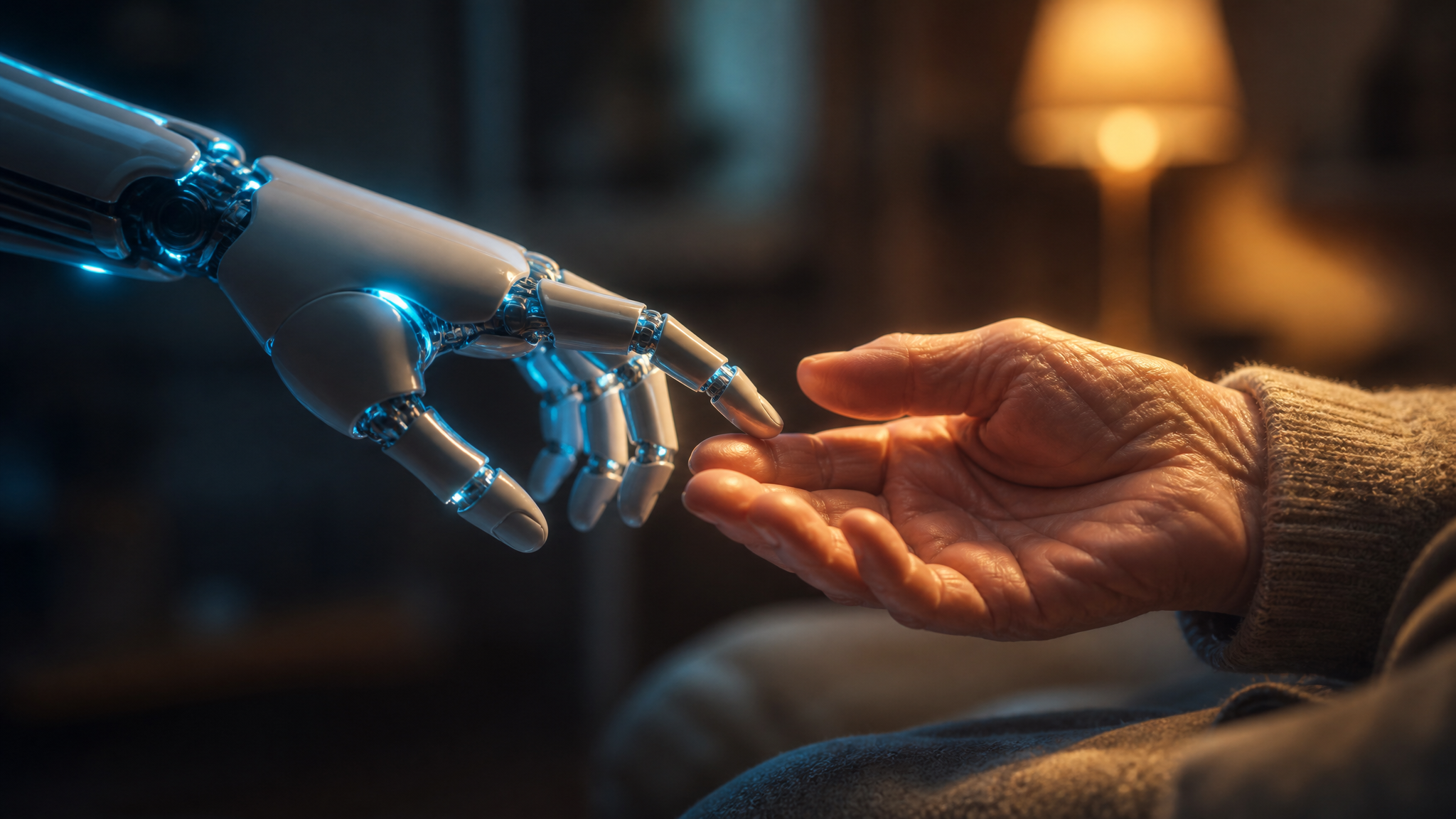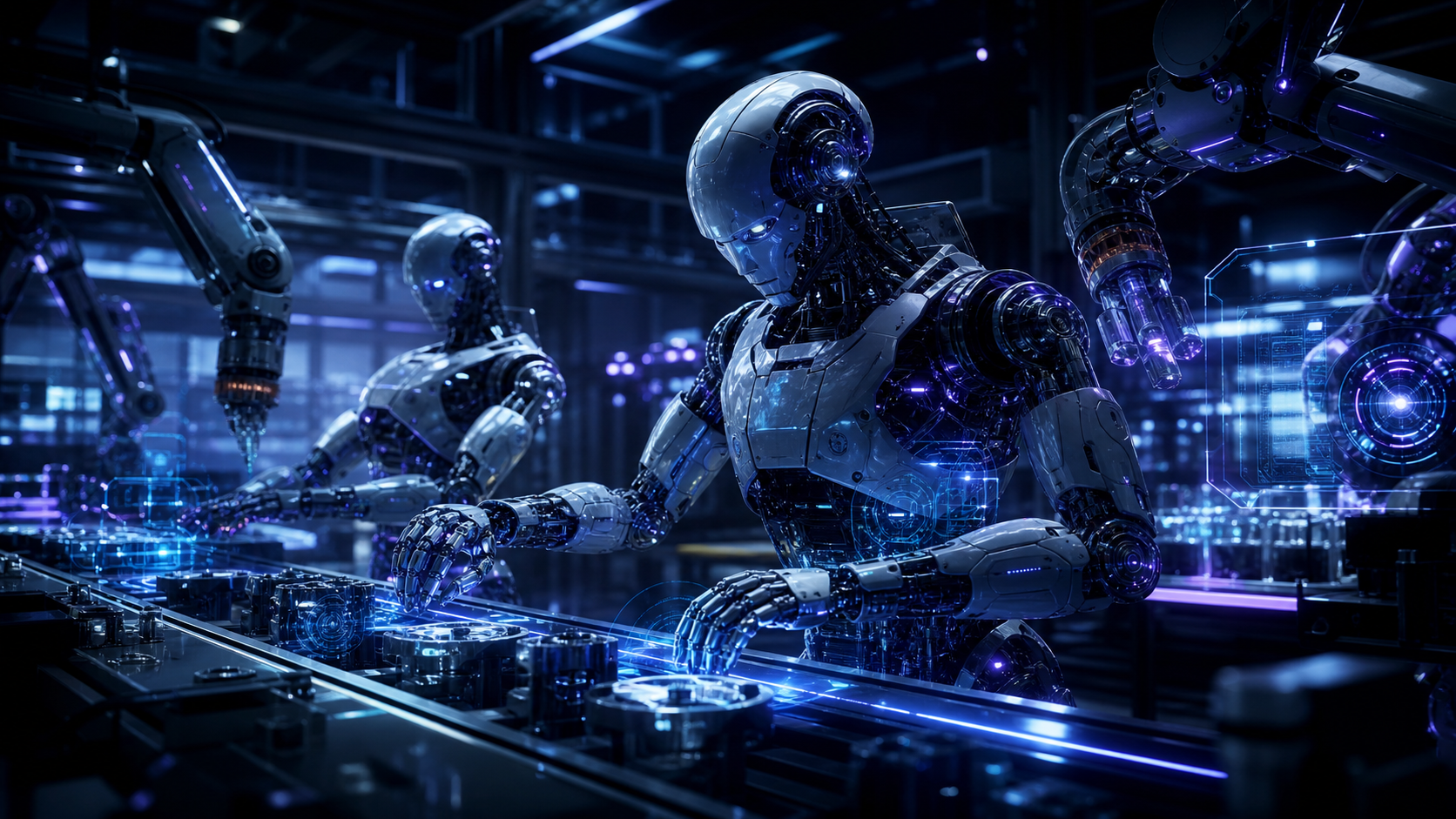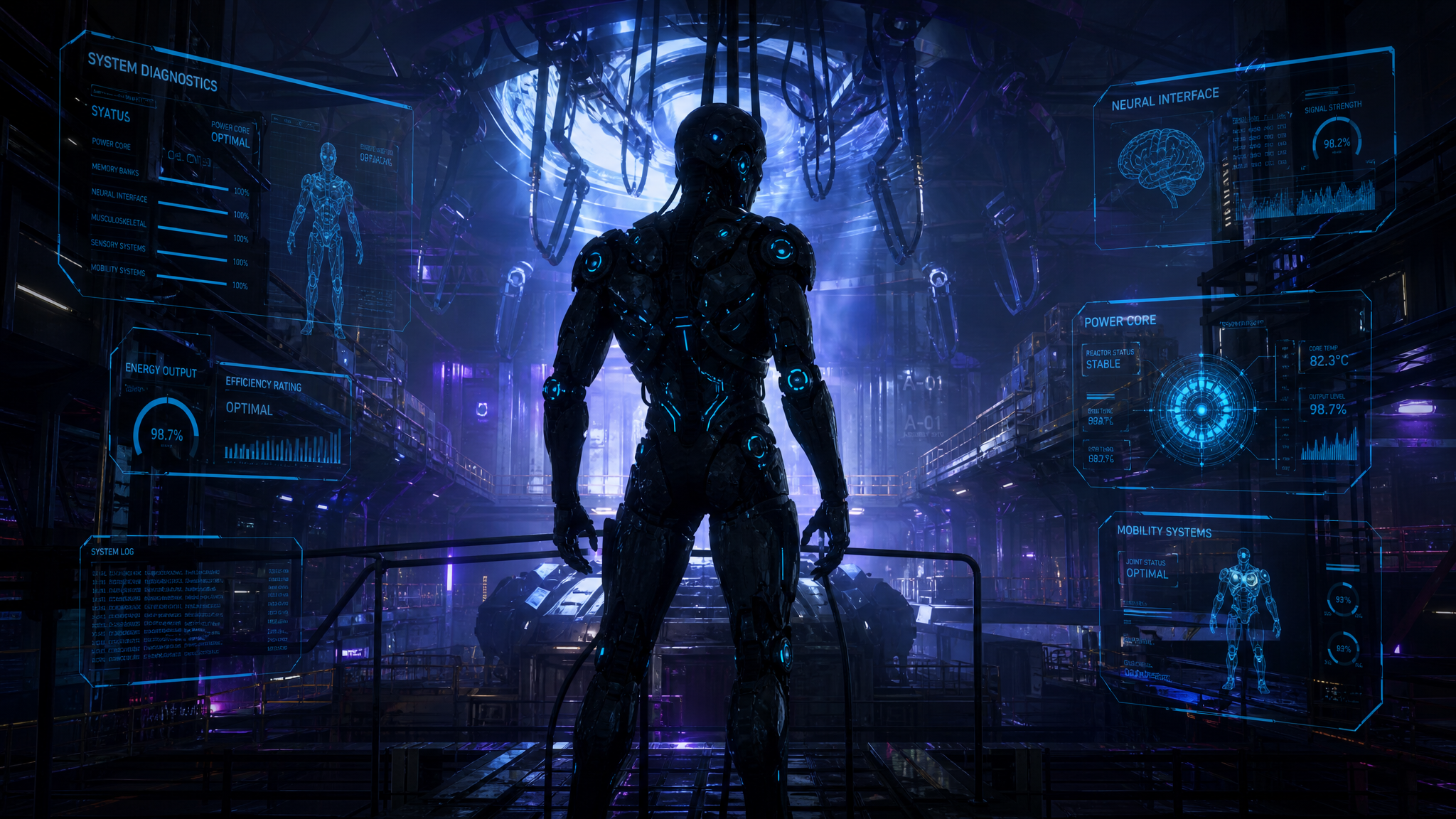
On a Tuesday morning in March 2026, a humanoid robot named Figure 02 walked across a BMW assembly floor in Spartanburg, South Carolina, picked up a metal bracket from a parts bin, inspected it visually, and placed it precisely into a mounting fixture. The task took eleven seconds. A human worker performing the same operation averages nine seconds. The difference is that Figure 02 had learned the task by watching a video demonstration once, and it would perform it identically for the next 20 hours without a break, a bathroom visit, or a workers' compensation claim.
Twelve time zones away, in a Unitree factory in Hangzhou, China, a robot called H1 was practising backflips. Not for any functional reason — there are limited industrial applications for robotic acrobatics — but because the ability to dynamically balance a 47-kilogram bipedal frame through a complete rotational axis demonstrates a mastery of physics simulation and motor control that was considered impossible for humanoid robots just two years earlier.
The humanoid robotics industry is no longer in the demonstration phase. It is in the deployment phase. And the implications for human labour, economic structure, and civilisational identity are more profound than any technology transition since the industrial revolution.
The State of Play: Who's Building What
The humanoid robotics landscape in 2026 is defined by a handful of companies whose capabilities, timelines, and ambitions vary dramatically but share one common trajectory: the machines are getting better faster than anyone predicted.
Figure AI: The Integration Play
Figure AI, founded in 2022 by Brett Adcock, has arguably made the most strategic move in the industry by partnering with both BMW (for manufacturing deployment) and OpenAI (for cognitive capability). Figure 02, the company's second-generation humanoid, represents the first commercially deployed robot that combines physical dexterity with large language model reasoning.
The OpenAI integration means Figure 02 doesn't just follow pre-programmed routines. It can interpret natural language instructions, reason about novel situations, and explain its actions. In a widely circulated demonstration, a Figure engineer asked the robot to hand them something to eat from a collection of objects on a table. The robot identified an apple (distinguishing it from non-food items), picked it up, and handed it over — while verbally explaining its reasoning: "I see an apple on the table. That's the only edible item, so I'll give you that."
Figure raised $675 million in a Series B round in February 2024 at a $2.6 billion valuation, with investors including Microsoft, OpenAI, NVIDIA, Jeff Bezos, and Intel. By early 2026, the valuation has reportedly exceeded $6 billion on the strength of the BMW deployment results.
Tesla Optimus: The Scale Ambition
Elon Musk has claimed that Tesla's Optimus humanoid robot will eventually be "the most valuable product ever created" and could generate more revenue than Tesla's entire automotive business. These are extraordinary claims. The reality is more measured but still significant.
Optimus Gen 2, demonstrated in late 2024, showed improved hand dexterity (11 degrees of freedom per hand), smoother walking gait, and the ability to perform delicate tasks like picking up eggs without breaking them. Tesla has deployed early Optimus units in its own factories, primarily for parts-sorting and materials-handling tasks.
The Tesla advantage is manufacturing at scale. If Optimus reaches production readiness, Tesla's existing Gigafactory infrastructure could produce humanoid robots at volumes and costs that no competitor can match. Musk has suggested a long-term production cost target of $20,000–$25,000 per unit, though independent analysts at Morgan Stanley estimate a more realistic near-term cost of $50,000–$80,000.
The gap between Musk's rhetoric and Optimus's current capabilities remains wide. Tesla's robots can walk, carry objects, and perform simple repetitive tasks. They cannot yet match Figure 02's LLM-integrated reasoning or Boston Dynamics' dynamic athleticism. But Tesla's history suggests that underestimating their manufacturing scaling capability is unwise.
Boston Dynamics Atlas: The Pivot to Commercial
Boston Dynamics' Atlas has been the public face of humanoid robotics for a decade, its parkour demonstrations and dance videos accumulating billions of views. But the company's April 2024 announcement marked a pivotal strategic shift: the retirement of the hydraulic Atlas platform and the introduction of an all-electric version designed explicitly for commercial deployment.
The new electric Atlas is lighter, quieter, and designed for sustained operation in industrial environments rather than short demonstrations. Hyundai, which acquired Boston Dynamics for $1.1 billion in 2021, is positioning Atlas as a tool for automotive manufacturing — a deployment environment where Hyundai has both the factories and the institutional knowledge to integrate humanoid workers alongside human ones.
A human workforce requires individual training for each new task. A robot workforce requires one training session, replicated infinitely.
Boston Dynamics' advantage is two decades of accumulated expertise in dynamics, balance, and mobility. No other humanoid robot moves as naturally as Atlas. The disadvantage is that Boston Dynamics has historically struggled to convert technical excellence into commercial revenue, and the company has yet to demonstrate the kind of AI reasoning integration that Figure has achieved through its OpenAI partnership.
Agility Robotics Digit: The Amazon Bet
Agility Robotics' Digit takes a different design approach: a bipedal robot optimised specifically for warehouse logistics. Unlike the human-mimicking designs of Atlas and Optimus, Digit has a utilitarian form factor — two legs, two arms, a sensor head, and no pretence of human appearance.
Amazon has been trialling Digit in its fulfilment centres since late 2023, testing the robot's ability to handle tote-moving operations — the repetitive task of picking up and relocating plastic bins that currently occupies thousands of warehouse workers. Amazon's investment in Agility (reportedly $150 million) signals the company's belief that bipedal robots can navigate the human-designed spaces of existing warehouses more effectively than wheeled or tracked alternatives, which require expensive infrastructure modifications.
The Chinese Wave
Perhaps the most significant development in humanoid robotics is the scale of Chinese entry into the market. In 2024–2025, over 40 Chinese companies announced humanoid robot development programmes.
Unitree Robotics has produced the most viral demonstrations — including the H1's backflips and full-speed running at 3.3 metres per second — and has adopted an aggressive pricing strategy, with its G1 humanoid priced at approximately $16,000. This is an order of magnitude cheaper than Western competitors and represents a deliberate effort to commoditise the hardware layer.
Fourier Intelligence has deployed its GR-1 humanoid in rehabilitation centres across China, positioning humanoid robots as therapeutic devices rather than industrial tools. UBTECH Robotics, backed by over $2 billion in funding, is developing Walker X for both industrial and service applications.
China's national AI development plan explicitly targets humanoid robotics as a strategic industry, with state-backed research programmes at Tsinghua University, Peking University, and the Chinese Academy of Sciences producing a pipeline of engineering talent that dwarfs any individual Western institution.
The Economics: When Robots Become Cheaper Than Humans
The fundamental economic question is not whether humanoid robots can perform human work. It is when they become cheaper than human workers on a total-cost-of-ownership (TCO) basis.
Goldman Sachs published a comprehensive analysis in January 2025 projecting that the humanoid robot market could reach $38 billion by 2035 and that robots could fill 4% of the US manufacturing workforce by that date. Their long-range estimate — $6 trillion in annual revenue by 2050 — assumes that humanoid robots become the dominant form of physical labour in manufacturing, warehousing, agriculture, and elder care.
The TCO calculation breaks down as follows:
Human Worker (US manufacturing, fully loaded): Average annual cost including wages, benefits, insurance, training, facilities, and management overhead: approximately $65,000–$85,000. This worker is available for approximately 2,000 hours per year after accounting for weekends, holidays, sick leave, and breaks.
Humanoid Robot (near-term projection): Unit cost of $50,000–$80,000 (amortised over a 5–10 year operational life), maintenance cost of $5,000–$10,000 per year, energy cost of $2,000–$4,000 per year. This robot is available for approximately 8,000 hours per year (running 22 hours per day with 2 hours for maintenance and charging).
On a per-hour basis, the human worker costs $32–$42 per productive hour. The robot, in the near-term cost scenario, costs $8–$15 per productive hour. And the robot cost curves are declining while human labour costs are rising.
At Tesla's target price of $20,000–$25,000 per unit, the per-hour cost drops below $5. At Unitree's current price of $16,000, it's already approaching $3 per hour for the hardware alone.
The crossover — the point at which deploying a humanoid robot is unambiguously cheaper than employing a human for equivalent tasks — will arrive at different times for different sectors. For structured, repetitive manufacturing tasks, it may already be here. For unstructured environments requiring judgment and adaptation, it's likely 2030–2035.
There is currently no international framework that specifically governs autonomous humanoid robots operating in public spaces. None.
The Convergence: Why Embodied AI Changes Everything
The humanoid robotics revolution cannot be understood separately from the agentic AI revolution. The convergence of physical robotics with large language models and autonomous AI agents creates a capability that is qualitatively different from either technology alone.
A robot that can only follow pre-programmed routines is an expensive tool. A robot that can understand natural language instructions, reason about novel situations, learn from demonstrations, and adapt to changing environments is an autonomous worker. The Figure 02 + OpenAI integration represents the first commercial instance of this convergence, and it transforms the addressable market from "structured manufacturing tasks" to "any physical task that a human can explain verbally."
NVIDIA's Project GR00T (Generalist Robot 00 Technology), announced in March 2024, provides the training infrastructure for this convergence. GR00T uses large-scale simulation to train humanoid robots in virtual environments before deploying them in the physical world — dramatically reducing the time and cost of teaching robots new skills. Isaac Sim, NVIDIA's physics simulation platform, can simulate millions of robot-hours of training experience in minutes.
The implication is exponential capability growth. Each new skill a humanoid robot masters in simulation can be deployed across every robot in a fleet simultaneously via software update. A human workforce requires individual training for each new task. A robot workforce requires one training session, replicated infinitely.
The Labour Market Earthquake
Which jobs are affected first? The evidence points to a clear sequence.
Manufacturing (2025–2028): Assembly line tasks, quality inspection, materials handling. This is where deployment is already happening (BMW + Figure, Tesla factories, Hyundai + Atlas).
Warehousing and Logistics (2026–2030): Picking, packing, sorting, loading. Amazon's Digit trials are the leading edge. The global warehouse labour shortage — estimated at 490,000 unfilled positions in the US alone — creates pull demand for robotic alternatives.
Agriculture (2028–2033): Harvesting, planting, crop monitoring. Agriculture faces severe labour shortages globally, and many agricultural tasks are physically demanding, repetitive, and hazardous. Humanoid robots' ability to navigate uneven terrain and manipulate variable objects (fruits, vegetables) makes them viable agricultural workers.
Elder Care (2030–2040): Assistance with daily activities, mobility support, medication management, companionship. This is the most socially sensitive application and the one with the most acute demographic need. Japan, where 35% of the population is over 60, has invested heavily in care robotics out of necessity.
Construction (2032–2040): Bricklaying, painting, finishing work. Construction is one of the least automated major industries, and the global construction labour shortage exceeds 10 million workers. Humanoid form factors are inherently suited to construction environments designed for human bodies.
Goldman Sachs estimates that humanoid robots could displace or augment 30–40% of manual labour tasks in affected sectors by 2040. This does not mean 30–40% unemployment — history suggests that technological displacement creates new categories of work even as it eliminates old ones. But the transition period — the years during which old jobs are disappearing faster than new jobs are emerging — could be the most disruptive labour market event since mechanised agriculture emptied the countryside.
The Liability Question
When a humanoid robot causes harm — drops a heavy object on a human co-worker, misidentifies an obstacle and collides with a pedestrian, or makes a medical care error — who is responsible?
Current legal frameworks offer no clear answer. Product liability law, designed for static manufactured goods, doesn't adequately address autonomous systems that learn and adapt. The manufacturer designed the hardware. A different company trained the AI model. A third company deployed the robot in a specific environment. A fourth company provided the natural language instructions that the robot was following when the incident occurred.
The EU's updated Product Liability Directive (2024) extends strict liability to software and AI systems, but its application to humanoid robots operating in unstructured environments remains legally untested. In the United States, liability would likely be determined state by state, creating a patchwork that makes nationwide deployment legally complex.
Insurance industry responses are emerging. Lloyd's of London has begun developing actuarial models for humanoid robot liability, but acknowledged in a 2025 report that "insufficient claims history exists to price autonomous humanoid robot risk with actuarial confidence." The industry is, in effect, flying blind.
The robots are already walking. The question is whether we're walking with them, or simply standing in their path.
The Military Dimension
The conversion of humanoid robots from industrial tools to weapons platforms is the conversation that the robotics industry prefers to avoid and that military planners have already begun.
The structural properties that make humanoid robots useful in factories — bipedal locomotion in human-designed spaces, manipulator dexterity, autonomous navigation, and AI-powered decision making — are precisely the properties that military applications require. A humanoid robot that can navigate a warehouse can navigate an urban battlefield. A manipulator that can pick up a bracket can pick up a weapon.
The US Defence Advanced Research Projects Agency (DARPA) has funded humanoid robotics research through multiple programmes, including the DARPA Robotics Challenge. China's military-civil fusion strategy explicitly includes humanoid robotics in its defence technology roadmap. Russia, South Korea, and Israel have all disclosed military humanoid robotics research programmes.
The ethical boundary is autonomous lethal decision-making: the point at which a humanoid robot identifies, targets, and kills a human being without direct human authorisation for each specific engagement. This boundary has not yet been crossed by deployed humanoid systems, but the technical capability to cross it exists within current-generation AI, and the military incentive to do so — faster reaction times, removal of human soldiers from danger, and the elimination of psychological barriers to lethal force — is substantial.
The Campaign to Stop Killer Robots, a coalition of over 250 NGOs in 70 countries, has called for a preemptive international ban on fully autonomous weapons. The UN Convention on Certain Conventional Weapons has discussed but failed to adopt binding restrictions. The governance gap for autonomous humanoid weapons is not a future problem. It is a present failure.
The Governance Vacuum
There is currently no international framework that specifically governs autonomous humanoid robots operating in public spaces. None.
The EU AI Act regulates AI systems by risk category but treats the AI software and the robotic hardware as separate regulatory objects. The Machinery Regulation (2023/1230) covers industrial robots as products but was not designed for autonomous, AI-driven humanoid systems operating outside factory environments. ISO 10218 (industrial robot safety) and ISO 13482 (personal care robot safety) provide technical standards but have no enforcement mechanism and were written before the current generation of AI-integrated humanoid robots existed.
The result is a regulatory gap that grows wider with each new deployment. Humanoid robots are walking into factories, warehouses, and soon public spaces, governed by a patchwork of product safety directives, voluntary industry standards, and the internal safety policies of the companies that build them.
This is not adequate. A technology with the potential to reshape labour markets, military capability, and the physical safety of every human it encounters requires dedicated, comprehensive, internationally coordinated governance. That governance does not exist, and the window in which it can be established proactively — before a major incident forces reactive legislation — is closing.
The Question That Defines a Generation
The humanoid robotics revolution is not coming. It is here. The robots walk among us — in BMW factories, Amazon warehouses, and Chinese rehabilitation centres. Within a decade, they will be in construction sites, farms, hospitals, and homes.
The technology is advancing faster than the most optimistic projections of five years ago. The economics are trending toward inevitable adoption. The labour market implications are seismic. The governance frameworks are non-existent.
Goldman Sachs projects $6 trillion in annual revenue by 2050. But behind that number are 3.5 billion human workers whose relationship with physical labour is about to be renegotiated by machines that look like them, move like them, and increasingly think like them.
The question is not whether humanoid robots will transform civilisation. The trajectory is clear. The question is whether we will shape that transformation deliberately, with governance frameworks that protect human dignity, distribute economic benefits, and prevent the weaponisation of embodied intelligence — or whether we will allow the transformation to happen to us, governed by the market dynamics of the companies that build the machines.
The robots are already walking. The question is whether we're walking with them, or simply standing in their path.
This article is part of the Sovereign Intelligence Hub's physical AI series. For the latest industry data and deployment timelines, see [The Humanoid Robotics Revolution](/hub/humanoid-robotics-labour-revolution). For the care economy dimension, see [The Care Economy](/hub/humanoid-robots-care-economy). For the military implications, see [Autonomous Weapons](/hub/autonomous-weapons-red-line).
Sources & Further Reading
- 1.Goldman Sachs — Humanoid Robot Market Sizing: The $6 Trillion Opportunity (January 2025)
- 2.Figure AI — Series B Funding Round and BMW Partnership Announcement (February 2024)
- 3.Tesla — Optimus Gen 2 Technical Specifications and Demonstration (2024)
- 4.Boston Dynamics — Electric Atlas Announcement (April 2024)
- 5.NVIDIA — Project GR00T: Foundation Model for Humanoid Robots (March 2024)
- 6.Campaign to Stop Killer Robots — Policy Recommendations for Autonomous Weapons
- 7.EU Machinery Regulation 2023/1230 and AI Act Interplay Analysis (European Commission, 2025)
- 8.Morgan Stanley — Humanoid Robots: From Science Fiction to Factory Floor (Research Report, 2025)