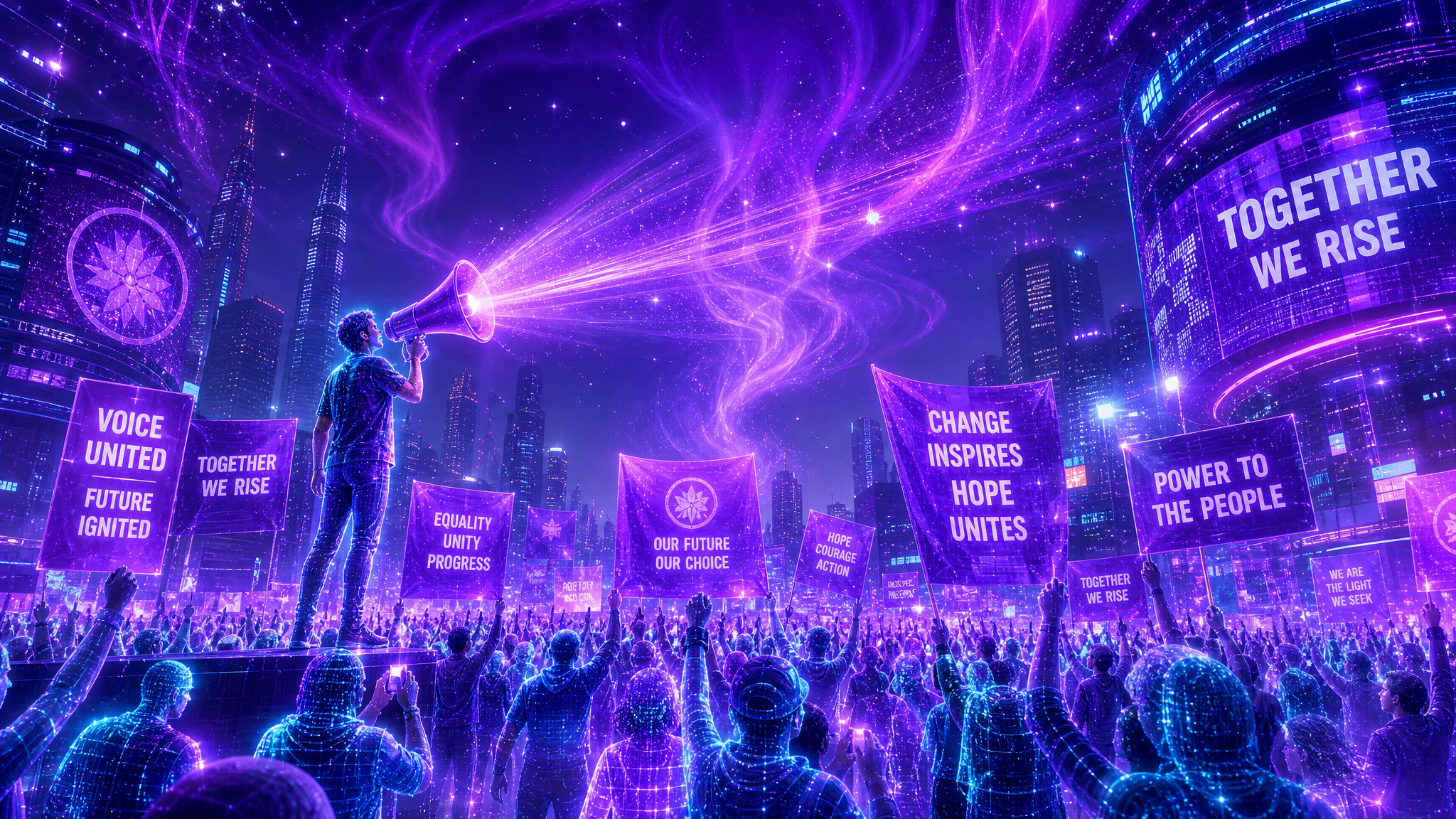
A new information environment for collective action
For much of the 20th century, political movements had to pass through relatively narrow media gates. Editors, broadcasters and wire services acted as the principal filters through which grievances became public issues. That system was never neutral, but it imposed a certain rhythm: events happened, journalists verified them, and audiences encountered a common if contested account.
That rhythm has weakened. Today, participants in a demonstration can document events in real time; sympathisers can remix them into slogans, clips and symbols; and platforms can distribute them to millions before any newsroom has published a first take. The practical consequence is that movements no longer rely on traditional media to become visible. But the strategic consequence is more complex: they must now compete in markets for attention shaped by algorithms, incentives for emotional salience and a fragmented audience’s appetite for immediacy.
The shift is not merely technological. It alters what counts as evidence, who gets to frame a conflict, and how quickly narratives harden into political fact. In this environment, virality can function as a form of agenda-setting, but it is a fragile one. What travels fastest is not always what is most representative, and what appears most authentic may be hardest to verify.
Digital visibility has made mobilisation easier to ignite, but harder to discipline.
What the data say about shrinking gatekeepers
Survey evidence points to a decisive redistribution of attention. The Reuters Institute’s annual research on news consumption has repeatedly shown that large shares of younger audiences encounter news through platforms, personalities and social feeds rather than by going directly to news outlets. That does not mean conventional journalism has disappeared; rather, it circulates within a wider ecosystem where headlines compete with eyewitness footage, commentary threads and influencer interpretations.
In practice, this creates a layered information chain. A clip posted by a participant may be amplified by activists, then cited by journalists, then reframed by politicians, then disputed by counter-networks. Each step can enlarge reach while also increasing distortion. Research from the Pew Research Center and academic studies of online political communication suggests that people often encounter public affairs content incidentally while using social media for other purposes. This matters for movements because incidental exposure can broaden awareness beyond already committed supporters, helping protests enter mainstream conversation quickly.
Yet the same architecture rewards novelty, outrage and conflict. Platform systems tend to privilege material that prompts reaction, whether supportive or hostile. For movement organisers, attention can therefore arrive before infrastructure does. A striking image or slogan may mobilise vast sympathy without creating durable channels for coordination, fundraising or negotiation.
From broadcasting to circulation
The older media order was built around broadcasting: a small number of institutions transmitting to large audiences. The newer one is built around circulation: many actors producing, editing and redistributing material across networks. Media scholar Zeynep Tufekci has argued that networked technologies help movements scale rapidly while also introducing new vulnerabilities, especially when visibility outpaces organisational depth.
Examples across the past decade bear this out. Hashtags and videos can provide a common grammar for dispersed anger, allowing people in different cities to recognise themselves as part of the same political moment. Shared imagery can create emotional synchrony, making participation feel both personal and historical. But circulation favours repetition over deliberation. Once a movement becomes legible primarily through a handful of recognisable artefacts, nuance is often lost.
This is why digital media produce a paradox. They expand the communicative repertoire of protest, but compress the time available for interpretation. Movement narratives can spread globally in hours, while factual clarification may take days. By then, public judgements may already be entrenched.
Digital visibility has made mobilisation easier to ignite, but harder to discipline.
Visual proof and the politics of authenticity
Images have long shaped social movements, but smartphones have multiplied both the supply of visual evidence and expectations that events should be seen directly. Footage from streets, campuses or workplaces can supply what appears to be immediate proof of misconduct or solidarity. It can humanise participants whom institutions caricature, and expose conduct that would previously have remained local or undocumented.
At the same time, visual media can mislead by omission, decontextualisation or selective framing. Human rights investigators and journalists increasingly rely on open-source methods to verify time, place and sequence, reflecting the fact that raw footage alone is no longer sufficient. Institutions such as the United Nations Educational, Scientific and Cultural Organisation and leading newsrooms have documented how manipulated, repurposed or context-stripped visuals can spread during crises and protests alike.
For movements, authenticity has become a strategic asset. First-person testimony, live streams and unedited clips often outperform polished communication because they signal proximity to risk. But authenticity is not the same as accuracy. A movement that depends too heavily on emotionally compelling but weakly verified material may win short-term attention at the cost of long-term credibility.
In the platform era, being first often matters more than being complete; being credible still matters more than being loud.
Algorithms do not create grievances, but they shape salience
Social platforms do not manufacture the structural conditions that produce protest: inequality, repression, corruption, exclusion and economic stress all pre-date them. What platforms do is shape salience. Recommendation systems influence which incidents are seen as exemplary, which framings become dominant and which publics are convened around a cause.
This is especially important in moments of ambiguity. Early images from a protest may be interpreted as evidence of state violence, public disorder, heroic resistance or foreign interference depending on which networks carry them and what prior beliefs audiences bring. Once a particular frame begins to trend, it can become self-reinforcing. Journalists cover what is already attracting attention; politicians react to what is already visible; and participants adapt slogans to what appears to resonate.
Research by the Organisation for Economic Co-operation and Development and others has underscored how platform design can intensify polarisation and create feedback loops around contentious issues. For movements, this means visibility is often inseparable from contestation. Every successful narrative generates a rival narrative aimed at discrediting it, reframing it or flooding the zone with confusion.
The rise of counter-mobilisation and narrative warfare
No contemporary movement communicates in an uncontested space. Alongside supporters and journalists, there are partisan influencers, state-linked actors, opportunists seeking engagement and loosely coordinated counter-movements. Their goal is not always persuasion in the classical sense. Sometimes it is to raise doubt, fracture solidarity or make a situation appear too confusing for outsiders to judge.
The study of computational propaganda has shown how organised networks can exploit platform features to amplify divisive content, impersonate grassroots sentiment or harass prominent organisers. The effect is to turn media visibility into a battlefield. A movement may find that its most viral moments are rapidly appropriated by opponents, stripped of context or woven into broader conspiratorial narratives.
This has practical implications for mobilisation. If participants believe any message can be spoofed, any image can be reframed and any public figure can become a target, trust becomes harder to maintain. Movements then rely more heavily on encrypted channels, interpersonal ties and local credibility. Public messaging still matters, but backstage coordination becomes more guarded.
In the platform era, being first often matters more than being complete; being credible still matters more than being loud.
Attention is abundant; endurance is scarce
The easiest error in reading digital protest is to mistake visibility for capacity. A topic can dominate feeds without generating the institutions required to sustain pressure: membership structures, legal support, leadership development, bargaining strategy or policy expertise. Tufekci’s work, along with comparative studies of digitally enabled contention, suggests that networked mobilisation often excels at rapid assembly but struggles with endurance.
This does not mean online-first movements are shallow. Some build sophisticated organisations over time. Rather, it means the path from symbolic resonance to political consequence is uncertain. High-engagement moments can attract people with different aims, create pressure for maximalist messaging and make tactical compromise appear like betrayal.
Traditional media once imposed delay that could, at times, force movements to clarify demands before national exposure arrived. Platforms remove much of that delay. The challenge is that rapid attention can freeze an early-stage identity into public expectation. A movement then has to govern not only its coalition, but also the narrative image of itself that audiences have already consumed.
The scarcest resource in digital contention is not reach but durable trust.
Why mainstream journalism still matters
It is tempting to describe legacy journalism as displaced by social platforms. A better description is refunctioned. News organisations no longer monopolise first sight, but they remain important in verification, synthesis and historical framing. Investigative reporting can test viral claims against records, witnesses and expertise. International coverage can connect local episodes to broader political patterns. Archival practice can preserve events after the platform cycle has moved on.
The best journalism also helps audiences distinguish between the representative and the exceptional. A dramatic clip may capture one encounter, but not the character of a whole movement. Reporting can show whether an incident is isolated, patterned or strategically significant. In this sense, professional journalism remains a crucial intermediary between raw visibility and public understanding.
That role, however, has become harder to perform under conditions of speed and mistrust. Newsrooms are often accused of moving too slowly by activists and too credulously by critics. The pressure to publish into a rapidly moving social environment can increase the risk of error. But the alternative — an entirely unmediated protest sphere — would leave audiences more exposed to manipulation, selective editing and emotional overreaction.
Global platforms, local contexts
One reason protest narratives now travel so quickly is that the same platforms host users across borders. A slogan coined in one country can be adapted elsewhere within days. Tactics for documenting police action, preserving evidence or maintaining digital security can spread transnationally through activist networks. So can visual aesthetics and repertoires of dissent.
Yet local context still determines political effect. A tactic that draws sympathy in one setting may invite repression in another. An image that resonates with international audiences may alienate local constituencies. Comparative research from academic centres and international organisations shows that movements succeed or fail not simply on communicative strength, but on state response, elite division, legal structures and coalition breadth.
This matters because global attention can distort strategic judgement. International solidarity may boost morale and pressure institutions, but it can also encourage movements to communicate outward at the expense of organising inward. The audiences who share a hashtag abroad are not usually the ones who decide labour law, policing policy or constitutional reform at home.
The scarcest resource in digital contention is not reach but durable trust.
Three metrics worth watching
If digital visibility is a poor proxy for political traction, what should analysts monitor instead? Three indicators are especially useful.
-
Conversion: are online expressions of support turning into tangible action such as attendance, donations, volunteering, strike participation or local organising? A movement that trends without converting attention into effort may be culturally salient but politically thin.
-
Narrative coherence: are the movement’s core claims surviving contact with a crowded information environment? Frequent internal contradiction, message drift or dependence on isolated viral artefacts usually signals fragility.
-
Institutional uptake: are claims entering courts, legislatures, unions, universities, municipal administrations or other decision-making bodies? Without institutional translation, even enormous visibility often dissipates.
These metrics are less glamorous than follower counts or hashtag impressions, but they better capture whether media energy is being converted into durable influence.
The next phase of movement media
The media environment surrounding protest will continue to evolve. Generative tools are likely to complicate verification further, making provenance and chain-of-custody more important for journalists, courts and civil-society investigators. Encrypted and semi-private spaces will remain central for coordination, even as public-facing content is optimised for wider circulation. Governments, meanwhile, are expanding their own digital repertoires, from online persuasion to surveillance and internet disruption.
None of this returns us to an era of simple media effects. People do not join movements because an algorithm tells them to. They join because they face material grievances, moral shocks, social influence and political opportunity. But media determine how those motivations are narrated, whether they become legible to others and how power responds.
For citizens and institutions alike, the task is not to romanticise either old gatekeepers or new networks. It is to recognise that collective action now unfolds in an information system where truth, attention and legitimacy move at different speeds. Movements can break through faster than ever before. Whether they can transform exposure into durable change depends less on virality than on verification, organisation and trust.