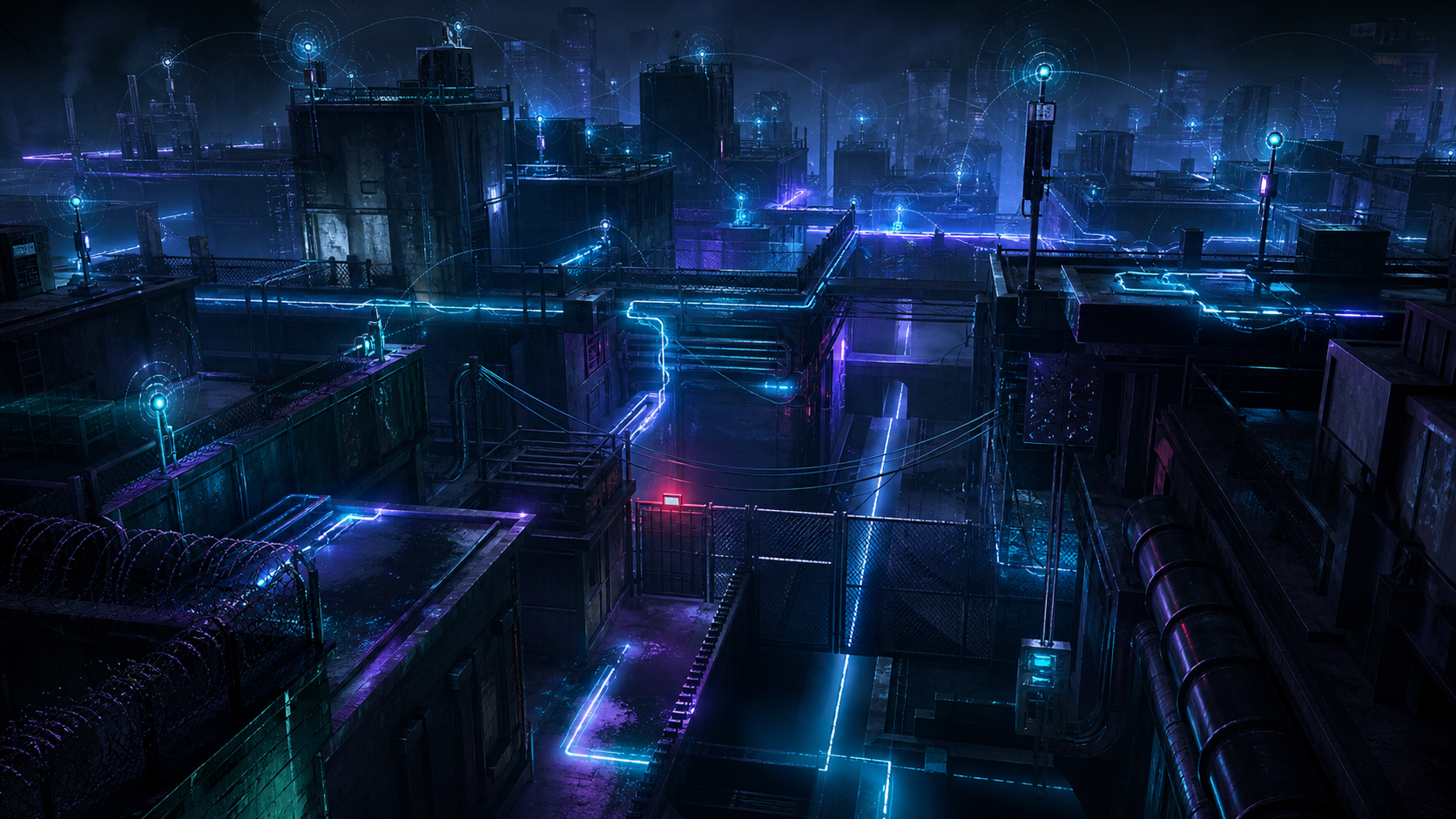
In the summer of 2012, Superstorm Sandy tore through New York City and exposed a vulnerability that no amount of corporate infrastructure spending had addressed: when the centralised internet goes down, entire communities go dark. In the weeks that followed, a small group of technologists in the Red Hook neighbourhood of Brooklyn activated a community mesh network that had been quietly built over the preceding years. While the rest of the borough struggled with severed fibre and flooded exchanges, Red Hook stayed connected. That episode — modest in scale, enormous in implication — planted a seed that has since grown into one of the most consequential infrastructure movements of the 2020s.
By 2026, community mesh networks have moved from the margins of technical experimentation to the centre of serious policy debate. Governments, municipalities, and civil society organisations are grappling with a question that was once considered purely academic: should the internet be a commons, governed by the communities it serves, or a commodity, delivered by a handful of vertically integrated corporations? The answer, increasingly, is being written not in legislation but in hardware — in rooftop antennas, solar-powered nodes, and open-source firmware deployed by communities who have decided not to wait for permission.
The Architecture of Resilience
To understand why mesh networks matter, it helps to understand what they are not. The conventional internet is a hub-and-spoke architecture: data travels from your device to a local exchange, through a regional backbone, across undersea cables, and back again — all mediated by a small number of carriers who own the physical infrastructure and set the terms of access. This architecture is extraordinarily efficient under normal conditions. It is also extraordinarily fragile under abnormal ones. A single point of failure — a flooded exchange, a severed cable, a government shutdown order — can silence millions of users simultaneously.
Mesh networks invert this logic. In a mesh topology, every node is simultaneously a sender, receiver, and relay. Data does not travel through a central hub; it hops from node to node, finding its own path through the network. If one node fails, traffic routes around it. If ten nodes fail, the network reconfigures. The result is a system that degrades gracefully rather than collapsing catastrophically — a property that engineers call resilience and that communities experiencing infrastructure failure call survival.
The technical underpinnings of modern community mesh networks have matured considerably. At the radio frequency layer, LoRa (Long Range) modulation has emerged as the dominant technology for low-bandwidth, long-range mesh communication. LoRa operates on licence-free ISM bands — 902–928 MHz in North America, 868 MHz in Europe — and achieves remarkable range through a technique called chirp spread spectrum, which encodes data across a wide frequency range to resist interference and penetrate obstacles. Research published in 2026 on the arXiv preprint server demonstrates that LoRa-based mesh nodes operating on the "Long Slow" preset (Spreading Factor 12) can maintain links at path attenuations exceeding 180 dB — sufficient for line-of-sight communication across distances that would be impossible for conventional Wi-Fi.
The Meshtastic Ecosystem
The most widely deployed open-source mesh networking firmware is Meshtastic, which runs on affordable ESP32-based hardware platforms including the LilyGo T-Beam, T-Deck, and Heltec series. A complete Meshtastic node — capable of joining or extending a community mesh — can be assembled for under £40, powered by a small solar panel and a lithium battery, and mounted on a rooftop or window ledge with minimal technical expertise. The firmware supports AES-256 encryption, GPS telemetry, and text messaging, and can relay data across multiple hops to extend network coverage far beyond the range of any single node.
The 2026 arXiv performance study provides the most rigorous empirical characterisation of Meshtastic networks to date. Its findings are instructive. Short-range presets (Spreading Factors 7–8) optimise for data throughput but fail at path attenuations above 110–120 dB, limiting their utility to dense urban environments with short inter-node distances. Medium presets (SF9–SF10) sustain links up to 135–150 dB — adequate for most suburban deployments. Long-range presets (SF11–SF12) push the theoretical envelope, with sub-noise-floor demodulation possible down to –18 dB SNR for SF12. The practical implication is that a well-sited Meshtastic node on a hilltop or tall building can serve as a relay for an entire neighbourhood, extending the mesh's reach by kilometres.
The study also identifies the network's principal vulnerability: congestion. Meshtastic uses a managed flooding protocol in which each node rebroadcasts received packets to extend their reach. In dense deployments, this can lead to network saturation, packet loss, and latency spikes. The recommended mitigation — assigning most nodes the CLIENT role rather than ROUTER or REPEATER — reduces unnecessary rebroadcasting but requires deliberate network planning. Competing firmware projects, notably MeshCore and Reticulum, address this limitation through more structured routing protocols. Reticulum, in particular, takes a fundamentally different approach: rather than flooding, it uses cryptographic identity and intelligent path selection, supporting diverse transport layers including LoRa, Wi-Fi, and the anonymising I2P network.
"The strength of a mesh network lies not in its topology alone, but in its social architecture — the governance structures that prevent technical power from concentrating in the hands of the few."
The strength of a mesh network lies not in its topology alone, but in its social architecture — the governance structures that prevent technical power from concentrating in the hands of the few.
Community Networks as Political Infrastructure
The technical architecture of mesh networks is inseparable from their social architecture. This is a lesson that the most successful community network projects have learned, sometimes painfully. A mesh network governed by a small group of technically skilled individuals is not fundamentally different from a network governed by a corporation: power concentrates, decisions are made without community input, and the infrastructure serves the interests of those who control it rather than those who depend on it.
The most sophisticated community network projects have developed governance models that treat the network as a commons — a shared resource managed collectively for the benefit of all participants. NYC Mesh, the volunteer-run network that provides high-speed internet to thousands of New Yorkers by bypassing traditional cable operators, has developed a governance structure that includes democratic assemblies, transparent decision-making processes, and explicit norms around privacy and bandwidth allocation. The network has secured grants including the ConnectALL initiative to scale its community-owned infrastructure, demonstrating that community networks can attract institutional support when they demonstrate robust governance.
The Red Hook Initiative's Digital Stewards programme represents a different but complementary approach. Rather than relying on a small group of technical experts to maintain the network, the programme trains community members — many of them young people with no prior technical background — to install, maintain, and govern their own infrastructure. The result is a network that is genuinely owned by the community it serves, with the technical knowledge distributed broadly enough to prevent any single point of human failure.
Researchers studying these initiatives have identified a consistent pattern: the most resilient community networks are those that treat the installation of hardware as a social and political act, not merely a technical one. When a new node is installed, it is an occasion for a community meeting, a teach-in, a conversation about what the network is for and who it serves. This "public pedagogy" approach — treating infrastructure as a site of political education — builds the social capital that sustains the network through technical failures, funding gaps, and governance disputes.
Governance as a Technical Requirement
The governance dimension of community mesh networks is not merely a nice-to-have; it is a technical requirement for long-term sustainability. Networks that lack clear governance structures tend to suffer from what researchers call "technocratic drift" — the gradual concentration of decision-making power in the hands of those with the most technical knowledge. This drift is not malicious; it is a natural consequence of the information asymmetry between technical experts and ordinary users. But its effects are corrosive: users who feel excluded from governance decisions are less likely to contribute to the network's maintenance, less likely to recruit new participants, and more likely to abandon the network when a more convenient alternative becomes available.
Successful community networks address this through what researchers describe as "plural contribution models" — governance frameworks that value non-monetary contributions such as labour, rooftop access, and mentorship as "shares" in the network. This approach reinforces the concept of the internet as a commons rather than a commodity, and creates incentives for participation that extend beyond the technically skilled minority.
"When Superstorm Sandy severed New York's centralised internet infrastructure in 2012, community mesh nodes kept entire neighbourhoods connected. That lesson has not been forgotten."
The Sovereignty Dimension
Beyond resilience and community governance, mesh networks have acquired a third dimension of significance: digital sovereignty. As the concentration of internet infrastructure in the hands of a small number of hyperscalers has become a geopolitical concern, community mesh networks offer a model of infrastructure ownership that is genuinely local, genuinely distributed, and genuinely resistant to external control.
The sovereignty argument for mesh networks operates at multiple levels. At the individual level, a node on your rooftop is the only guarantee that your communications are not subject to the terms of service, data retention policies, or government cooperation agreements of a distant corporation. At the community level, a locally owned and governed network is not subject to the pricing decisions, service discontinuations, or infrastructure investments of a commercial provider whose primary obligation is to its shareholders. At the national level, a distributed mesh infrastructure is inherently more resistant to the kind of targeted infrastructure attacks — physical or cyber — that can silence centralised networks.
When Superstorm Sandy severed New York's centralised internet infrastructure in 2012, community mesh nodes kept entire neighbourhoods connected. That lesson has not been forgotten.
This sovereignty dimension has attracted a diverse coalition of supporters. Privacy advocates see mesh networks as a bulwark against surveillance capitalism. Emergency management professionals see them as critical resilience infrastructure. Rural communities see them as a solution to the persistent failure of commercial providers to serve low-density areas profitably. And a growing number of technologists see them as a necessary counterweight to the concentration of digital power in the hands of a small number of corporations and governments.
The Wakoma Model: Portable Sovereignty
One of the most innovative approaches to community mesh deployment is the Wakoma Nimble system — an open-source, portable wireless platform that allows communities to deploy self-contained networks without permanent infrastructure. The Nimble system has been used to support digital literacy programmes in Canada and community networks in South African townships, demonstrating that the mesh model is not limited to wealthy urban communities with access to rooftop space and technical expertise.
The Nimble approach is particularly significant because it addresses one of the persistent challenges of community mesh deployment: the gap between technical capability and community capacity. Many communities that would benefit most from mesh networks — rural communities, low-income urban neighbourhoods, communities in the Global South — lack the technical expertise to deploy and maintain complex infrastructure. Portable, pre-configured systems that can be deployed by non-technical community members lower this barrier significantly.
The Regulatory Landscape
Community mesh networks operate in a complex regulatory environment that varies significantly by jurisdiction. In most countries, the radio frequencies used by LoRa-based mesh networks — the ISM bands — are licence-free for low-power operation, making it legal for anyone to deploy a mesh node without obtaining a radio licence. This is a significant advantage over traditional wireless infrastructure, which requires spectrum licences that are typically held by large commercial operators.
However, the licence-free status of ISM bands comes with constraints. Power limits — set by the FCC in the United States, ISED in Canada, and Ofcom in the United Kingdom — restrict the maximum transmit power of unlicensed devices, limiting their range and requiring more nodes to cover a given area. High-gain antennas can extend range significantly, but may push transmit power above legal limits if not carefully managed. Community network operators must navigate these constraints carefully to avoid regulatory violations.
The regulatory environment is also evolving in response to the growing importance of community networks. The Cities Coalition for Digital Rights — an international coalition of municipalities committed to digital rights — has advocated for regulatory frameworks that support community network deployment, including spectrum access policies that reserve capacity for community use and funding mechanisms that support community network infrastructure. Several European municipalities have gone further, treating community mesh networks as public infrastructure and providing direct funding and rooftop access to support their deployment.
Spectrum as a Commons
The deeper regulatory question is whether spectrum — the electromagnetic frequencies that carry wireless communications — should be treated as a commons or a commodity. The current regulatory model in most countries treats spectrum as a scarce resource to be allocated through licensing, with the result that the most valuable frequencies are held by large commercial operators who can afford to pay for them. This model has produced efficient commercial wireless networks, but it has also created structural barriers to community network deployment.
An alternative model — spectrum as a commons — would reserve a portion of the radio spectrum for community use, with governance structures that prevent any single actor from monopolising access. This model has precedents: the ISM bands themselves are a form of spectrum commons, and the success of Wi-Fi — which operates on unlicensed spectrum — demonstrates that commons-based spectrum management can produce highly efficient and widely adopted technologies. Extending this model to additional frequency bands could significantly expand the capacity available for community mesh networks.
Data residency and data sovereignty are not the same thing. A node on your rooftop is the only guarantee that your communications remain yours.
"Data residency and data sovereignty are not the same thing. A node on your rooftop is the only guarantee that your communications remain yours."
The Path Forward
The trajectory of community mesh networks in 2026 is one of cautious optimism. The technical foundations are solid: LoRa-based mesh networking has been validated by rigorous empirical research, and the open-source ecosystem around Meshtastic, MeshCore, and Reticulum continues to mature. The governance models developed by pioneering projects like NYC Mesh and the Red Hook Initiative provide templates that can be adapted to diverse community contexts. And the regulatory environment, while complex, is gradually becoming more supportive of community network deployment.
The challenges that remain are real but tractable. Congestion management in dense deployments requires more sophisticated routing protocols than current firmware provides — a gap that projects like MeshCore and Reticulum are actively addressing. The bandwidth constraints of LoRa-based networks limit their utility for high-bandwidth applications like video streaming, though they are more than adequate for the text messaging, GPS telemetry, and low-bandwidth data applications that are most critical in emergency scenarios. And the governance challenges of sustaining community networks over the long term — maintaining participation, managing conflicts, securing funding — require ongoing attention and innovation.
What is clear is that the question of who owns and governs digital infrastructure is no longer a technical question. It is a political question, a social question, and ultimately a question about what kind of communities we want to live in. Community mesh networks offer one answer: infrastructure that is owned by the people who use it, governed by the communities it serves, and resilient enough to survive the failures — technical, political, and natural — that centralised systems cannot.
The mesh beneath the grid is growing. And as it grows, it is quietly rewriting the rules of connectivity — not by disrupting the existing system from above, but by building an alternative from below, one node at a time.
Key Takeaways
- Community mesh networks using LoRa technology (Meshtastic, MeshCore, Reticulum) provide resilient, decentralised connectivity that degrades gracefully rather than failing catastrophically.
- The most successful community networks treat governance as a technical requirement, not an afterthought — distributing decision-making power to prevent technocratic drift.
- Digital sovereignty requires infrastructure sovereignty: community-owned mesh networks are the only guarantee that communications remain outside the control of distant corporations or governments.
- Regulatory frameworks are evolving, but spectrum policy remains a structural barrier — treating spectrum as a commons rather than a commodity could significantly expand community network capacity.
- The Wakoma Nimble model demonstrates that portable, pre-configured mesh systems can extend community network deployment to communities that lack technical expertise.